
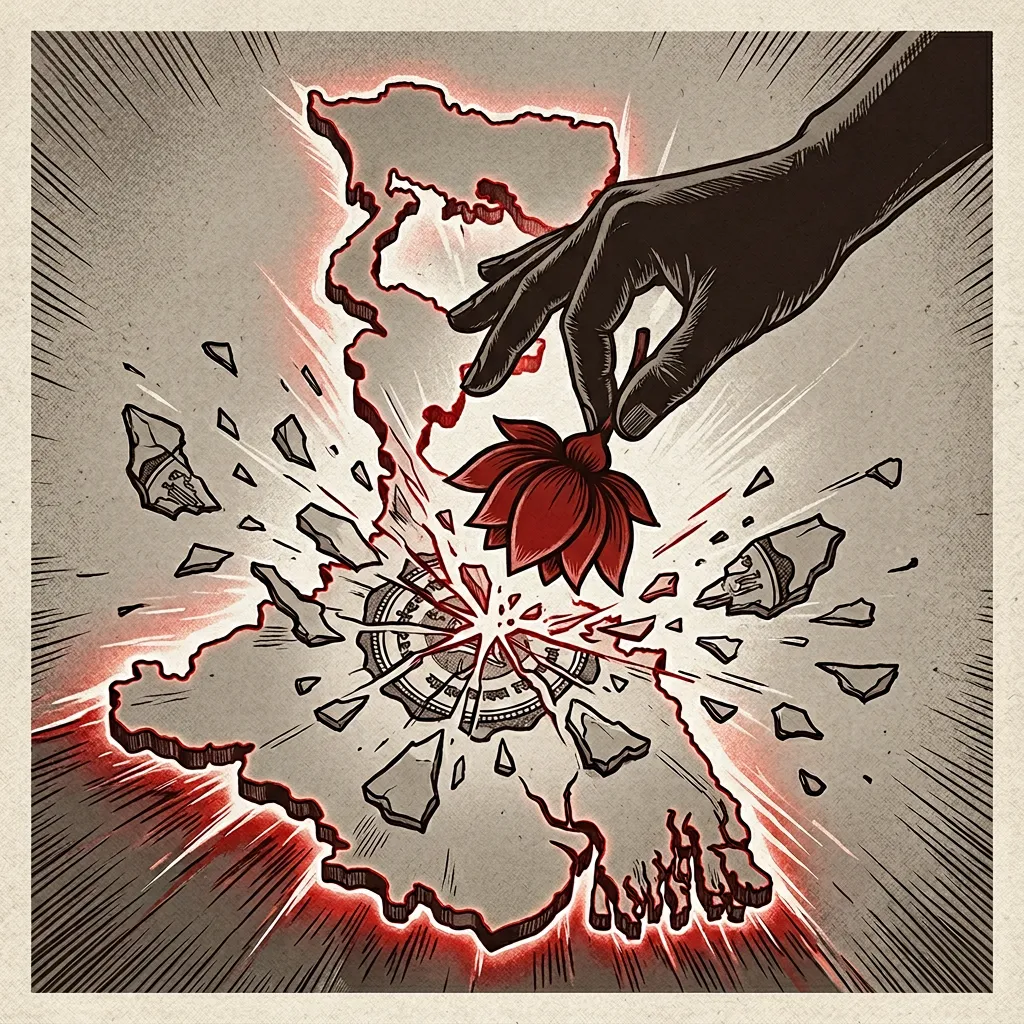
Prime Minister Narendra Modi's Bharatiya Janata Party (BJP) has achieved a significant political breakthrough by winning state elections in West Bengal, a region long considered an opposition stronghold. The victory marks the party's first electoral success in the state, representing a major expansion of its political influence in eastern India. The win is being framed as a landmark event with substantial implications for India's national political landscape and the BJP's future strategy.
Channel News Asia (CNA) emphasizes the historic nature of the BJP's achievement, noting that the party has never previously governed West Bengal. Its reporting frames the victory as a 'landmark' and a 'record' win, suggesting a decisive shift in voter sentiment that allowed Modi's party to breach a key opposition fortress. The coverage highlights the strategic importance of the win, implying it strengthens the BJP's national position and demonstrates the appeal of its political message beyond its traditional base. The tone is factual, focusing on the electoral outcome and its immediate political significance.
Al Jazeera's reporting uses more active and confrontational language to describe the same event. It states the BJP is 'set to gain (wrest) control' of West Bengal. The parenthetical inclusion of the verb 'wrest' introduces a narrative of conquest or taking power from a resistant incumbent, framing the victory as an aggressive political takeover rather than a simple electoral outcome. This word choice suggests a struggle for control, potentially alluding to the intense and often violent campaign rhetoric and clashes reported in the state in the lead-up to the vote. While factual on the result, the framing carries a different connotation about the nature of the political change.
Framing the Political Shift The core divergence between the sources lies in how they contextualize the BJP's entry into power in West Bengal. Channel News Asia presents it primarily as a historic electoral milestone and a testament to the BJP's expanding reach, using terms like 'scored a landmark victory.' The implication is one of organic growth and political success. Al Jazeera's chosen language—'wrest control'—frames the event as a disruption, a forceful alteration of the established political order. This framing could reflect a broader editorial perspective on the BJP's political methods or the nature of its expansion into regions with strong regional identities and parties.
In conclusion, the BJP's victory in West Bengal is uniformly reported as a major event that reshapes India's political map. The consensus is on the result's historic nature for the BJP. However, the analytical subtext differs. One narrative highlights achievement and expansion, while the other implies a more combative and disruptive seizure of power. This divergence in framing points to how the same electoral fact—a change in governing party—can be narrated either as a democratic milestone or as a conquest, reflecting differing interpretations of the campaign's tone and the implications for India's federal political dynamics.