
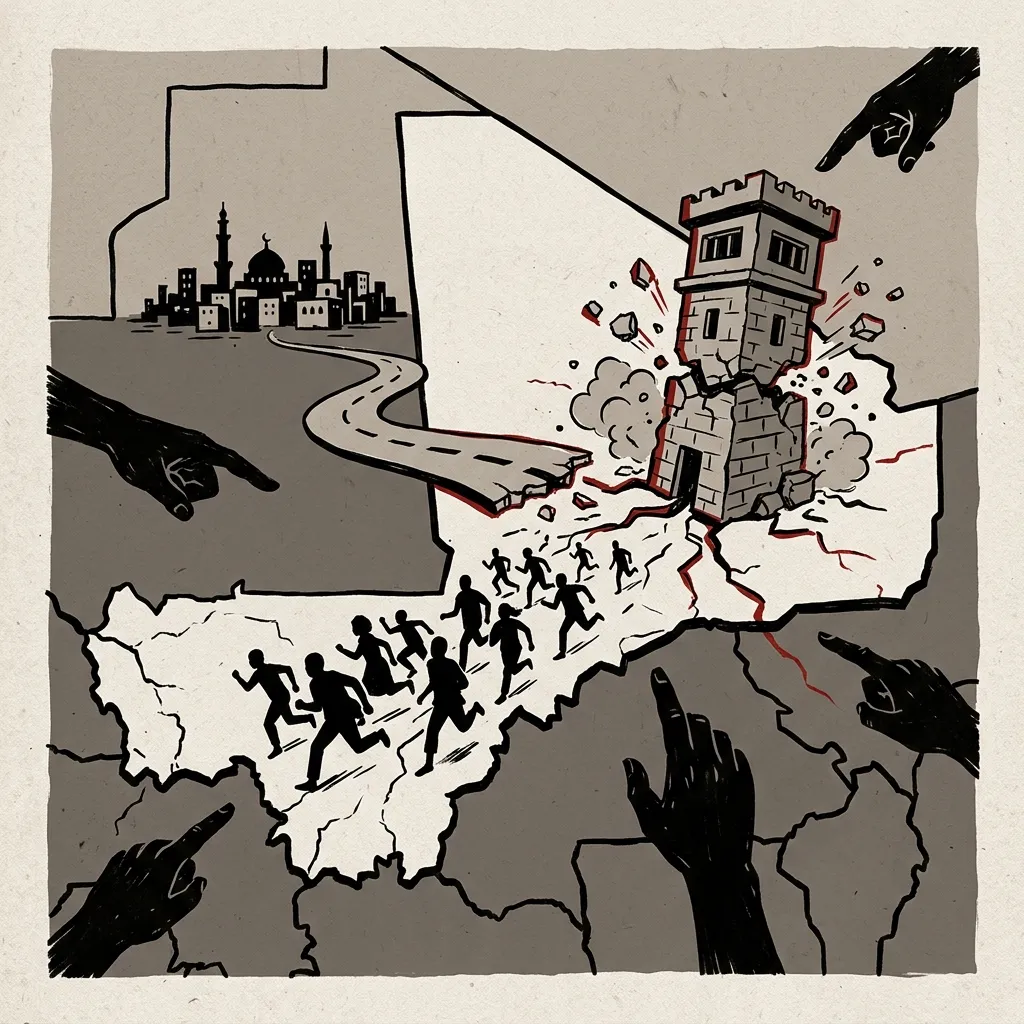
A recent offensive by armed groups in Mali has targeted a high-security prison and vital supply routes to the capital, Bamako, while also triggering reports of reprisals against specific ethnic communities. The coordinated nature of the attacks and the subsequent allegations highlight the complex and volatile security situation in the country, with reporting from different regions focusing on distinct aspects of the crisis.
European Reporting: Focus on Communal Fallout
Reporting from the European outlet Le Monde centers on the human rights consequences for civilians following the militant offensive that began on April 25. The publication details that Fulani and Tuareg communities have faced suspicion and reported abuses from other actors in the conflict. These groups are alleged by some to have collaborated with the attackers, specifically named as the Group for the Support of Islam and Muslims (JNIM) and pro-independence activists from the Azawad Liberation Front (FLA). Le Monde notes that several disappearances within these communities have been reported in the wake of the violence, framing the event as one that exacerbates ethnic tensions and civilian suffering.
Middle Eastern Reporting: Focus on Tactical Operations
In contrast, Al Jazeera's coverage provides more detail on the military and logistical operations carried out by the fighters. Its report emphasizes the storming of a prison facility described as "Africa's Alcatraz," which is said to hold high-value detainees. Furthermore, Al Jazeera highlights a parallel tactic: the disruption of crucial supply chains intended for the capital, Bamako. The outlet explicitly links the attacking fighters to Al-Qaeda, identifying them as part of the Al-Qaeda-linked network, which aligns with the JNIM group mentioned by Le Monde. This framing presents the event as a direct and sophisticated assault on state infrastructure and stability.
Framing the Conflict
The divergence in reporting reveals two primary, interconnected narratives about the same series of events. Le Monde's narrative is consequence-oriented, investigating the downstream impact of the violence on vulnerable populations and the risk of communal strife. It implicitly questions the stability of the social fabric in Mali by highlighting accusations and abuses against specific ethnicities. Al Jazeera, meanwhile, adopts a more immediate, tactical frame. Its narrative focuses on the capabilities and actions of the militant groups themselves—their ability to strike a symbolic, high-security target and impose an economic blockade on the capital. This framing underscores the direct challenge to state authority and the tangible mechanisms of the insurgency.
Synthesis of Perspectives
Together, these reports paint a fuller picture of an escalating conflict. The offensive is not merely a set of isolated military strikes but a multi-pronged action with broad repercussions. The attack on the prison suggests an aim to free comrades or strike a propaganda blow against the state, while the blockade of Bamako's supplies represents an economic warfare tactic designed to sow discontent and demonstrate the government's inability to provide security and basic goods. The allegations against Fulani and Tuareg communities, as reported by Le Monde, indicate that the military actions have triggered a dangerous cycle of suspicion and retaliation that could further fracture the country along ethnic lines, potentially playing into the hands of the insurgents. The broader implication is a conflict that is simultaneously intensifying on the battlefield and deepening societal wounds, with different media lenses choosing to zoom in on either the immediate tactical victories of the militants or the longer-term human cost and communal fragmentation.