
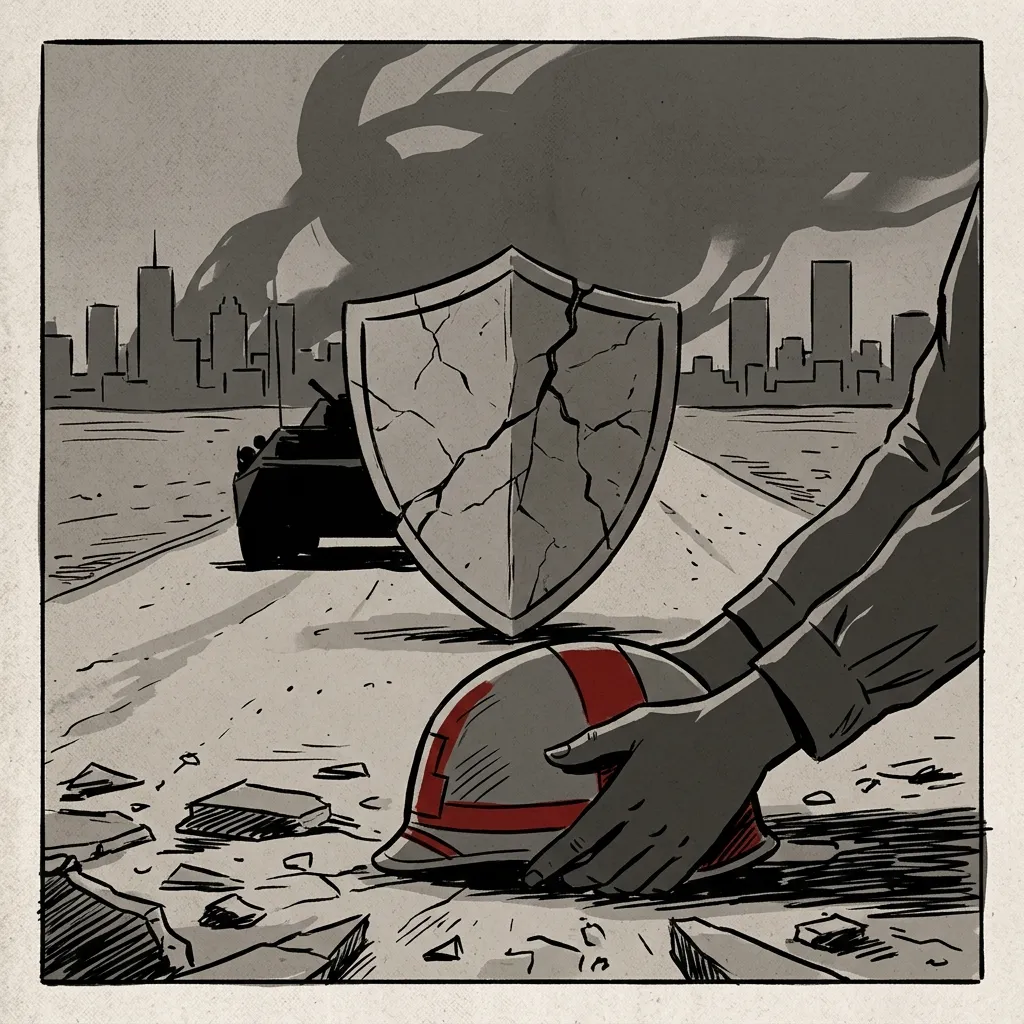
A wave of coordinated attacks across Mali, culminating in the assassination of the country's defense minister, has triggered a multifaceted security and political crisis. The events have prompted a major funeral under heavy guard, led to a jihadist group declaring a blockade on the capital, and exposed tensions surrounding the role of foreign military partners, particularly Russia, in the conflict-ridden nation. Reporting on the situation varies significantly, with sources emphasizing different aspects of the crisis, from the immediate human impact and state response to the broader geopolitical and insurgent strategies at play.
The Attacks and Their Immediate Aftermath Sources uniformly confirm a series of nationwide assaults over the weekend, but they frame the targets and consequences with differing emphases. The Hindu and AllAfrica report that Defense Minister Sadio Camara was killed in an assault on his personal residence, with AllAfrica explicitly stating the attacks have "destabilised the army's grip on power." BBC News and Le Monde contextualize the minister's death as part of a larger offensive, with Le Monde specifying the perpetrator as JNIM, an organization it describes as "an Al Qaeda-affiliated terrorist group." The Hindu introduces a unique element, reporting that during these attacks, the Russian "Africa Corps paramilitary unit" withdrew from a key northern town, a detail not mentioned by other sources in this context.
State Response and the Funeral The response from Mali's ruling military junta is centered on the funeral for the slain minister. Africanews and AllAfrica provide detailed coverage of the planned ceremonies, noting they would be held on Thursday in the capital, Bamako. Africanews highlights the atmosphere, describing a tribute attended by "thousands" and conducted "under tight security," suggesting a show of public solidarity and state control. AllAfrica adds a political dimension, reporting that junta leader Assimi Goïta was expected to attend, framing the event as a moment of unity for the embattled leadership.
The Evolving Insurgent Strategy Following the initial attacks, a new phase of the crisis is reported by several outlets, focusing on a declared blockade of Bamako. BBC News frames this from the perspective of residents, using a poignant quote in its headline: "'How are we going to get back home?'" This humanizes the impact of the blockade, detailing the difficulties for those trying to enter or leave the city. Le Monde provides the strategic rationale, reporting that JNIM declared the blockade "after launching an offensive against the country's ruling junta," directly linking the action to a campaign against the military government. It also notes that France has advised its citizens to leave Mali temporarily, indicating international concern over the escalating situation.
Framing the Conflict The sources diverge notably in how they contextualize the actors and the stakes of the conflict. Le Monde employs the label "jihadists" and specifies the group's affiliation with Al Qaeda, framing the conflict within a global counter-terrorism narrative. BBC News uses the more general term "Islamist group," while focusing its narrative on the humanitarian and logistical crisis for civilians in Bamako. The Hindu introduces a distinct geopolitical angle by highlighting the role and response of Russian paramilitaries, a point absent from the other reports. Africanews and AllAfrica concentrate on the internal state narrative, detailing the official funeral proceedings and the junta's presentation of the event, with AllAfrica explicitly referencing the destabilization of the junta's authority.
In conclusion, the synthesis of reports paints a picture of a nation at a critical juncture. The attacks represent both a severe personal blow to the military government with the loss of its defense minister and a strategic escalation by insurgent groups aiming to isolate the capital. The varied reporting underscores the complexity of the crisis: it is simultaneously a domestic struggle for political control, a counter-insurgency challenge with international terrorist links, and a situation with implications for foreign military involvement. The tight security at the state funeral contrasts sharply with the growing vulnerability of the capital's populace, highlighting the precarious balance between projecting strength and confronting a widening threat.