
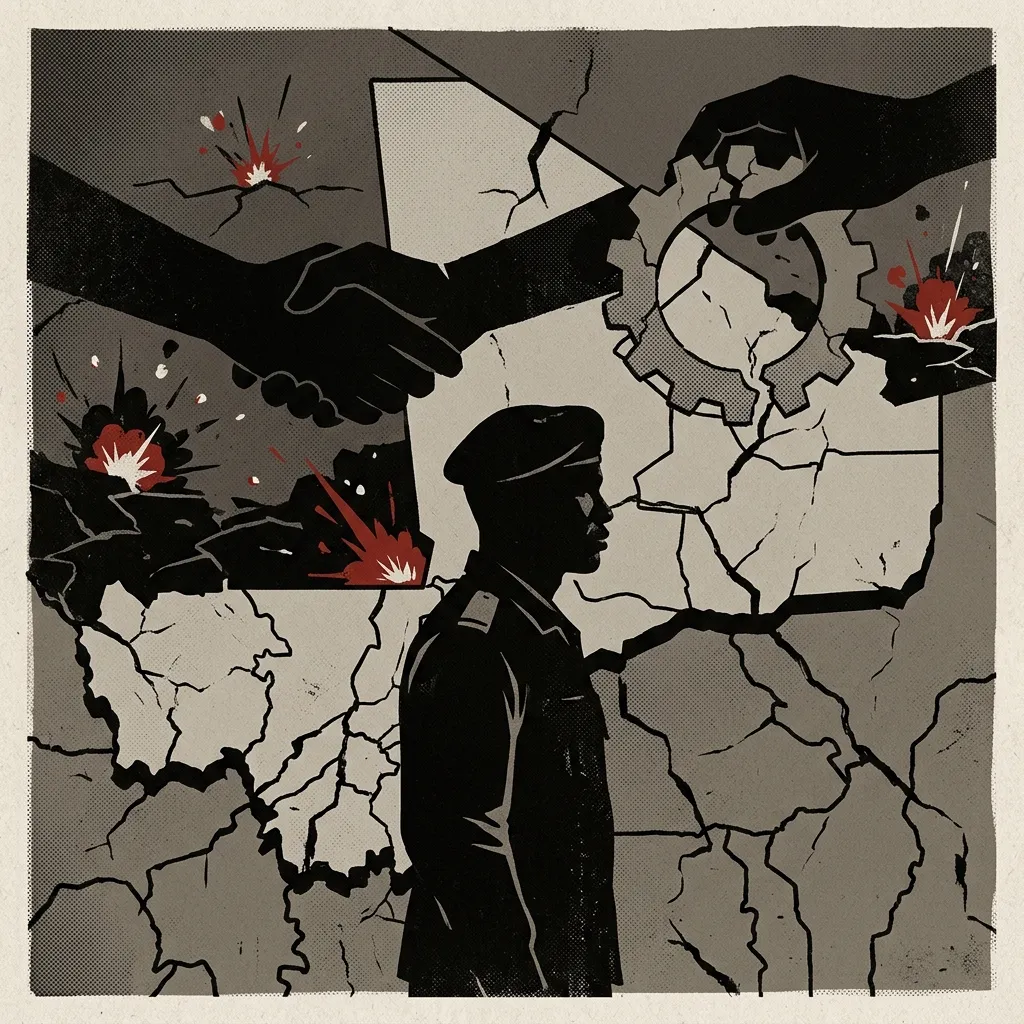
Mali's military leader, Colonel Assimi Goita, has made his first public appearance following a weekend of major insurgent attacks across the country, with his office stating he met with Russia's ambassador in Bamako on Tuesday. The reappearance comes after a period of absence that fueled speculation, with Goita asserting the situation in Mali is 'under control' despite the severe setbacks.
The context for his return is a severe security crisis. Over the weekend, coordinated attacks by groups described by various sources as jihadists and Tuareg separatists struck multiple locations, including targets near the capital. A central event was the fall of the strategic northern town of Kidal. The attacks resulted in the death of Mali's defence minister and prompted the country's prime minister to publicly urge citizens 'not to give in to panic.' The violence has had tangible domestic consequences, with a Malian airline suspending flights to the north and centre of the country due to security concerns.
The crisis has exposed significant tensions within Mali's international partnerships. A report from Radio France Internationale (RFI), aggregated by AllAfrica, cites a senior Malian official accusing Russian paramilitary forces of 'betrayal.' The allegation stems from the reported withdrawal of these forces from Kidal, which the official claims allowed rebel groups to seize the city. This narrative contrasts sharply with the public stance of the Russian government, which, according to Africanews, has called for Mali to return to 'peace and stability' amid the escalating violence. The meeting between Goita and the Russian ambassador appears as an effort to publicly reaffirm this alliance.
European coverage frames the events within a broader geopolitical shift. Le Monde analyzes that the setbacks suffered by the Bamako junta have had the effect of reestablishing neighboring Algeria's role as a regional mediator, marking a regain of influence for Algiers after years of waning presence. The same publication also notes the 'awkward stance' of former colonial power France, which has issued only a brief statement on the crisis. This is presented as a reflection of the junta's current alliance with Russia and the declining French influence in the Sahel region.
Analytically, the core narrative conflict lies in the justification of the military government itself. The BBC frames the attacks as a direct challenge to the junta's foundational promise, noting that 'the military came to power to bolster security but the weekend's attacks have brought that into question.' This framing presents the violence not just as a security incident, but as a potential crisis of legitimacy for the ruling authorities. The junta's response, through Goita's statement and the prime minister's appeal for calm, is an attempt to project control and resilience in the face of this challenge.