
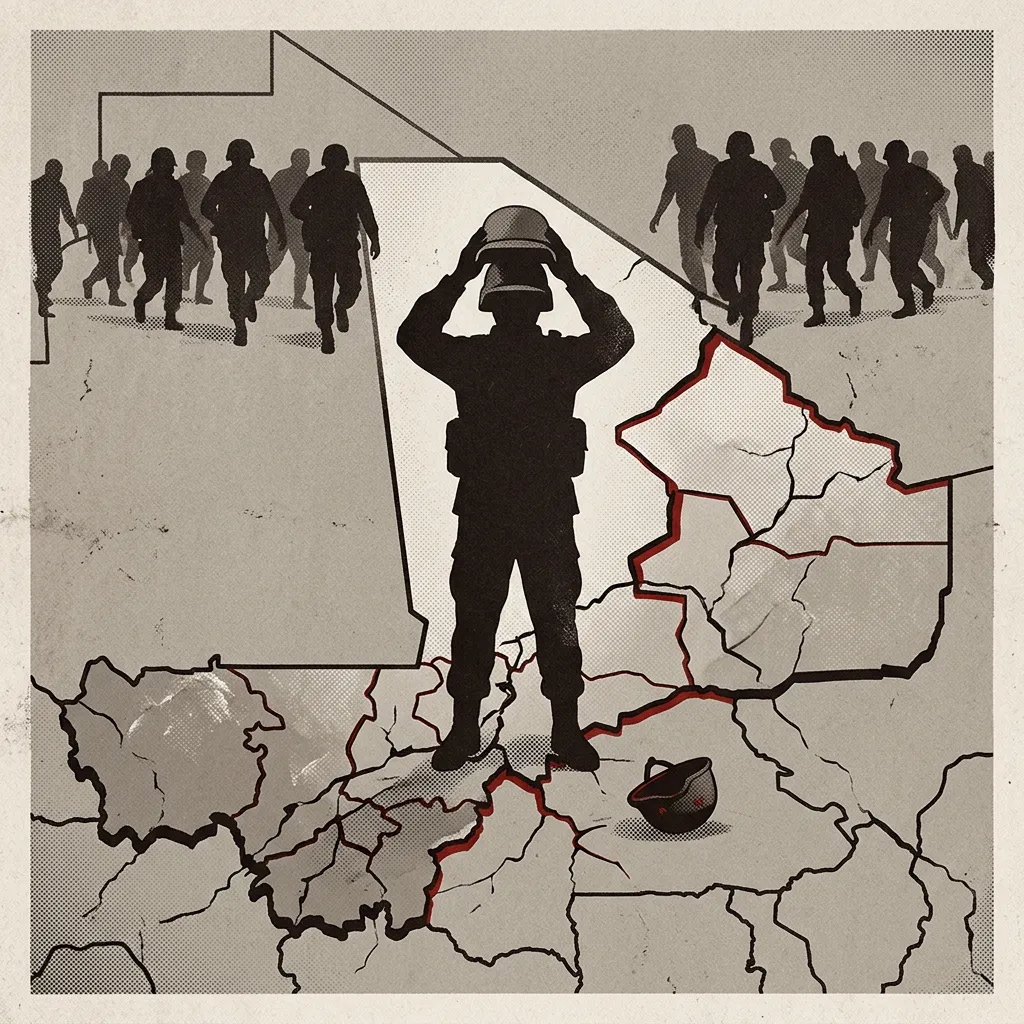
Mali's military leader, Colonel Assimi Goita, has appointed himself as the country's new defense minister following the death of his predecessor in a major offensive in the north. The leadership change comes as Malian and allied forces face significant territorial losses to a combined force of jihadist and Tuareg-led separatist fighters, raising questions about the junta's stability and strategy.
Regional and International Reporting on the Leadership Shift
African sources report the leadership change as a direct administrative response to the crisis. Africanews frames the event factually, stating that Goita will take on the defense minister's duties by decree following the previous minister's death in what it describes as "large-scale attacks." AllAfrica, aggregating a report from RFI, provides deeper context on the attackers, focusing on the claims of the Azawad Liberation Front (FLA). This source highlights the FLA's insistence that it is a separatist group, not a terrorist organization, despite acknowledging its coordinated actions with al-Qaeda-linked fighters. The African coverage thus centers on the internal power reshuffle and the identity of the armed groups involved.
European outlets frame the event within a narrative of military setback and geopolitical alignment. The BBC reports that former Defense Minister Sadio Camara was killed in a "massive offensive by combined jihadist and separatist forces." Le Monde provides the most detailed military context, reporting that Malian and Russian troops have withdrawn from key northern towns including Kidal, Tessalit, and are pulling out from Aguelhok. It cites French military sources suggesting the objective is now to concentrate forces in central and southern Mali. This framing presents Goita's move as occurring amidst a significant contraction of the junta's and its Russian ally's territorial control.
Al Jazeera's Middle Eastern perspective uses more direct language regarding Goita's action, stating the "military leader promotes himself" after the minister's death in attacks linked to both al-Qaeda and Tuareg separatists. This characterization subtly emphasizes the consolidation of personal power by the junta chief in a time of crisis.
Framing the Conflict and Leadership Response
The sources collectively describe a multi-faceted offensive but differ in emphasis and attribution. The core fact is an attack that killed the defense minister, involving both jihadist and Tuareg separatist elements. However, the framing diverges significantly:
- Nature of the Opposing Force: AllAfrica/RFI explicitly details the FLA's argument for being considered separatists rather than terrorists, presenting their political motive (independence for northern Azawad) alongside their tactical alliances. In contrast, BBC and Al Jazeera use the combined terms "jihadist and separatist forces" without delving into this internal distinction. Le Monde uses the broader description "pro-independence and jihadist offensive," blending the groups under a unified military threat.
- The Scale of the Crisis: Le Monde and the BBC emphasize the scale and success of the offensive, detailing territorial losses and a strategic retreat. Africanews and Al Jazeera mention the attacks but focus more immediately on the ministerial appointment as the key news. AllAfrica's angle is less on the battlefield outcome and more on the political identity of one attacking faction.
- Geopolitical Context: Only Le Monde explicitly mentions the role of Russian troops as allies sharing in the retreat, and cites French military intelligence. This frames Mali's conflict within the context of its post-French intervention security partnerships. The other sources do not mention international actors on the ground, presenting it as a domestic Malian military and political event.
Synthesis and Broader Implications
The synthesis of reports indicates that Colonel Goita's assumption of the defense portfolio is a reactive measure to a severe and escalating security crisis. The move consolidates military and defense authority in the hands of the junta leader at a moment when the state's control over its northern territory is demonstrably weakening. The differing framings reveal a conflict viewed through multiple lenses: as a question of insurgent identity (AllAfrica), a significant military reversal for the junta and its Russian partners (Le Monde), a straightforward leadership reshuffle (Africanews), a personal power consolidation (Al Jazeera), and a major combined offensive (BBC). These perspectives underscore that the event is not merely a cabinet change but a pivotal moment reflecting deep challenges to Mali's sovereignty, the junta's legitimacy, and the stability of the Sahel region. The diverging terminology used to describe the attacking forces suggests ongoing international debate over how to categorize and ultimately address the complex insurgency in northern Mali.