
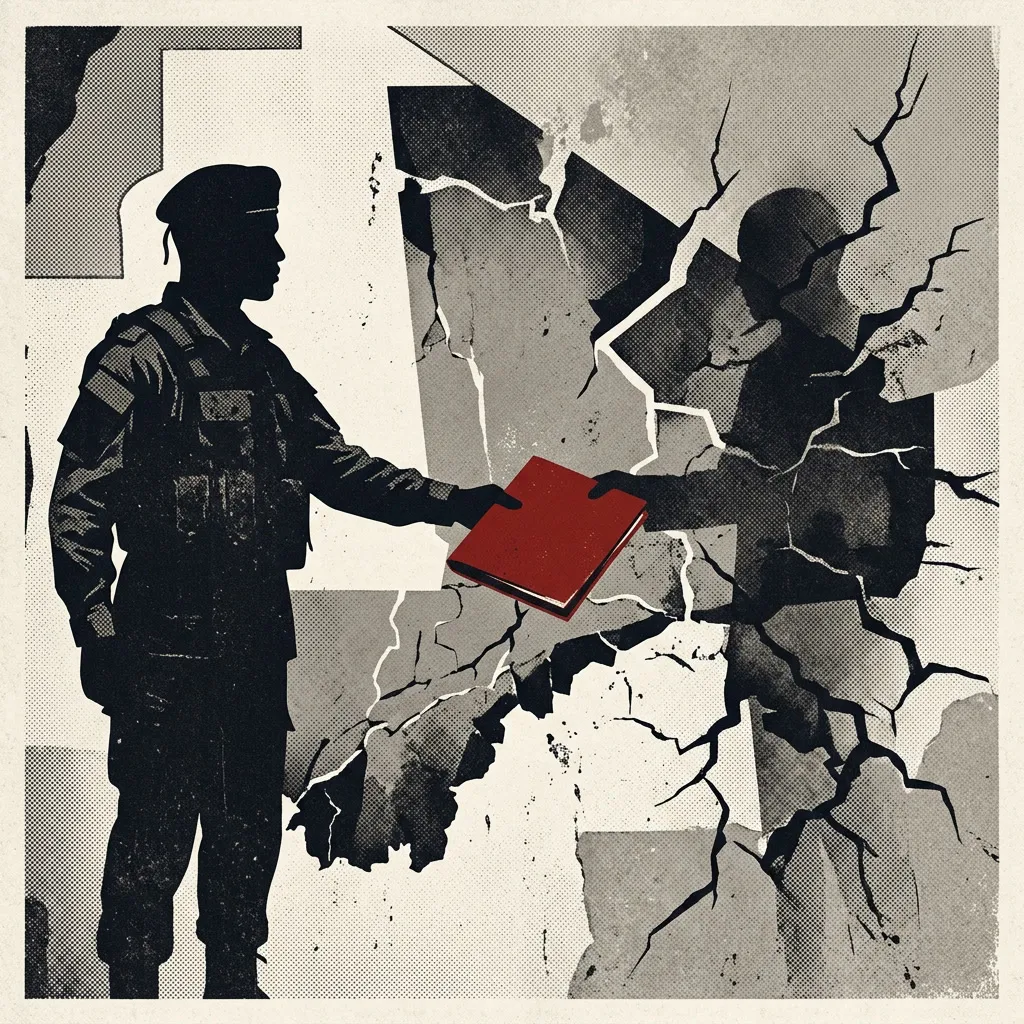
Mali's transitional president and military leader, Colonel Assimi Goita, has formally taken on the role of defense minister, a move announced by presidential decree. This decision follows the death of the previous minister, Sadio Camara, who was killed during what sources describe as a significant offensive by armed groups. The leadership change occurs amidst a complex and deteriorating security situation in the West African nation, which has been under military rule since a 2020 coup.
Africanews reports the development in a straightforward, declarative manner, focusing on the official decree and the circumstances of the predecessor's death. The source states that Goita will assume the role after the death of the previous minister in what it terms "large-scale attacks." This framing presents the move as a direct, procedural response to a vacancy created by a security crisis, without editorializing on Goita's motivations. The report implicitly contextualizes the event within Mali's ongoing struggle with instability but does not specify the perpetrators of the attacks.
In contrast, Al Jazeera's report employs more pointed language, framing the action as Goita "promoting himself" after the minister's death. This phrasing suggests a consolidation of personal power rather than a simple administrative reassignment. Al Jazeera also provides specific detail on the attackers, stating the defense minister was killed in attacks "linked to al-Qaeda and Tuareg separatists." This identifies the dual threats of international jihadist networks and local ethnic-separatist movements, offering a clearer, more detailed picture of the security landscape that precipitated the leadership change.
The BBC's coverage aligns more closely with Africanews in its factual reporting of the decree but shares Al Jazeera's specificity regarding the nature of the offensive. The BBC notes that Camara was killed in a "massive offensive by combined jihadist and separatist forces," corroborating the narrative of a coordinated, multi-faceted assault. The headline's phrasing, "names himself," carries a similar connotation to Al Jazeera's "promotes himself," subtly highlighting the autonomous, top-down nature of the decision within the junta's structure. The BBC's report thus blends the procedural reporting of Africanews with the analytical undertone present in Al Jazeera's framing.
Framing the Leadership Shift
The core event—Goita assuming the defense portfolio—is reported consistently across sources, but the framing of his action and the context of the attacks reveals distinct editorial approaches. Africanews adopts a neutral, institutional tone, presenting the move as a matter-of-fact state response. Al Jazeera and the BBC introduce a layer of political analysis, with word choices that imply a power consolidation move by the junta leader. Furthermore, a key divergence lies in the description of the security threat. Africanews uses the broad term "large-scale attacks," while both Al Jazeera and the BBC explicitly name the actors involved (al-Qaeda/jihadist and Tuareg/separatist forces), providing a more granular understanding of the conflict dynamics that led to the ministerial vacancy.
This consolidation of the roles of head of state and defense minister under Goita underscores the junta's tightening grip on all levers of security authority at a critical moment. The explicit naming of jihadist and separatist groups by some sources highlights the persistent and intertwined challenges facing the Malian military, which has expelled French and UN peacekeeping forces in recent years and turned to Russian Wagner Group mercenaries for support. The manner in which this transition is reported reflects differing regional perspectives on military governance and the narrative surrounding counter-insurgency efforts in the Sahel.