
Deadly Weekend Assault Targets Military Leadership
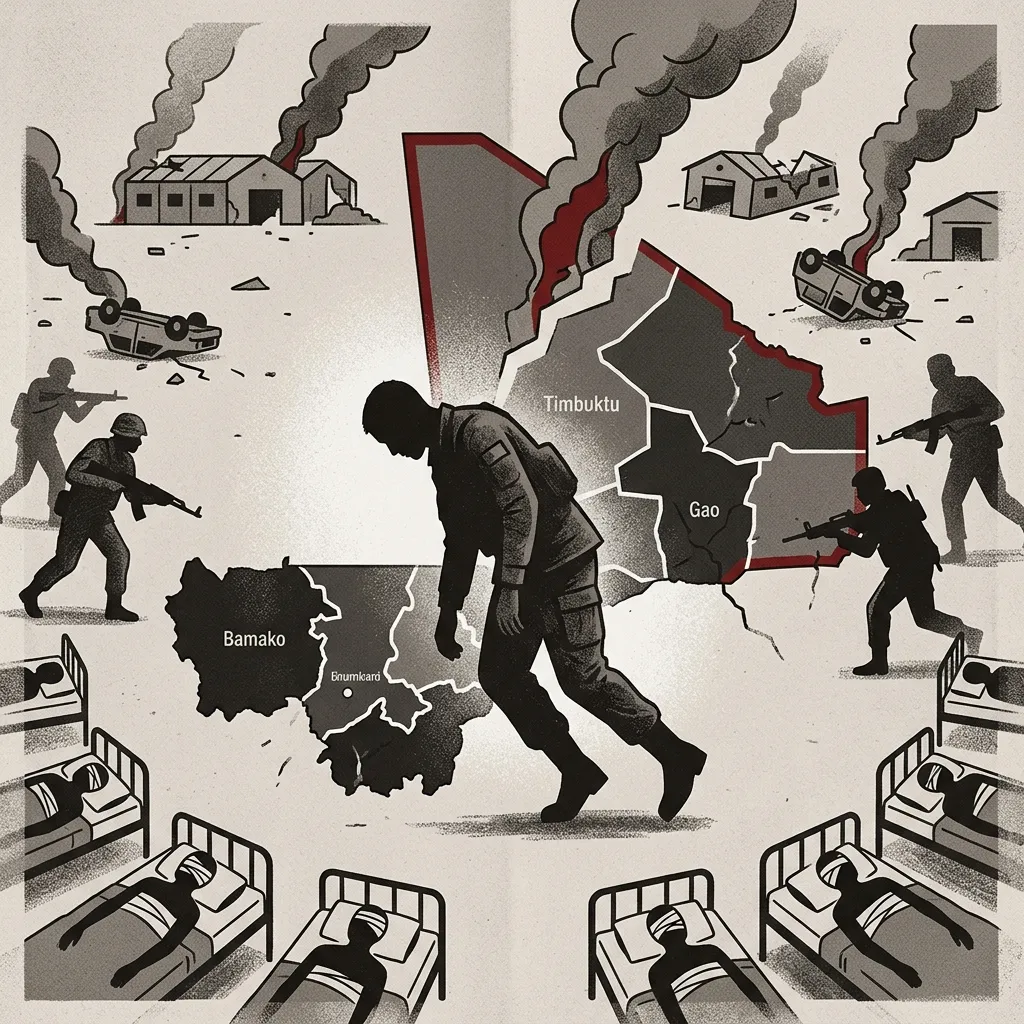
Mali experienced coordinated attacks over the weekend that resulted in the death of the country's defense chief, General Sadio Camara, according to multiple regional reports. The assaults involved both jihadist forces and rebel groups targeting military positions, marking what some analysts describe as a significant escalation in the West African nation's ongoing security challenges.
Prime Minister General Abdoulaye Maiga of Mali's transitional government visited injured victims on Monday, urging the public to remain calm following Saturday's violence. The attacks struck both near the capital Bamako and in northern regions of the country, representing a geographically dispersed offensive against government forces.
Framing the Perpetrators and Their Coordination
Sources differ in how they characterize the attacking forces and their collaboration. Africanews refers to "jihadi and rebel forces" in one report while describing a "jihadist attack" in another account. Al Jazeera frames the situation as armed groups "joining forces," suggesting a notable shift in tactical cooperation between previously separate entities. RFI, as cited by AllAfrica, specifically identifies the attackers as "jihadists and Tuareg separatists," providing ethnic and ideological specificity to the rebel component.
The question of whether these groups are forming new alliances or simply conducting simultaneous operations remains unclear from the available reporting. Al Jazeera's coverage explicitly raises this coordination as a key analytical question, asking what is "driving" these joint attacks, while other sources present the coordination as established fact without exploring its origins or durability.
Government Response and Public Messaging
The transitional government's response has centered on projecting stability and control. Prime Minister Maiga's hospital visit and call for calm represents the public face of official crisis management. One Africanews report states that "life is gradually returning to normal" based on gathered testimonies, suggesting authorities are emphasizing resilience and continuity despite the loss of a senior military commander.
This framing of normalcy contrasts with assessments from international sources. RFI characterizes the situation as "Mali's most serious security crisis since 2012," referencing the year when Tuareg rebels and jihadist groups seized northern Mali, prompting French military intervention. This historical comparison suggests the current attacks represent not merely an incident but potentially a watershed moment.
Political Implications for the Junta
The political context receives varying emphasis across sources. AllAfrica's headline explicitly frames the attacks as targeting "the junta," foregrounding the military government that has ruled since a 2020 coup. RFI's analysis, as reported, suggests this "could be a turning point for the junta in power," raising questions about the government's ability to maintain control and legitimacy.
Other sources do not emphasize the political vulnerability of the transitional government, instead treating the attacks primarily as security incidents. This difference in framing reflects divergent editorial judgments about whether the story is fundamentally about military tactics and casualties or about the stability of Mali's governing structure.
Historical and Regional Context
The 2012 reference point appears only in international coverage, not in the African sources provided. This suggests different assumptions about audience familiarity with Mali's recent history. Similarly, the specific identification of Tuareg separatists as distinct from jihadist groups appears in international reporting but not consistently in regional African coverage, which uses broader terms like "rebels."
The attacks' proximity to Bamako receives mention as significant, indicating that violence previously concentrated in Mali's north and center has reached closer to the seat of government power. However, sources do not provide specific details about casualties beyond General Camara's death or the scale of the coordinated operations.