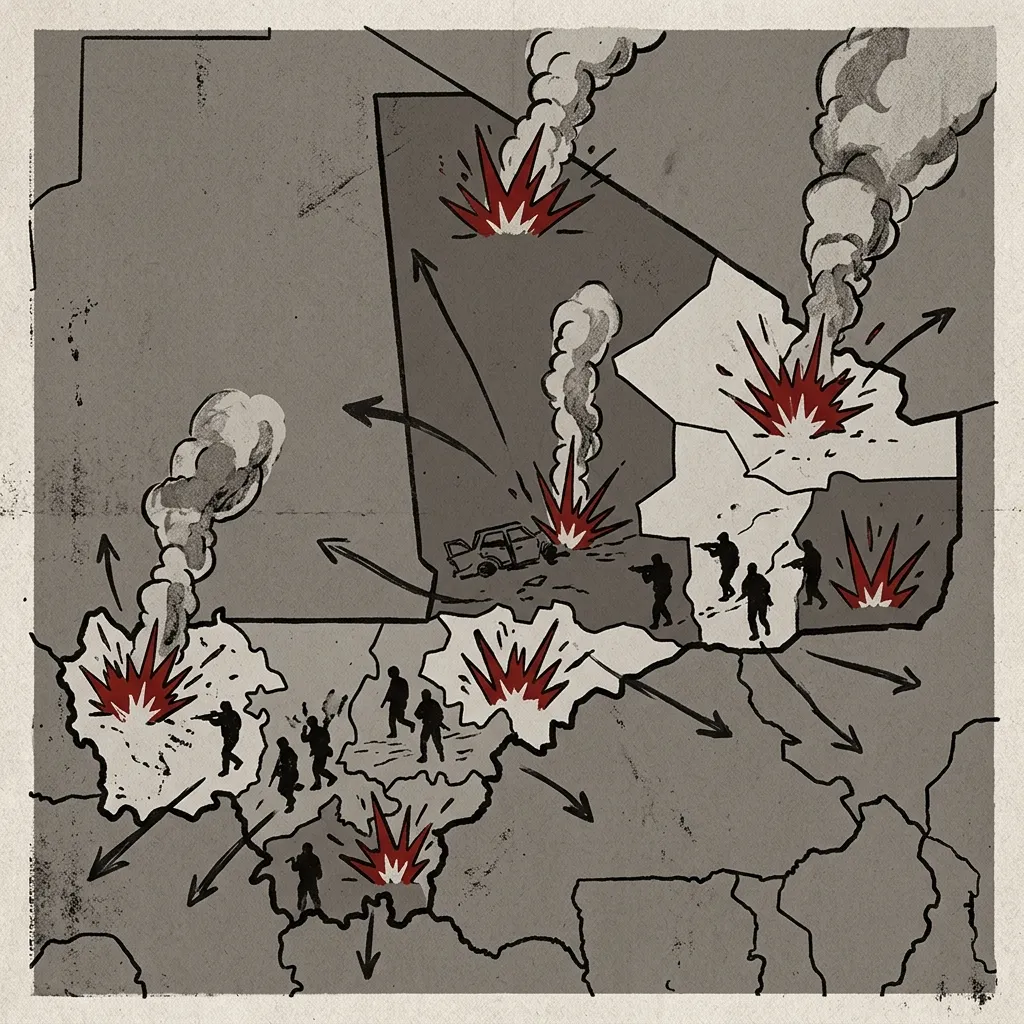
Coordinated Attacks Across Mali
Mali's Defence Minister Sadio Camara was killed in a car bomb attack on his residence in Kita, outside the capital Bamako, according to family members and government officials. The Hindu reports that his second wife and two grandchildren also died in the attack. This assassination occurred during what multiple sources describe as coordinated, large-scale attacks by armed groups across the West African nation.
BBC News characterizes the offensive as "the largest jihadist attack in years," with witnesses reporting clashes in central and northern regions. Al Jazeera notes that armed groups with differing ideologies have launched these coordinated strikes, while The Hindu specifies that both Islamic militants and separatists have claimed responsibility for simultaneous attacks.
Unusual Alliance of Adversaries
A notable aspect of these attacks is the apparent cooperation between groups that have historically been rivals. Al Jazeera reports that opponents including an al-Qaeda-linked group have joined forces, while BBC News identifies ethnic Tuareg fighters working alongside Islamist groups. This tactical alliance raises questions about whether such cooperation can be sustained given the groups' differing ideologies and objectives.
Territorial Gains and Russian Withdrawal
BBC News reports that ethnic Tuareg fighters claim control of Kidal, a strategic city in northern Mali, following the weekend attacks. The same source confirms that Russian fighters have withdrawn from the northern city after separatist attacks. Al Jazeera frames the attacks as targeting both government and Russian forces in Mali, highlighting the involvement of external military actors in the conflict.
Impact on Government Stability
The death of Defence Minister Camara represents what Al Jazeera describes as "a big blow for Mali's military government." The minister was characterized as influential within the current junta administration. Multiple sources note that Mali has been governed by military authorities following coups, though they differ in how prominently they feature this context.
The immediate security response included warnings from foreign embassies. The Hindu reports that India's embassy advised its nationals to stay indoors and exercise caution, noting close coordination with Malian authorities. The U.S. Embassy in Bamako issued alerts citing explosions and gunfire near Kati and the international airport, urging American citizens to shelter in place.
Broader Context of Instability
Al Jazeera provides historical framing, noting that Mali has experienced continuous political or security crises since 2012, describing the country's trajectory from what it calls a "democracy beacon" to its current instability. The same outlet reports that Mali's security situation has deteriorated in recent years as armed groups have carried out coordinated attacks.
BBC News focuses more narrowly on the immediate military developments, describing a "wave of coordinated attacks by jihadist militants and separatists" spreading through the country. The Hindu emphasizes the international dimension, highlighting both the U.S. security alert and India's advisory to its citizens.
Military Sites Targeted
Al Jazeera reports that coordinated attacks struck military sites in addition to the Defence Minister's home. The scale and coordination of the offensive suggest significant planning and operational capacity among the attacking forces, though sources vary in their emphasis on whether this represents a new phase of conflict or an escalation of existing patterns.
The attacks have prompted questions about Mali's security architecture and the effectiveness of both government forces and their external military partners in maintaining territorial control and protecting high-value targets.