
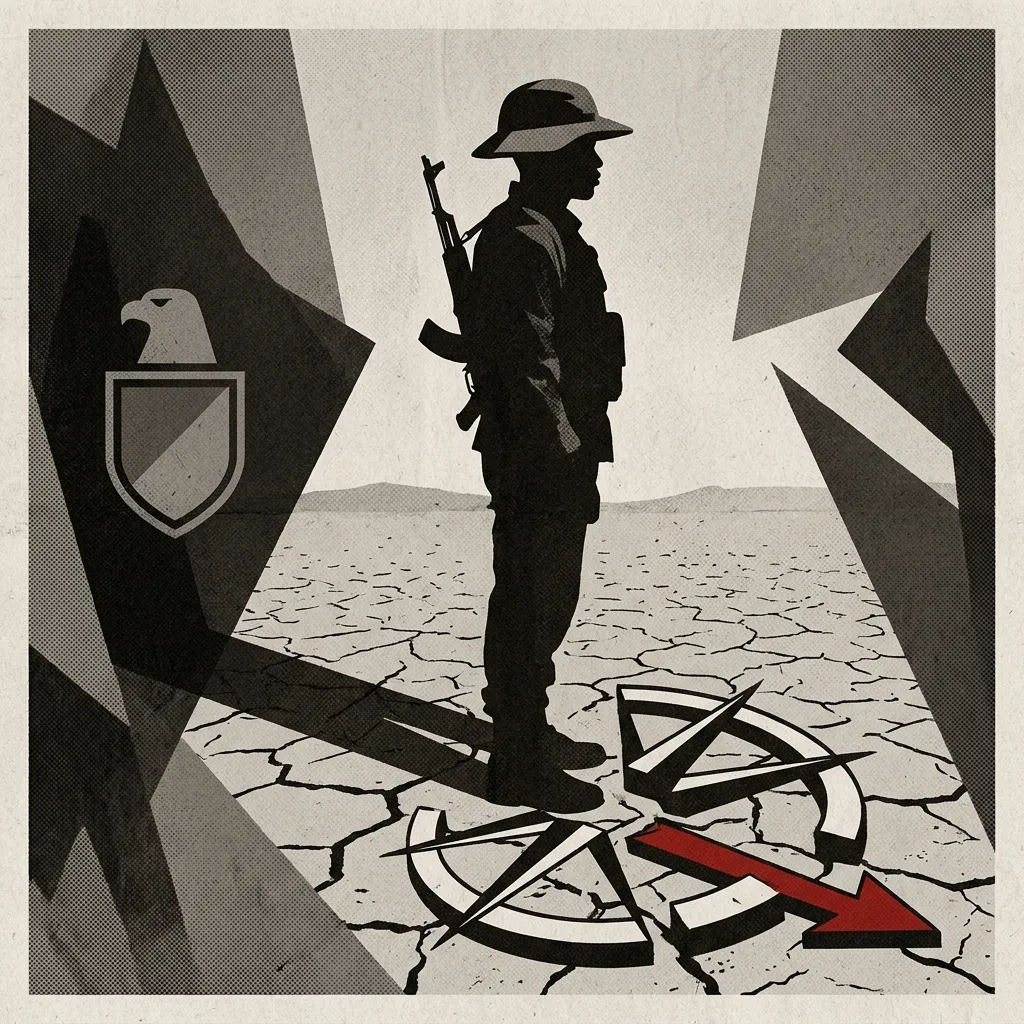
Mali is grappling with a significant escalation in its long-running conflict, as a major jihadist offensive has led to high-level casualties and territorial losses, while also triggering a controversial government probe into alleged collusion between some military officers and the insurgents. The crisis highlights the fragile security situation under the ruling military junta and the complex role of foreign partners, particularly Russia.
European Perspective: Focus on Russian Setbacks and Junta Support Reporting from the European outlet Le Monde frames the recent events primarily through the lens of international geopolitics and the performance of foreign mercenaries. The source details that the offensive, launched in late April, resulted in serious setbacks for the Russian Africa Corps, a private military company. These setbacks reportedly included the death of a key political figure, Defense Minister Sadio Camara, who is described as being pro-Russian, and the loss of the strategic town of Kidal. Le Monde's narrative strongly emphasizes Russia's unwavering political commitment to the Malian military junta, suggesting this support continues "at all costs" despite these military reversals. The report implicitly questions the effectiveness of the junta's security strategy, which has pivoted away from former French and UN partners towards reliance on Russian contractors.
African Perspective: Internal Probe and Allegations of Collusion In contrast, the report from Africanews centers on the Malian government's internal response to the attacks. It states that Malian authorities have announced an investigation into alleged links between some military officers and the jihadist and separatist fighters responsible for the recent offensive, described as the largest in over a decade. This framing shifts the focus from external actors to potential internal corruption and security failures within the Malian state itself. The report presents the probe as an official action taken by the junta-led government, suggesting a narrative of the state attempting to root out betrayal from within its own ranks. The language used, such as "conflict-battered country," underscores the prolonged human toll of the instability, a contextual element less prominent in the European coverage.
Framing the Conflict: Geopolitics vs. Internal Accountability The two sources present divergent, though not necessarily contradictory, narratives about the same crisis. Le Monde constructs a story of international power projection, where the fortunes of Russian mercenaries and their local allies are a primary metric for understanding the conflict's dynamics. The death of the defense minister and loss of Kidal are framed as indicators of Russian and junta vulnerability. Conversely, Africanews builds a narrative centered on national sovereignty and internal accountability. The major offensive is presented as the catalyst for a domestic investigation into military corruption, implying that the threat may be as much from within the state apparatus as from external militant groups. While Le Monde highlights the cost of foreign alliance, Africanews highlights a potential crisis of institutional integrity.
Synthesis and Broader Implications Together, these reports paint a multifaceted picture of a severe security challenge for Mali's military government. The junta faces not only a potent militant offensive that has inflicted tangible losses on its forces and allies but also damaging allegations that elements of its own military may have facilitated the attacks. This dual crisis complicates the junta's claims to be the sole legitimate guardian of Malian sovereignty. The European framing suggests the junta's legitimacy is increasingly tied to the performance and backing of its Russian partners, while the African framing indicates the government is attempting to manage a narrative of internal purification and control. The situation underscores how internal security failures and external geopolitical dependencies are deeply intertwined in the Sahelian conflict, with regional and international observers emphasizing different facets of the same destabilizing event.