
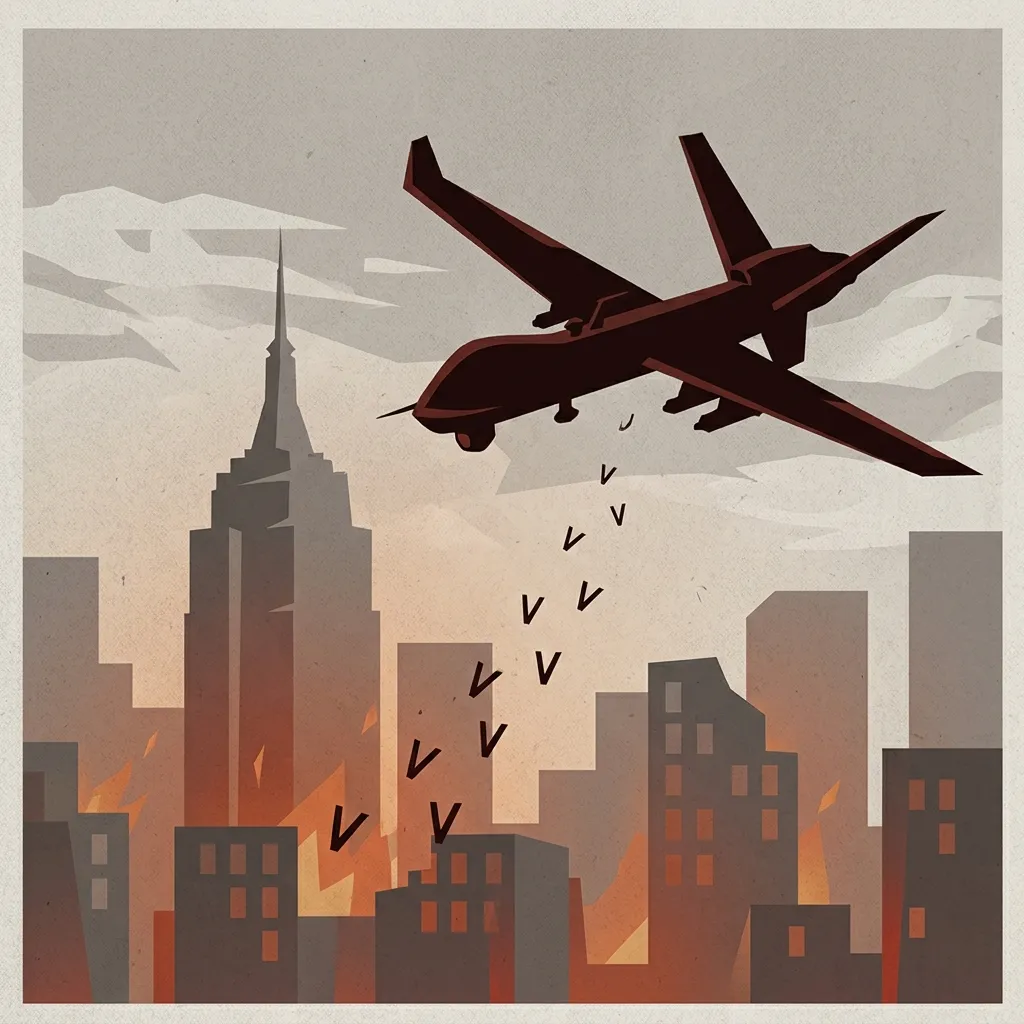
A significant wave of drone attacks targeted Moscow and other Russian regions on May 7, leading to widespread flight disruptions and reports of strikes on industrial and residential sites. The attacks occurred against a backdrop of conflicting ceasefire declarations from Russia and Ukraine ahead of Russia's Victory Day commemorations, highlighting an escalation in long-range strikes deep inside Russian territory. The reporting reveals clear differences in how the events are framed, with sources emphasizing either the scale of the aerial threat, the civilian impact, or the political context of the attacks.
According to the independent Russian outlet Meduza, Moscow Mayor Sergei Sobyanin reported that Russian air defenses intercepted more than 30 drones approaching the capital between midnight and noon. The report states that no casualties or significant damage were reported in Moscow, with emergency services only responding to sites where debris fell. However, Meduza also cites the Telegram channel Astra, which published eyewitness videos showing explosions in the Naro-Fominsk district of the Moscow Region, suggesting the intended target was a Defense Ministry logistics complex. This dual sourcing—official statements paired with social media evidence—is a hallmark of Meduza's reporting style. The disruption to civilian life was substantial, with approximately 100 flights canceled or delayed at Moscow's major airports due to imposed flight restrictions.
Beyond Moscow, Meduza details attacks in other regions, notably Perm. Citing Perm Krai Governor Dmitry Makhonin, the outlet reports that Ukrainian drones struck an unspecified industrial facility in the city, with no reported casualties. Crucially, Meduza contrasts this official account with reports from several Russian Telegram news channels, which claim, based on eyewitnesses, that a drone struck the roof of a residential building. This reporting creates a narrative that acknowledges official Russian claims of intercepting threats and minimizing damage while simultaneously introducing evidence of potential civilian-area impacts from both debris and direct strikes. Meduza also provides context, noting a previous series of Ukrainian attacks on Perm in late April that damaged a Lukoil refinery.
The broader military and political context is framed differently across sources. Meduza reports that Russia's Defense Ministry announced the interception of 347 Ukrainian drones overnight on May 7, a figure described as close to a record. More pointedly, Meduza explicitly links the attacks to the breakdown of ceasefire arrangements. It notes that Russian President Vladimir Putin declared a ceasefire for May 8-9 for Victory Day, while Ukrainian President Volodymyr Zelensky announced a separate truce beginning May 6. Meduza reports that Ukrainian authorities accused Russia of violating this Ukrainian-declared truce, implying the drone attacks could be a response. This framing presents the attacks as part of a reciprocal cycle of violence following diplomatic failure.
In contrast, the framing from The Hindu, an Indian mainstream publication, places a different emphasis on the sequence of events and responsibility. Its headline, "Russia says Ukraine launched a major drone attack after Moscow shunned ceasefire offer," constructs a cause-and-effect narrative. This phrasing suggests Ukraine's action was a direct consequence of Russia rejecting a peace initiative, potentially framing Ukraine as reacting to Russian intransigence. The Hindu's brief summary also contextualizes the attacks within growing tensions as Victory Day approaches and the lack of progress in U.S.-led peace efforts, offering a more geopolitically oriented lens focused on stalled diplomacy rather than the tactical details of the strikes.
Framing the Conflict
The sources construct distinct narratives through selective emphasis and sourcing. Meduza's reporting, while independent, operates within the factual framework provided by Russian officials (mayor, governor, defense ministry) but consistently layers those statements with alternative information from Telegram channels and eyewitnesses. This creates a nuanced picture that confirms the scale of the attack and official claims of successful interceptions while questioning the completeness of those claims regarding damage and civilian impact. Its narrative is one of a massive, disruptive attack on the Russian homeland, with underlying questions about the accuracy of official damage assessments.
The Hindu's framing, though less detailed on the events themselves, introduces a clear political causality. By stating the attack occurred "after Moscow shunned ceasefire offer," it implicitly positions the drone strikes within a narrative of diplomatic provocation and response. This framing is more aligned with an international perspective analyzing the actions of both states within a cycle of offer and retaliation, rather than focusing on the domestic Russian experience of the attacks.
The synthesis of these reports points to a significant tactical escalation by Ukrainian forces, demonstrating an increased capability to threaten the Russian capital and distant industrial regions. The concurrent reporting on ceasefire violations and rejections underscores how both sides are using military actions and public diplomacy in tandem, with strikes serving as a tool to undermine the other's political messaging during a symbolic period. The disruption to Moscow's air traffic signifies a successful penetration of Russian air defenses to a degree that forces a costly civilian response, marking a new phase in the conflict's geographical reach. The differing reports on whether residential areas were hit in Perm highlight the ongoing fog of war and the challenge of verifying battlefield claims, especially when they concern strikes on sovereign territory far from the front lines.