
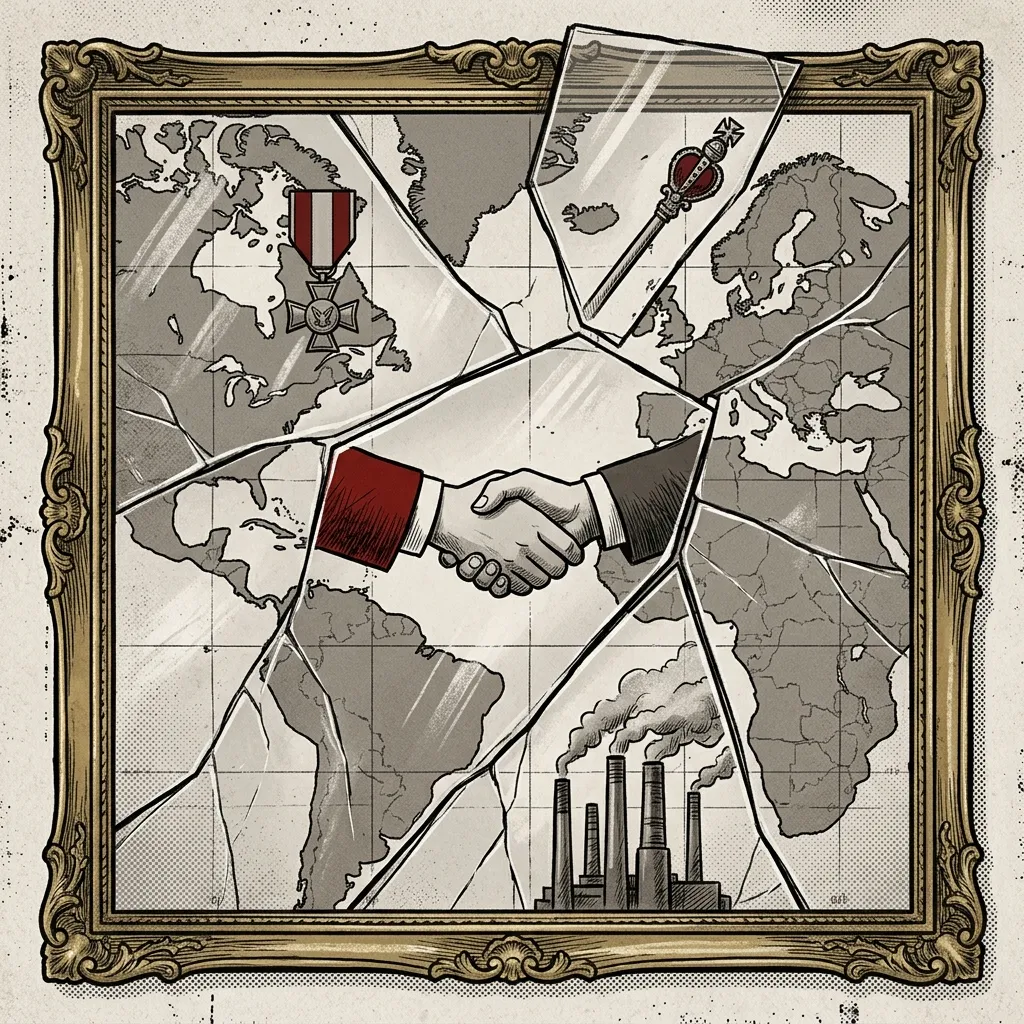
King Charles III and Queen Camilla's state visit to the United States served as a diplomatic event interpreted through distinct regional and political prisms. Coverage ranged from analyzing the strategic significance of the Anglo-American alliance to highlighting ceremonial details and framing the visit within the context of contemporary geopolitical tensions. The monarch's public addresses, particularly to the U.S. Congress and at the White House, became focal points for divergent narratives about the purpose and subtext of the tour.
The Hindu from India framed the visit as a significant diplomatic moment aimed at reinforcing bilateral bonds during a turbulent period. The outlet reported that King Charles acknowledged "times of great uncertainty" in a speech to Congress, using the occasion of the 250th anniversary of American independence to express gratitude and highlight enduring ties. This perspective emphasizes the visit's role in strategic alliance management, subtly underscoring its importance for global stability without delving into specific political controversies.
Le Monde, representing a mainstream European viewpoint, provided a similar but more pointed analysis of the Congressional address. The French publication reported that while maintaining a consensual tone, the King urged the United States not to "turn inward." It specified that he described an "unyielding resolve" as necessary to defend Ukraine and emphasized the importance of the rule of law and environmental protection. This framing presents the monarch as delivering a gentle but firm diplomatic nudge to American policymakers on key transatlantic priorities, casting the visit as a bridge for shared values amid potential isolationist tendencies.
In stark contrast, RT, the Russian state-affiliated outlet, centered its entire report on the King's interactions with President Donald Trump, portraying the visit as occurring amid a "standoff in historically close US-UK ties." It extensively covered a joke made by Charles about the controversial demolition of the White House East Wing for a new ballroom, comparing it to the British burning of the building in 1814. The source also highlighted what it called a "subtle rebuke" and "subtle swipe" from the King regarding Trump's criticism of NATO, linking it to the bloc's refusal to support a U.S. "war on Iran." This narrative focuses on friction, diplomatic barbs, and underlying tensions within the alliance.
Clarin from Latin America offered a more granular, event-based coverage. One report detailed the royal couple's visit to the September 11th memorial in New York, noting the laying of a floral tribute on the 25th anniversary of the attacks and a subsequent visit to a Harlem farm. A separate article focused exclusively on the lavish details of the state dinner at the White House, describing items from gold tableware to a chocolate cake shaped like a beehive made with White House honey. This framing treats the visit as a series of ceremonial and human-interest events, with less emphasis on high-political speechmaking.
Daily Maverick from Africa provided the most minimal context, including the visit in a global photo roundup described with words like "moving, tragic, surprising, inspiring." This places the event within a broader tapestry of world happenings, suggesting its newsworthiness is visual and symbolic rather than primarily political or analytical.
Framing the Conflict The core divergence lies in whether sources frame the visit as a reaffirmation of unity or a platform for managing discord. The Hindu and Le Monde narratives align, both seeing the King's speeches as reinforcing shared values and strategic partnership, though Le Monde is more explicit about the policy advice being given. RT's narrative directly conflicts with this, constructing a story of diplomatic tension and veiled criticism, especially regarding NATO and U.S. leadership. Clarin and Daily Maverick sidestep this political dichotomy altogether, focusing instead on ceremonial symbolism and visual documentation.
In synthesis, the visit acts as a Rorschach test for global media. For outlets invested in a stable Western alliance, it was an occasion to celebrate enduring bonds and offer gentle counsel. For a source aligned with a geopolitical rival like Russia, the same events provided material to highlight cracks in that alliance and critique U.S. leadership. For others, the historical pageantry and logistical details of a state visit were the story itself, separate from the underlying political currents analyzed elsewhere.