
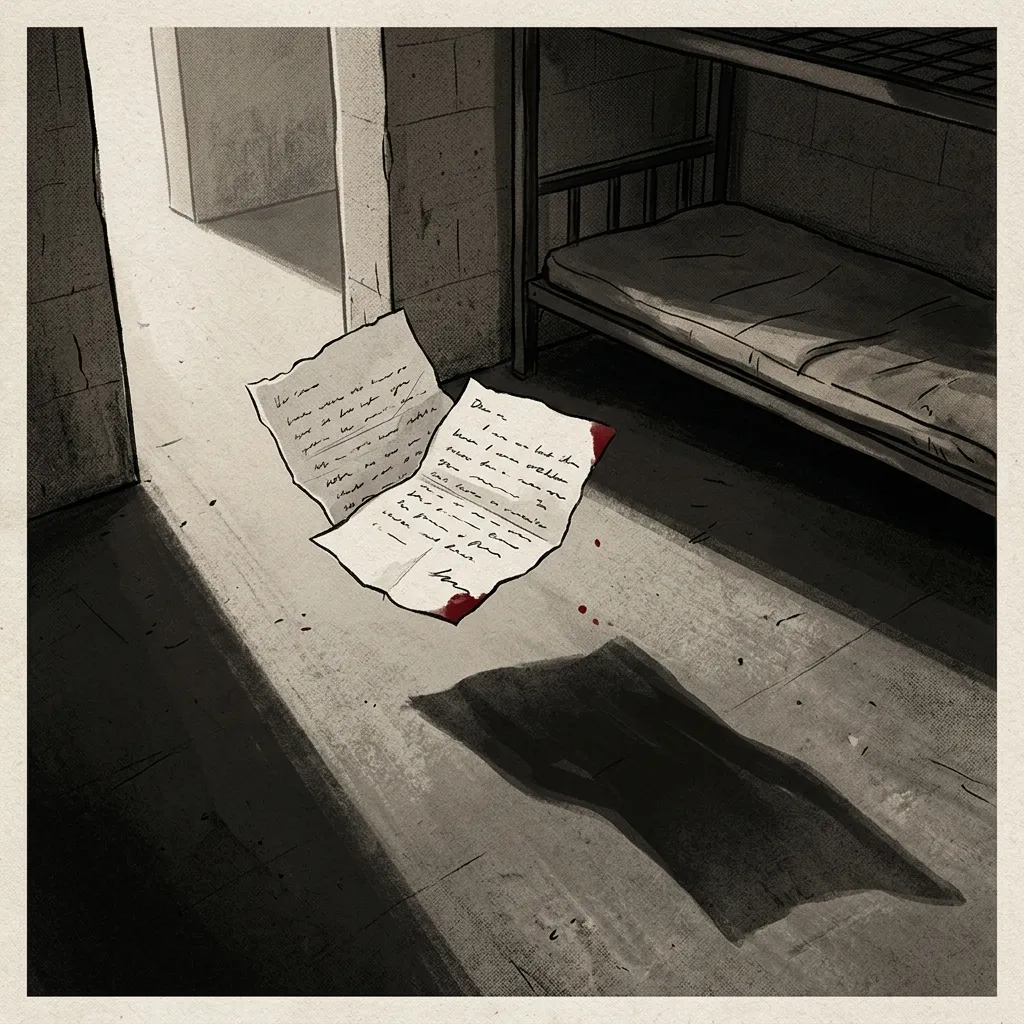
A U.S. judge has released a handwritten note purportedly written by Jeffrey Epstein, which his former cellmate claims to have discovered following an earlier suicide attempt. The note's authenticity remains unverified, and its release adds another layer to the ongoing scrutiny surrounding the circumstances of the financier's death while awaiting trial on sex trafficking charges.
The Hindu reports that the note was released by a judge and that it was found by Epstein's cellmate after what the publication describes as a 'suspected suicide attempt' in jail. The Indian outlet quotes the content of the note directly: 'They investigated me for month — found nothing!!!' This framing presents the note as a piece of evidence emerging from a judicial process, with the headline focusing on the cellmate's claim and the judge's action. The report situates the note within the timeline of Epstein's first suspected suicide attempt, implying it is part of a sequence of events leading to his eventual death.
BBC News adopts a more cautious tone, explicitly stating in its headline that the document is a 'purported suicide note.' The British broadcaster immediately adds a verification disclaimer, noting that the note 'has not been verified by the BBC.' Its report centers on the claim made by Epstein's former cellmate but separates the claim from established fact. The BBC's framing emphasizes the unverified nature of the document and the act of its release by a U.S. judge, presenting it as a development in the story rather than a confirmed piece of evidence.
Le Monde provides contextual detail, specifying that the cellmate said he found the letter 'in a book following a failed suicide attempt by the disgraced financier, several weeks before his eventual August 2019 death.' The French newspaper's description uses the terms 'sex offender' and 'disgraced financier' to characterize Epstein, embedding the note's release within the narrative of his criminal status and ultimate demise. Le Monde's report links the note to a specific failed attempt and clarifies the temporal gap between that event and Epstein's death, offering a more structured chronology than the other sources.
Framing the Note's Significance The three sources converge on the basic facts: a note has been released by a court; a cellmate claims it was written by Epstein and found after a suicide attempt. However, their framing diverges in tone and emphasis. The Hindu presents the note's content as a direct insight, quoting it without an immediate verification warning. BBC News prioritizes journalistic caution, making the unverified status a central element of its report. Le Monde integrates the event into a broader biographical and legal narrative of Epstein, emphasizing his status and the timeline. All sources avoid drawing conclusions about the note's meaning or its implications for the investigations into Epstein's death, reporting instead on its emergence as a new piece of information in the public domain.
The release of this document, regardless of its authenticity, reintroduces questions about Epstein's state of mind and the conditions of his incarceration prior to his death. It represents a procedural development in the posthumous handling of the case, where even unverified artifacts become subject to judicial disclosure and public scrutiny. The note's message of 'They investigated me for month — found nothing!!!'—as reported by The Hindu—potentially speaks to Epstein's perception of the investigations against him, but as BBC News underscores, this interpretation remains speculative without verification. The broader implication is that the Epstein case continues to generate ancillary disclosures that sustain public and media interest, even years after his death, while official conclusions about the circumstances of that death remain a subject of controversy and unresolved inquiry.