
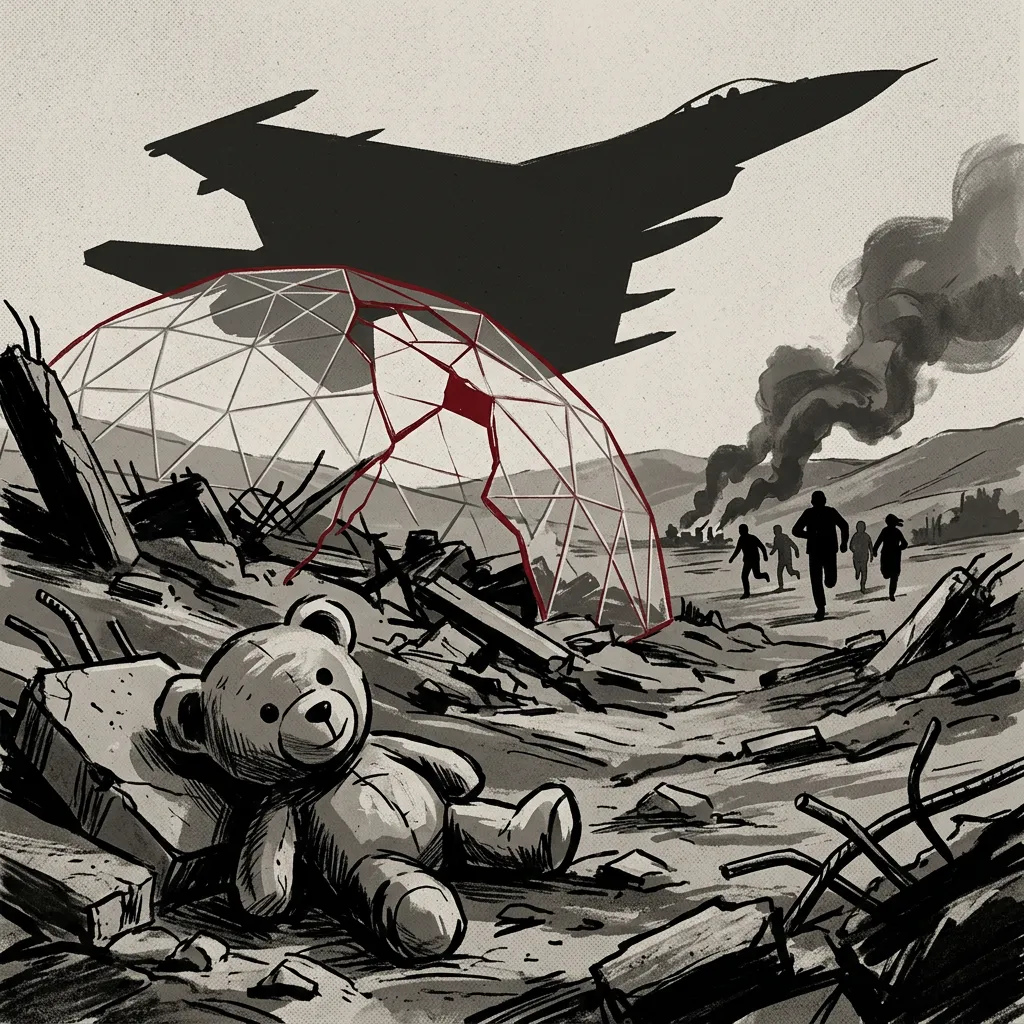
A series of Israeli military strikes in southern Lebanon have resulted in multiple civilian casualties, according to Lebanese authorities, occurring within a broader regional context of ongoing hostilities and diplomatic efforts. The reported deaths, which include children, have drawn condemnation from Lebanese officials and highlight the persistent volatility along the Israel-Lebanon border, even as international actors work to prevent a wider conflict.
European Reporting: Contextualizing the Incident The BBC, reporting from a European perspective, frames the event as a violation of a fragile ceasefire. Its report centers on the casualty figures provided by Lebanon's health ministry, specifying at least nine fatalities, among them two children. The language used—'deadly Israeli strikes on southern Lebanon despite ceasefire'—implicitly establishes a timeline and a breach of an understood agreement. The report's structure suggests a focus on the immediate humanitarian outcome of the strikes and their potential to disrupt a tenuous calm. The BBC's narrative tends to present the incident as a discrete, escalatory event within a cycle of border clashes, emphasizing the human cost and the challenge to diplomatic efforts aimed at de-escalation.
Indian Reporting: Emphasizing Official Condemnation The Hindu's coverage, from an Indian mainstream viewpoint, leads with the Lebanese governmental accusation, as seen in its headline: 'Lebanon says Israeli strikes kill 9 people, including 2 children.' This framing places the authority of the statement with the Lebanese state. The article provides specific context not mentioned in the other source, detailing that President Joseph Aoun made these remarks to a delegation from the International Federation of Red Cross and Red Crescent Societies. It quotes Aoun condemning 'continuing Israeli violations' in south Lebanon. This inclusion shifts the narrative slightly from a single incident to a pattern of actions, as articulated by a head of state in a forum focused on humanitarian organizations. The report thus blends the immediate news of the strikes with the political and diplomatic reaction from Lebanon's highest office, suggesting a deliberate effort to internationalize the grievance.
Framing the Conflict: Ceasefire Breach vs. Pattern of Violations The two sources align on the core facts: Israeli strikes occurred in southern Lebanon, and Lebanese authorities report nine deaths, including two children. However, their framing diverges in emphasis and contextual scope. The BBC narrative is anchored to the concept of a 'ceasefire,' framing the strikes as an action that breaks a specific, presumably agreed-upon, period of calm. This implies a measurable escalation from a baseline of non-hostility. In contrast, The Hindu's account, through the reported words of President Aoun, frames the event not as an isolated breach but as part of 'continuing Israeli violations.' This framing suggests a state of persistent aggression rather than a lapse from peace, embedding the incident within a longer-standing pattern of conduct. The BBC highlights the incident's impact on a diplomatic process (the ceasefire), while The Hindu highlights the Lebanese state's political condemnation and its appeal to international humanitarian bodies.
Synthesis and Broader Implications The reporting underscores the precarious situation on the Israel-Lebanon border, where localized strikes can quickly draw high-level political condemnation and threaten broader regional stability. The convergence on civilian child casualties points to a significant humanitarian dimension that both sources recognize. The divergence in framing—between a ceasefire violation and a continuing pattern of violations—reflects different editorial focuses: one on the disruption of a specific diplomatic or military understanding, and the other on the accumulating political grievances of a sovereign state. These reports collectively illustrate how a single military action is interpreted through different lenses: as an escalatory event in a tense standoff, or as the latest example in an ongoing narrative of border infringement and civilian suffering. The attention given to President Aoun's direct condemnation in one source indicates an effort to document the formal state-level response, which may influence international perception and diplomatic pressure.