
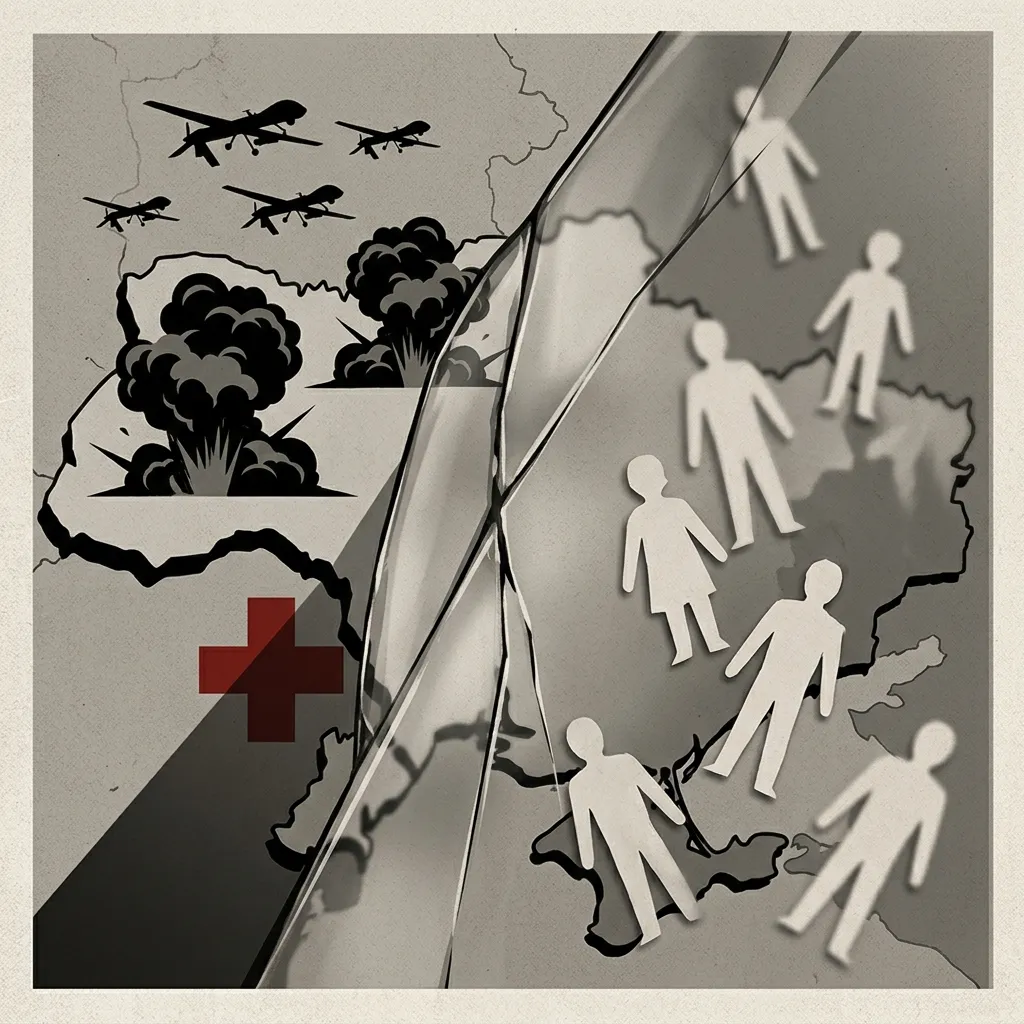
Reports from Lebanon describe a series of lethal Israeli military actions over a 24-hour period, though major news sources present significantly different casualty figures and narrative emphasis. While all accounts agree that Israeli airstrikes and drone attacks resulted in civilian and medical personnel deaths, the scale of the reported toll and the framing of the broader conflict context vary sharply between regional and international outlets.
Al Jazeera, a major Middle Eastern broadcaster, frames the incident within a pattern of escalating violence following a nominal cessation of hostilities. Its report states that Israeli attacks have intensified in southern Lebanon, leading to the deaths of 51 people within a single day. A central element of its narrative is the specific killing of medical personnel among the casualties. Furthermore, Al Jazeera provides a cumulative toll, asserting that 552 people have been killed since what it pointedly refers to as the 'ceasefire' began on April 16, using quotation marks to cast doubt on the legitimacy or effectiveness of that truce. This framing presents the events as part of a sustained and deadly Israeli offensive that continued unabated after a declared peace initiative.
In contrast, Africanews, an international service based in Africa, offers a more localized and temporally constrained account. It reports on specific strike incidents: three Israeli drone strikes on vehicles south of Beirut that killed four people, and a separate series of airstrikes in southern Lebanon that killed at least 13. Its narrative includes poignant detail, noting that among the 13 dead were a man and his 12-year-old daughter. Africanews attributes these figures to official Lebanese sources, namely state media and the Health Ministry. Its report is focused on the discrete events of a single day, without embedding them in a broader statistical narrative about the conflict's trajectory since April. The mention of a child victim serves to underscore the civilian cost of the operations.
Framing the Conflict The primary divergence lies in the scope and context provided. Al Jazeera employs a macro-level, contextual framing, using high casualty numbers (51 in a day, 552 since April 16) to argue that Israeli military action constitutes a severe and ongoing escalation, implicitly questioning the sincerity of the ceasefire. Its emphasis on medics being among the dead carries the connotation of attacks on protected humanitarian actors. Africanews, meanwhile, employs a micro-level, incident-based framing. It sticks closely to the facts of specific strikes as reported by official channels, highlighting individual tragedies like the death of a father and daughter. It avoids the larger polemical context about the ceasefire's status, presenting a snapshot of violence without explicitly linking it to a wider pattern of intensification.
Concluding, the synthesis of these reports reveals a conflict narrated through different lenses: one of systemic military escalation and humanitarian law concerns, versus one of tragic but discrete violent incidents. The disparity in the core casualty figure—51 versus at least 17—itself becomes a point of journalistic divergence, requiring readers to note the source of each statistic. Al Jazeera's report suggests a broader, sustained campaign, while Africanews documents specific acts of violence. This difference shapes the implied narrative, from one of a failing peace process to one of ongoing, deadly clashes.