
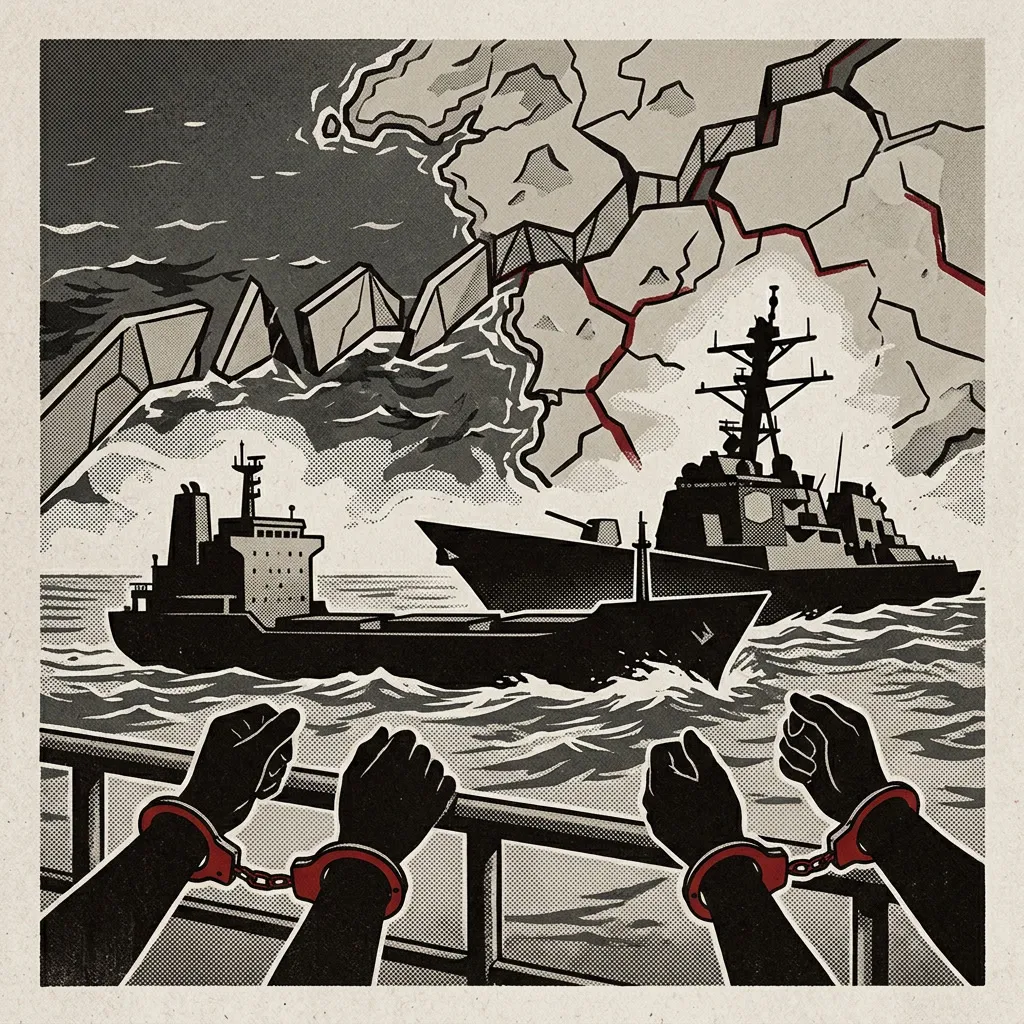
Israel has moved to deport two foreign activists detained after its military intercepted a humanitarian aid flotilla bound for the Gaza Strip in late April. The activists, Brazilian national Thiago Ávila and Spanish-Swedish citizen Saif Abukeshek, were taken into custody following the seizure of their vessel in international waters. While Israeli authorities confirm the deportation process, reporting on the event varies significantly across regions, with differences in the description of the flotilla's mission, the legal status of the detention, and the diplomatic reactions it provoked.
Latin American Perspective: Focus on National Citizen Folha de S.Paulo, a major Brazilian newspaper, centers its reporting on the status of the Brazilian citizen involved. The publication notes the Israeli Foreign Ministry's statement confirming the deportation of Thiago Ávila and his fellow activist. It frames the event as a continuation of a previous incident, linking directly to its own prior coverage of the flotilla's capture in April, where it reported Israel had detained four Brazilians. The report is factual but implicitly personalizes the story for a Brazilian audience by highlighting the nationality of one detainee. It does not delve into the legal controversies surrounding the interception or detail the diplomatic fallout, keeping the narrative tightly focused on the state's action against a citizen.
European Perspective: Legal and Diplomatic Dispute Politico Europe provides a more detailed account that emphasizes the legal and diplomatic tensions ignited by the incident. Its reporting, sourced from human rights group Adalah, frames the activists' pending release as a development following detention. Crucially, it highlights the accusation from Spain's Foreign Minister, José Manuel Albares, who characterized Israel's actions as an "illegal detention in international waters." This framing positions the event within a discourse of international law and state sovereignty. The report also provides context on the flotilla's origin and mission, naming it the 'Global Sumud Flotilla' and noting its launch from Spain. The narrative is one of a contentious interstate dispute, with the human rights organization monitoring the situation to ensure the activists' release.
South Asian Perspective: Procedural Update The Hindu's report, while confirming the core facts of the impending release and deportation, presents the story in a more concise, procedural manner. It cites the rights group's announcement as its primary source, framing the news as an update on the detainees' status after "over a week of Israeli detention." The tone is neutral and factual, with less emphasis on the geopolitical or legal ramifications highlighted in the European report. It does not recount the Spanish foreign minister's accusations or delve into the circumstances of the interception, presenting the event more as a discrete administrative outcome following a security incident.
Framing the Conflict The regional framings reveal how the same event is contextualized through different national and editorial lenses. The Latin American source personalizes the story, making it about a citizen's encounter with a foreign state. The European coverage contextualizes it within a broader narrative of humanitarian activism, international law violations, and diplomatic friction between EU member states and Israel. The South Asian report treats it as a straightforward news update on a foreign policy event, with less embedded commentary or connection to wider regional tensions. All sources agree on the basic sequence: interception, detention, and planned deportation. However, they diverge on what aspects of that sequence are most newsworthy and what broader conflicts they illustrate.
Synthesis of Broader Implications The reporting discrepancies underscore the multifaceted nature of the ongoing Gaza conflict and how it spills into international waters and diplomacy. The flotilla incident is not merely a story about activists being detained; it is a touchpoint for debates on naval blockades, the legality of intercepting vessels in international waters, and the challenges of delivering aid to Gaza. The strong reaction from Spain, as reported in European media, signals continued European concern over Israeli military actions beyond its immediate borders. Meanwhile, the focused reporting from Brazil shows how such global incidents resonate domestically when nationals are involved. The consistent endpoint—deportation—suggests Israel's primary aim is to prevent the breach of its maritime blockade, a policy that continues to generate international humanitarian and legal challenges, as reflected in the divergent regional narratives.