
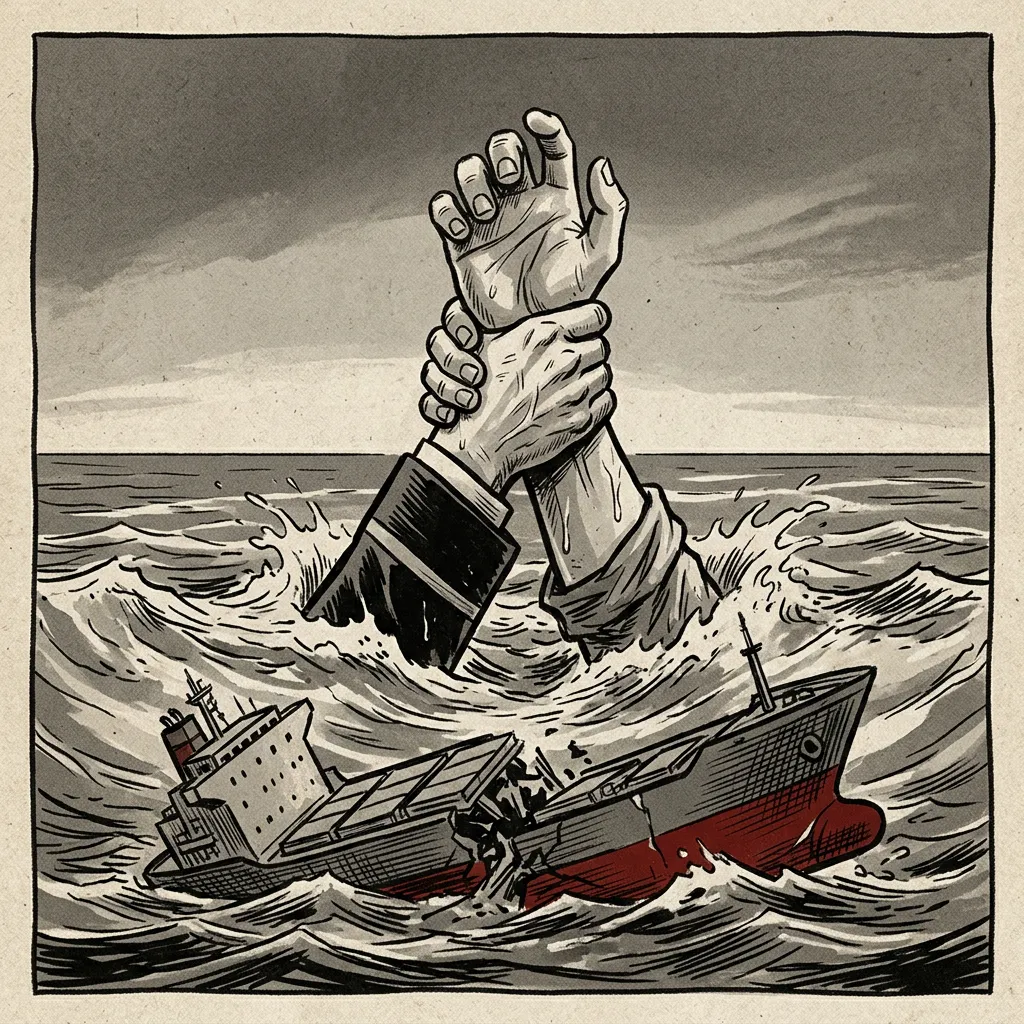
The interception by Israeli naval forces of the 'Global Sumud Flotilla,' a civilian-led attempt to break the maritime blockade of Gaza, has ignited an international dispute centered on legality and the treatment of detained activists. While Israel asserts its right to enforce a naval blockade for security reasons, other nations and human rights organizations have condemned the operation, alleging unlawful detention and mistreatment of those captured. The incident has drawn in governments from Europe and Latin America, highlighting the enduring geopolitical tensions surrounding Gaza and the broader Israeli-Palestinian conflict.
Al Jazeera's coverage frames the event primarily through a lens of international law and state sovereignty. The Middle Eastern outlet focuses its report on the question posed in its headline: the legality of Israel's interception. It highlights the Spanish government's characterization of the detention of two activists as an 'abduction,' a term that carries strong connotations of illegitimacy and criminality under international law. By leading with this legal question and the direct accusation from a European Union member state, Al Jazeera situates the narrative within a framework of potential Israeli violations of international norms, implicitly challenging the official Israeli security justification.
Folha de S.Paulo, reporting from a Latin American perspective, shifts the emphasis from abstract legality to specific allegations of human rights abuses. The Brazilian newspaper details accusations from the Israeli NGO Adalah, which claims that detained activists, specifically naming Brazilian national Thiago Ávila and Spanish-Palestinian Saif Abu Keshek, suffered mistreatment at the hands of Israeli security forces. The report notes the Israeli government's denial of these allegations. Folha's framing centers on the welfare of individuals, particularly a Brazilian citizen, making the story one of potential consular concern and human rights observance. This focus personalizes the conflict and directs attention to the conditions of detention following the interception.
Framing the Conflict
The divergence in reporting underscores two distinct but overlapping narratives about the same event. Al Jazeera constructs a narrative of state power versus international law, emphasizing the diplomatic fallout and the challenge to Israel's actions from other sovereign nations. The use of 'abduction' directly contests Israel's narrative of a lawful interdiction. Folha de S.Paulo, conversely, builds a narrative of state authority versus individual rights. Its focus is on the alleged abuse of prisoners in custody, a post-interception story that questions Israel's adherence to human rights standards in its treatment of detainees. While Al Jazeera asks if the act of stopping the flotilla was legal, Folha asks if the subsequent conduct was humane.
Both reports, by highlighting the statements of external actors (Spain, an Israeli NGO) and downplaying the official Israeli position, create a narrative where Israel's actions are under scrutiny. Neither source extensively details Israel's stated security rationale for the blockade or the interception, which would typically include references to preventing the smuggling of weapons to Hamas. This omission in the provided excerpts shapes a discourse where Israel is primarily in a defensive, explanatory posture against accusations, rather than proactively justifying a security policy.
In conclusion, the flotilla incident has become a new flashpoint, refracting the long-standing Gaza blockade through contemporary lenses of legal accountability and human rights advocacy. The international reactions reported—from formal governmental accusations to NGO allegations of abuse—suggest the episode will further strain Israel's diplomatic relations with certain quarters and fuel existing debates over its policies. The synthesis of these reports reveals a conflict where the facts of the interception are less disputed than their legal characterization and humanitarian consequences, with different regional media prioritizing different facets of this multifaceted dispute.