
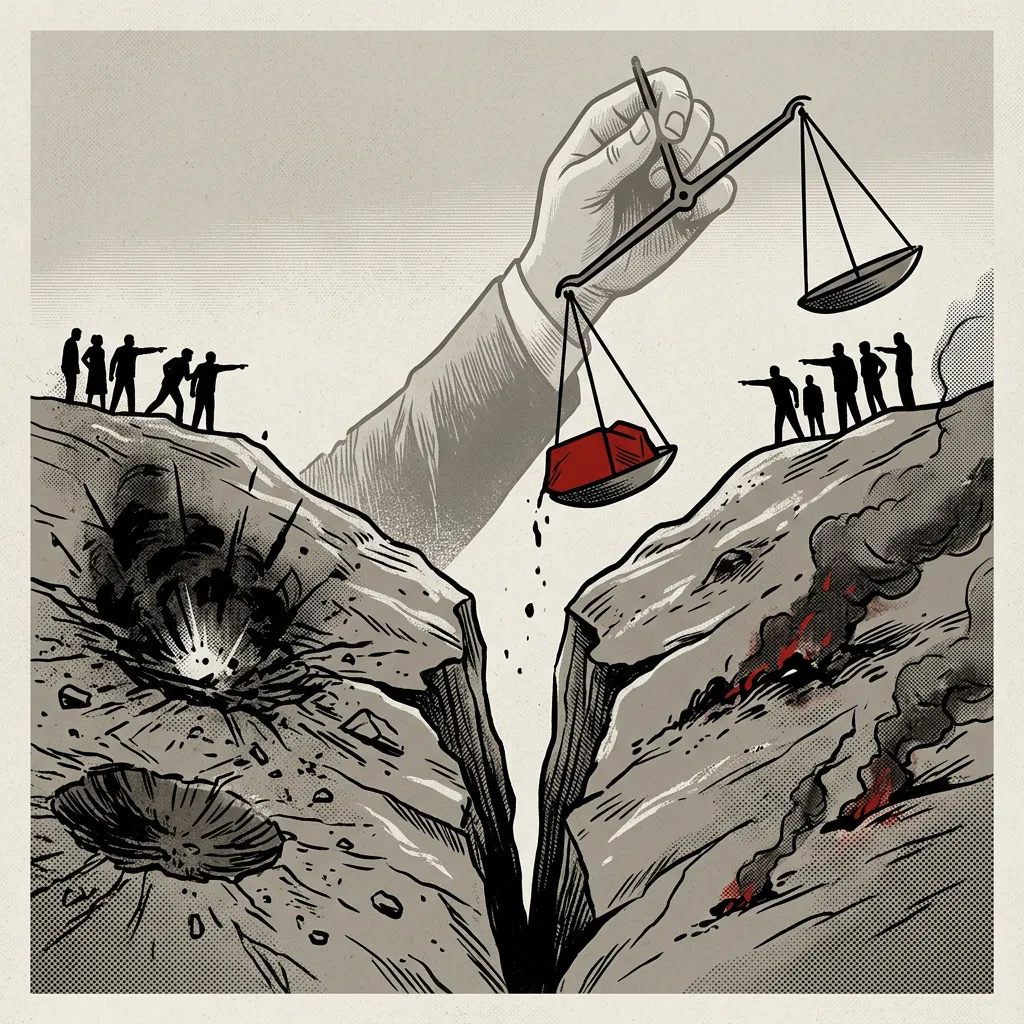
A significant escalation of hostilities between Israel and Lebanon, alongside diplomatic friction between the United States and its allies, is being framed in starkly different terms by international media. Reports focus on the scale of Israeli military action in Lebanon, the involvement of Iran and Hezbollah, and the complex role of the US in both facilitating and attempting to restrain the conflict. Divergences emerge in the portrayal of US objectives, the characterization of Israeli operations, and the historical context of regional tensions.
Russian state media outlet RT provides a detailed, critical narrative that links the current conflict to broader US geopolitical strategy and historical hypocrisy. One RT report frames the Israeli assault on Lebanon as extending beyond countering Hezbollah to reflect deeper ambitions and internal pressures. It emphasizes high civilian casualties, reporting over 250 deaths in the first day, and questions Israel's stated military objectives by noting strikes on urban infrastructure like neighborhoods, schools, and hospitals. The report positions the conflict as a direct pressure point on US-Iran negotiations, arguing that Washington seeks to diminish Tehran's influence but is struggling to control its ally, Israel. It cites sources like Axios and the New York Post to state that US President Donald Trump pressed Israeli leader Benjamin Netanyahu for restraint, but that Israel's operations continued unabated, creating a 'multi-kilometer buffer zone' in southern Lebanon. Another RT article injects historical context, arguing that the current crisis over Iran's nuclear program is rooted in Western reversal, noting that the US and Israel initially helped establish Iran's nuclear project before later opposing it. This framing paints Western non-proliferation efforts as inherently duplicitous.
A separate RT report shifts focus to intra-Western tensions, highlighting UK Prime Minister Keir Starmer's admission of 'cracks' in Western alliances following his refusal to join the US-led war on Iran. It notes Trump's criticism of Starmer, whom he labeled 'no Winston Churchill,' framing the discord as a significant strain on traditional transatlantic unity. This narrative suggests a fragmented Western front, complicating a coherent diplomatic response to the Lebanon-Israel escalation.
In contrast, Middle Eastern broadcaster Al Jazeera focuses on a specific diplomatic maneuver, reporting that Lebanon's President Joseph Aoun is under US pressure to meet with Israel's Benjamin Netanyahu during a visit this month. This framing presents the US as actively, and potentially recklessly, engaging in high-stakes diplomacy that could 'inflame tensions' rather than cool them. It highlights the precarious position of Lebanese leadership caught between domestic constituencies and external pressure, a dimension less emphasized in the RT coverage which focuses more on military action and US-Iran dynamics.
Framing the Conflict The sources collectively depict a multi-layered crisis but assign blame and narrative focus differently. RT constructs a narrative of US-Israeli culpability and strategic failure. Its reporting on Lebanon heavily emphasizes civilian suffering and questions the legitimacy of Israeli targets, implicitly critiquing what it portrays as indiscriminate warfare. It consistently links the Lebanon theater to the US-Iran rivalry, suggesting Israeli actions are either a deliberate tool to sabotage diplomacy or a force the US cannot control. The historical narrative on Iran's nuclear program serves to undermine the moral and factual premises of US policy, suggesting hypocrisy and manufactured crisis.
Al Jazeera's brief report offers a different angle, focusing on diplomatic pressure rather than military analysis. It frames US involvement as a potential source of further instability through its push for a highly sensitive leaders' meeting, pointing to the fragile political realities within Lebanon itself. This contrasts with RT's portrayal of the US as primarily a military enabler or an ineffective restrainer.
The synthesis of these reports reveals a conflict where military action and diplomacy are deeply intertwined and perceived through competing lenses. The US is simultaneously depicted as a war participant (via its support for Israel and conflict with Iran), a diplomatic broker (pushing for Lebanon-Israel talks and negotiating with Iran), and a source of alliance discord (as per the UK rift). Israel's campaign is framed either as a necessary counter-terror operation or as a disproportionate assault with geopolitical ulterior motives. The role of Iran and its proxy Hezbollah is central, portrayed either as the root cause of regional aggression or as actors responding to external threats and broken diplomatic promises.
In conclusion, the reporting underscores the profound challenges in achieving de-escalation. The narratives suggest a cycle where military action undermines diplomacy, and diplomatic pressures are either insufficient or themselves destabilizing. The apparent strains within Western alliances, as highlighted, further complicate any unified international response. The diverging historical framings, particularly regarding the origins of Iran's nuclear program, indicate that the conflict is rooted in deeply contested narratives of responsibility and betrayal, making a resolution based on mutual understanding exceptionally difficult.