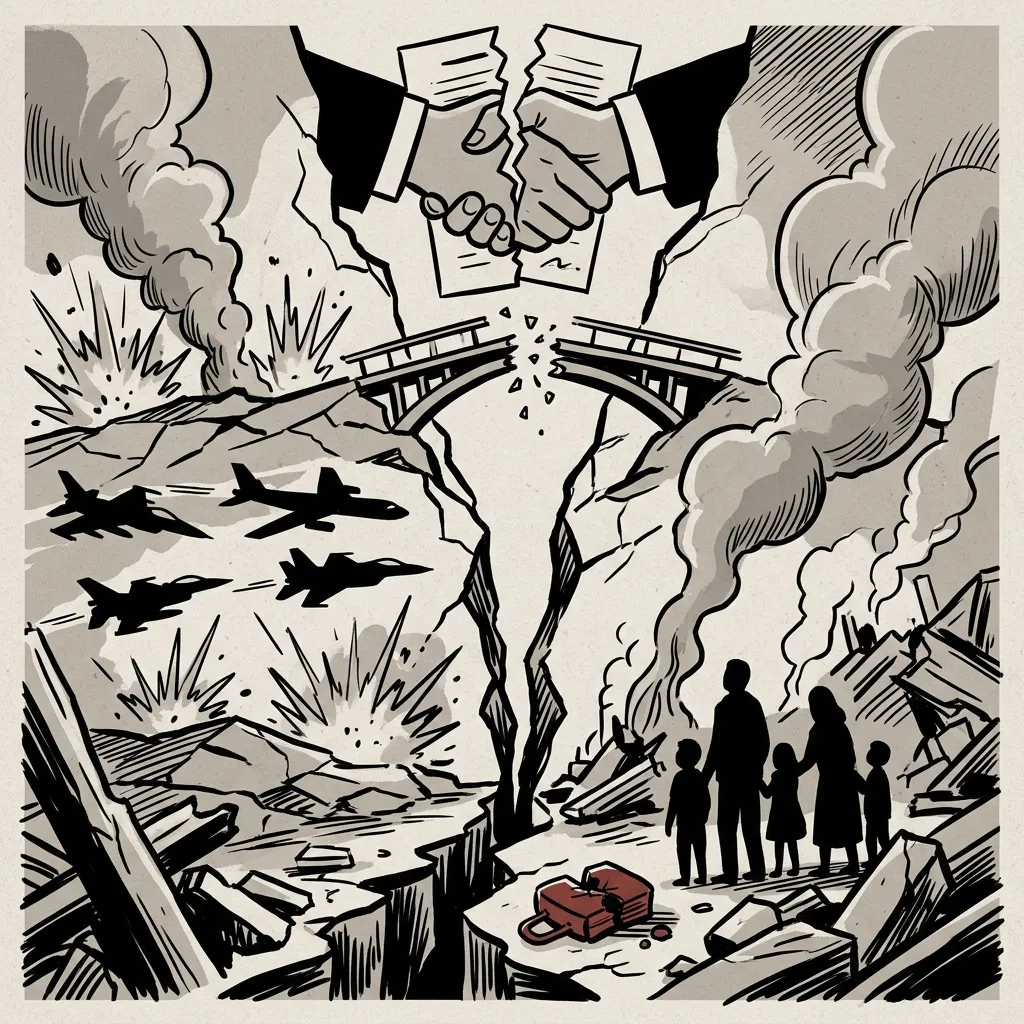
Deadly Strikes Mark Ceasefire's Deadliest Day
A US-mediated ceasefire between Israel and Lebanon, which began April 16 and was extended until mid-May, is showing severe strain as Israeli military operations continue in southern Lebanon. On Sunday, Israeli strikes killed 14 people, including two women and two children, according to Lebanon's Health Ministry—the deadliest single day since the truce began. The Hindu and Al Jazeera both report this toll, with Al Jazeera noting the strikes forced new displacement. Since the ceasefire's start, at least 36 people have been killed by Israeli strikes, according to an AFP tally cited by The Hindu.
The same day, Hezbollah drone attacks killed a 19-year-old Israeli soldier, Sergeant Idan Fooks, and wounded six others near the occupied Lebanese border town of Taybeh, according to RT and the IDF. RT reports that when a helicopter arrived to evacuate the wounded, Hezbollah launched two additional drones—one intercepted, another exploding near troops and aircraft without further casualties. Video footage of the incident circulated widely online.
Competing Narratives on Ceasefire Violations
Israeli Prime Minister Benjamin Netanyahu accused Hezbollah of "disintegrating the ceasefire," according to Clarin, claiming Israeli forces had killed 46 suspected Hezbollah militants in recent weeks. The BBC reports Netanyahu ordered the army to "vigorously attack" Hezbollah in Lebanon. Israeli military statements, cited by The Hindu, described projectiles launched from Lebanon as "blatant violations of ceasefire understandings."
Hezbollah and Lebanese sources present a different picture. Al Jazeera reports that Hezbollah rejects Netanyahu's allegations that it is undermining the ceasefire. RT notes that despite the truce, Israeli troops have continued operations north of the Litani River, expanding what Israel calls a "buffer zone" stretching approximately 10 kilometers into Lebanese territory. Israel also issued forced evacuation orders for seven additional southern Lebanese towns, according to RT and Al Jazeera.
Hezbollah Rejects Direct Israel-Lebanon Negotiations
Hezbollah leader Naim Qassem announced the group would not respect any agreement reached through direct Lebanon-Israel talks, according to The Hindu and Clarin. The Hindu reports that Lebanese and Israeli ambassadors to the United States held two meetings in Washington in recent weeks—the first such direct talks in decades. Clarin quotes Qassem calling dialogue with Israel a "gratuitous, humiliating, and unnecessary concession," adding that Hezbollah "will not renounce our weapons." Al Jazeera's opinion section argues that achieving Lebanese sovereignty and Hezbollah demilitarization requires credible political transition, not military pressure.
Journalist Casualties and War Crimes Accusations
RT provides detailed coverage of an Israeli strike that killed Lebanese journalist Amal Khalil on Wednesday. Colleague Zeinab Faraj, wounded in the attack, described from her hospital bed how a drone struck their vehicle in al-Tiri village. RT reports Khalil is the ninth journalist killed by Israel in Lebanon since the conflict reignited, according to Lebanese authorities. The outlet notes that Lebanese, Iranian, and Russian officials condemned the killing, with Russia's Foreign Ministry calling it a "brutal killing" with "no justification." The IDF denied targeting journalists and said the incident was under review. This journalist casualty story does not appear in coverage from Al Jazeera, The Hindu, BBC, or Clarin in the provided sources.
Destruction and Displacement
Al Jazeera reports that satellite imagery reveals massive Israeli military damage to southern Lebanese towns. The outlet also notes that in Gaza, Israel has violated what it terms the "ceasefire" more than 2,400 times, though this Gaza reference appears only briefly in the provided sources focused primarily on Lebanon.
Divergent Emphasis on Causation
Sources differ significantly in how they frame responsibility for the ceasefire's collapse. BBC and The Hindu emphasize Netanyahu's orders to attack and Israeli claims of Hezbollah violations. RT and Al Jazeera focus more extensively on Israeli military expansion into Lebanese territory, forced evacuations, and civilian casualties. Clarin presents both Israeli accusations against Hezbollah and Hezbollah's rejection of negotiations relatively neutrally. The Hindu provides the most balanced account of mutual accusations, noting both Israeli claims of projectiles from Lebanon and the continuation of Israeli strikes.