
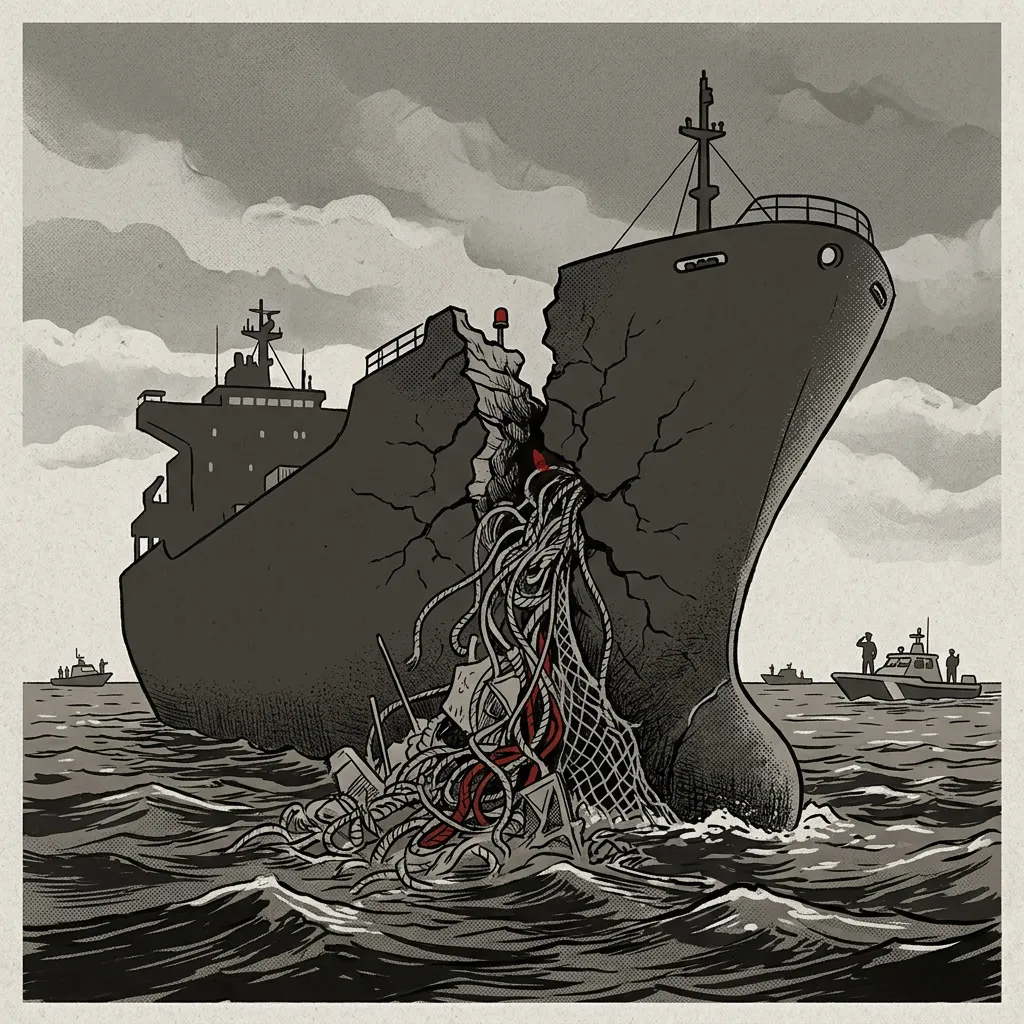
The Israeli military's interception of a humanitarian flotilla bound for the Gaza Strip has resulted in the detention of scores of international activists, with conflicting narratives emerging from the involved parties and regional media. Israeli authorities state they peacefully redirected the vessels, while flotilla organizers and some national governments allege the activists were forcibly seized in international waters. The incident has drawn attention to the ongoing blockade of Gaza and the methods used to enforce it, with reports highlighting the detention of citizens from multiple countries, including Brazil and Argentina.
Initial reports from Israel's Foreign Ministry, as cited by The Hindu, framed the operation as a peaceful transfer. Officials stated that approximately 175 activists from more than 20 boats were being escorted to Israeli territory. The ministry released a video purporting to show activists aboard an Israeli naval vessel, suggesting a non-violent procedure. However, the same article notes that flotilla organizers countered this narrative, accusing Israel of having "kidnapped" 211 individuals. This stark contrast in terminology—"escorted" versus "kidnapped"—establishes the core dispute over the legality and nature of the interception.
Latin American coverage provides specific national angles and details absent from the initial Israeli statement. Folha de S.Paulo reports that four Brazilian nationals were among those captured. The Brazilian article specifies the location of the interception as being in international waters near the Greek island of Crete, a detail that carries significant legal implications. By emphasizing the "capture" of citizens in international waters, the report implicitly questions the jurisdictional authority of the Israeli action. Similarly, Clarín reports the involvement of Argentine citizens, identifying them as militants from the Left Front political party. This source adds operational concerns, noting allegations that engines on some boats were disabled, leaving them adrift, and that a protest march was held in Buenos Aires demanding the detainees' release.
Framing the Conflict The framing of the event diverges sharply along institutional versus activist lines. The official Israeli narrative, as disseminated by its Foreign Ministry, focuses on order and procedure, presenting the interception as a necessary maritime security measure conducted without incident. The release of supporting video is part of this effort to control the visual narrative. In direct opposition, the flotilla organizers and the media reporting their claims frame the event as an act of state piracy and the illegal detention of peaceful humanitarian volunteers. The Latin American sources deepen this activist narrative by personalizing it, highlighting the plight of specific nationals and raising practical fears about their safety and the condition of their vessels.
A critical divergence lies in the reported location: international waters versus undisputed Israeli jurisdiction. The assertion by Folha de S.Paulo and Clarín that the interception occurred in international waters challenges the legal foundation of Israel's action, painting it as an extraterritorial overreach. Israel's statement, conversely, omits any mention of location, focusing instead on the outcome—the activists being brought to Israel. Furthermore, the humanitarian purpose of the flotilla is a central pillar of the organizers' narrative, while it is notably absent or downplayed in the initial Israeli characterization, which describes only "activists" on "boats."
In conclusion, this incident replays a familiar pattern of confrontation around the Gaza blockade, but with renewed international participation from Latin America. The conflicting accounts—between state authority and civilian protest, between "detention" and "kidnapping," between a security operation and a humanitarian mission—reflect the entrenched positions in the Israeli-Palestinian conflict. The involvement of citizens from multiple nations ensures the episode will generate diplomatic inquiries and continued scrutiny of Israel's enforcement of its maritime blockade, keeping the legal and humanitarian debates firmly in the international spotlight.