
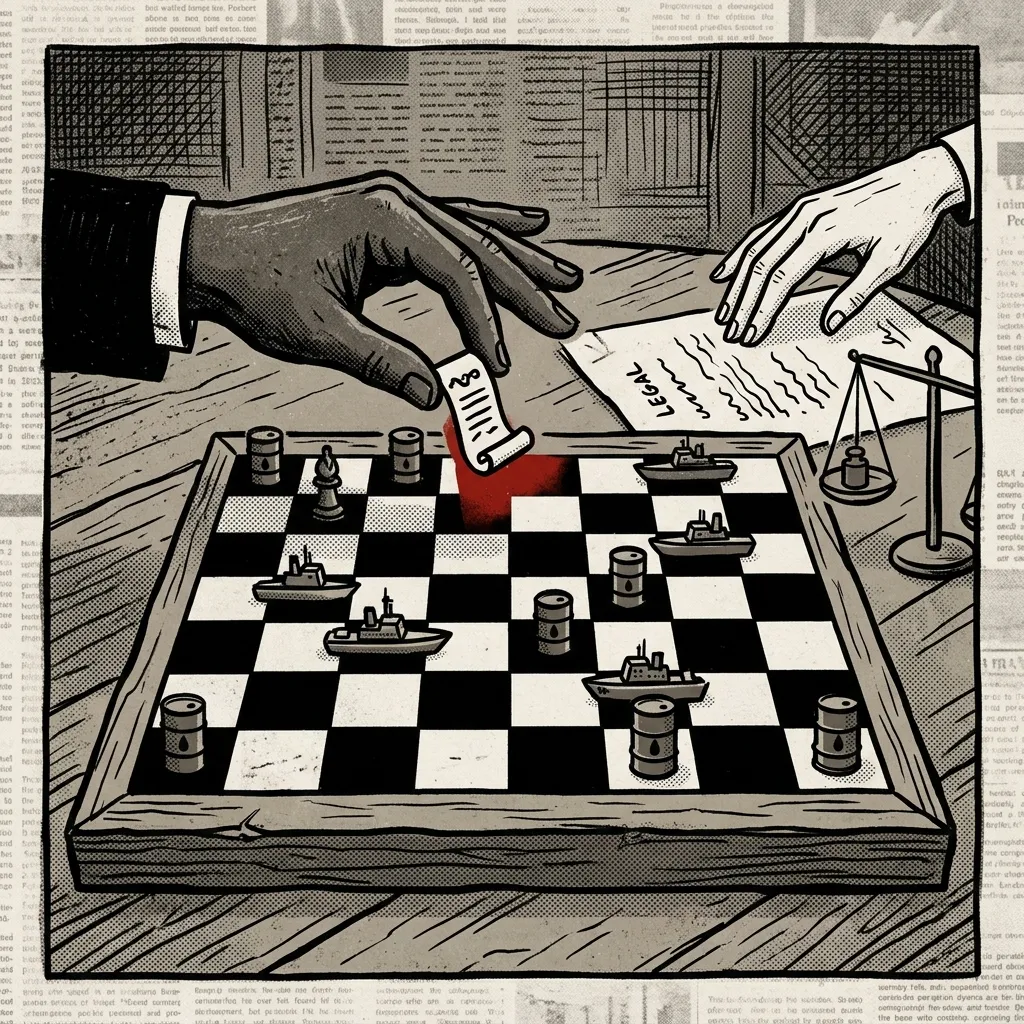
A fragile ceasefire between the United States and Iran, now in its fourth week, faces a critical juncture with Tehran submitting a new diplomatic proposal and Washington debating the conflict's legal status and economic strategy. While no direct hostilities have been reported since the truce began, public statements from both capitals indicate deep-seated tensions and divergent assessments of the pressure being applied, particularly through a U.S. naval blockade of key Iranian oil exports.
Latin American Perspective: Legal Maneuvers and Diplomatic Overtures Reporting from Brazil's Folha de S.Paulo highlights two key developments. First, it notes that the Iranian government, referred to as "the regime," has forwarded a new peace proposal to U.S. mediators via Pakistan, as announced by the official Iranian news agency IRNA. Second, it details a significant legal claim from the U.S. side. According to Folha, U.S. Defense Secretary Pete Hegseth stated that the ongoing ceasefire suspends the legal requirement for the Trump administration to seek congressional authorization to continue the war. This framing presents the ceasefire not just as a humanitarian pause but as a procedural tool affecting U.S. domestic war powers.
Middle Eastern Perspective: Siege Rhetoric and Regional Toll Al Jazeera's coverage emphasizes the human and political dimensions from the region. It quotes Iran's president describing the U.S. naval blockade as an "intolerable" siege, a term that frames the U.S. action as an act of collective punishment. Concurrently, it reports that former U.S. President Donald Trump has signaled that war may resume, highlighting the precarious nature of the truce. Al Jazeera also incorporates a regional casualty report from unrelated Israeli attacks in Lebanon, situating the U.S.-Iran tension within a broader context of regional instability, though it does not directly link the two conflicts in its analysis.
Indian and European Perspectives: Truce Status and Economic Dispute The Hindu reports on the U.S. administrative view of the ceasefire, citing a U.S. official who stated the truce has "terminated" hostilities for the purposes of a congressional war powers deadline. This aligns with the legal argument reported by Folha but uses the stronger term "terminated" rather than "suspended." The report confirms the absence of direct military exchanges for over three weeks.
Politico Europe provides a deep analysis of the economic battlefield, revealing a stark divide between U.S. administration claims and independent expert assessments. U.S. officials, including the Treasury Secretary and White House advisers, are portrayed as insisting the naval blockade of the Strait of Hormuz is creating an imminent crisis for Iran, claiming the country is merely "days" away from exhausting oil storage capacity, which would force production shutdowns and cause permanent infrastructure damage. In contrast, energy analysts and firms cited by Politico contest this timeline. They argue Iran has weeks, not days, of storage left—including on floating tankers—and that significant revenue loss would take months to materialize. Experts also question the administration's understanding of Iran's tolerance for economic pain and its ability to restart oil production quickly after a shutdown. The report notes this strategic disagreement unfolds against a backdrop of rising global oil prices and domestic U.S. political pressure over fuel costs.
Framing the Stalemate The sources collectively paint a picture of a conflict paused militarily but accelerating on diplomatic, legal, and economic fronts. The U.S. narrative, as reflected in Politico and The Hindu, centers on applying maximum economic pressure and leveraging legal interpretations of the ceasefire to maintain operational freedom. The Iranian narrative, via Al Jazeera and the IRNA report in Folha, frames the U.S. actions as an unjust siege while engaging in diplomacy. The Latin American source adds a layer of procedural analysis regarding U.S. war powers, while the European outlet critically examines the factual basis of the U.S. economic strategy. All sources agree on the existence of the ceasefire but differ profoundly on its sustainability, the effectiveness of the blockade, and the immediate next steps.
Conclusion: A Precarious Pause The synthesis of reports indicates the U.S.-Iran ceasefire is a multidimensional stalemate. Diplomatic channels are active with Iran's new proposal, but the path to a lasting agreement is clouded by aggressive rhetoric from both sides. The U.S. appears to be using the truce period to intensify economic pressure and solidify its legal standing to continue conflict if needed, while publicly expressing confidence in a swift outcome. Independent analyses and Iranian statements challenge the premise of this strategy, suggesting a capacity for prolonged endurance. The situation remains volatile, with the potential for resumed hostilities explicitly acknowledged by key figures, making the coming weeks critical for either a diplomatic breakthrough or a return to open warfare.