
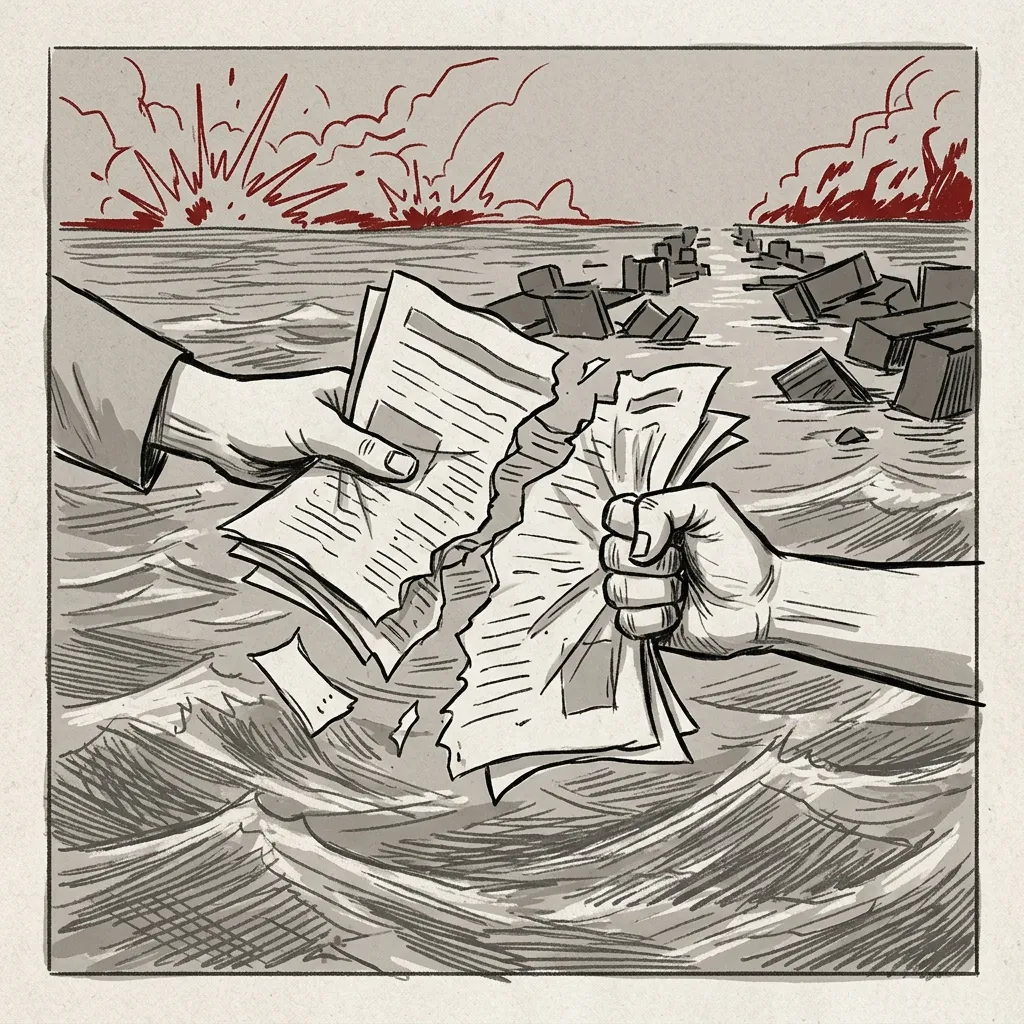
Iran has submitted a new 14-point peace proposal to mediator Pakistan, aiming to end the ongoing conflict involving the United States, Iran, and Israel. The proposal's arrival has been met with immediate public skepticism from US President Donald Trump, who has cast doubt on its acceptability and warned that military strikes could resume, setting a tense stage for diplomatic review. The development unfolds against a backdrop of continued regional hostilities, including Israeli military operations in Lebanon and a volatile blockade of the Strait of Hormuz, which has driven global oil prices sharply higher.
US Perspective: Public Doubt and Threats of Resumed Force Reports from US-focused statements, covered extensively by sources like The Hindu, Al Jazeera, and Channel News Asia, frame the American response as one of deep skepticism and conditional threat. President Trump is quoted stating he was "not satisfied" with Iran's proposal and that he does not find it "acceptable." He has promised to review the plan's exact wording but has publicly pre-judged its likelihood of success. A significant element of the US framing, highlighted by The Hindu, Al Jazeera, and Channel News Asia, is the explicit warning that the United States "could restart strikes 'if they misbehave.'" This conditional threat positions any future US military action as a reactive measure to Iranian conduct, framing Iran as the potential spoiler. Channel News Asia adds a specific dimension to Trump's skepticism, reporting his view that "Tehran had not paid a big enough price for what it had done," which frames the conflict in terms of punitive justice and suggests the proposal may be premature from the US standpoint.
Iranian Perspective: A Diplomatic Gambit and Warning The Iranian framing, as reported by RT and Bangkok Post, presents the proposal as a serious diplomatic initiative while simultaneously warning of a likely return to war. RT's report, sourcing Iranian Deputy Foreign Minister Kazem Gharibabadi, states that "the ball is in the US court" and presents the US with a choice between "a diplomatic solution or a continuation of the confrontational approach." This framing positions Iran as the party proactively seeking peace and places the onus for continued conflict squarely on Washington. Concurrently, Bangkok Post reports a senior Iranian military officer stating that renewed fighting with the US was "likely," just hours after Trump's dismissive comments. This dual-track communication—offering diplomacy while preparing the public for war—frames Iran as both pragmatic and resilient, ready for either outcome. The proposal's transmission via Pakistan, noted by The Hindu and RT, also frames the conflict within a broader, non-Western diplomatic context.
Regional and Global Context: Escalating Tensions and Economic Impact Multiple sources provide context that shapes the high stakes of this diplomatic exchange. The Hindu's live blog coverage notes that the Israeli military is urging residents of southern Lebanon to evacuate amid operations against Hezbollah, indicating the regional war is actively expanding on another front. RT and The Hindu detail the complicating factor of "twin Iranian and US blockades of the Strait of Hormuz," a critical global oil chokepoint. The economic consequence is made explicit by RT, which reports that "oil prices surged past $120 per barrel" as a direct result of the instability. This framing connects the geopolitical maneuvering to immediate global economic pain. Latin American outlets like Folha de S.Paulo and Clarín primarily relay the core developments—the proposal, Trump's skeptical review, and the threat of resumed strikes—framing it as a major international crisis with unpredictable outcomes.
Framing the Diplomatic Stalemate The coverage reveals a stark contrast in how the key actors and their proposals are framed. The US narrative, as conveyed through Trump's statements, is one of distrust and the maintenance of coercive pressure. The peace plan is framed not as a potential breakthrough but as an insufficient offering from an adversary that must still be disciplined. The Iranian narrative, conversely, frames the proposal as a comprehensive solution for a "permanently ending the imposed war" (RT), using language that suggests the conflict was forced upon Iran. The mediator, Pakistan, is highlighted in non-Western reports (The Hindu, RT), framing the negotiations outside traditional US-European diplomatic channels. The simultaneous warnings from both sides about the high likelihood of renewed conflict, reported by Bangkok Post and Channel News Asia, frame the diplomatic window as fragile and possibly closing.
Conclusion The submission of Iran's 14-point plan represents a formal, high-stakes entry into a diplomatic process that all parties publicly view with profound pessimism. The framing from Washington emphasizes Iranian accountability and the readiness to return to military options, while Tehran's framing emphasizes American responsibility to choose peace over confrontation. The surrounding context of escalating military actions in Lebanon and the economically disruptive blockade in the Gulf underscores that the proposal exists within a rapidly deteriorating security environment. The global reaction, reflected in soaring oil prices, highlights the widespread ramifications of a conflict that remains poised between a fraught negotiation and a significant escalation.