
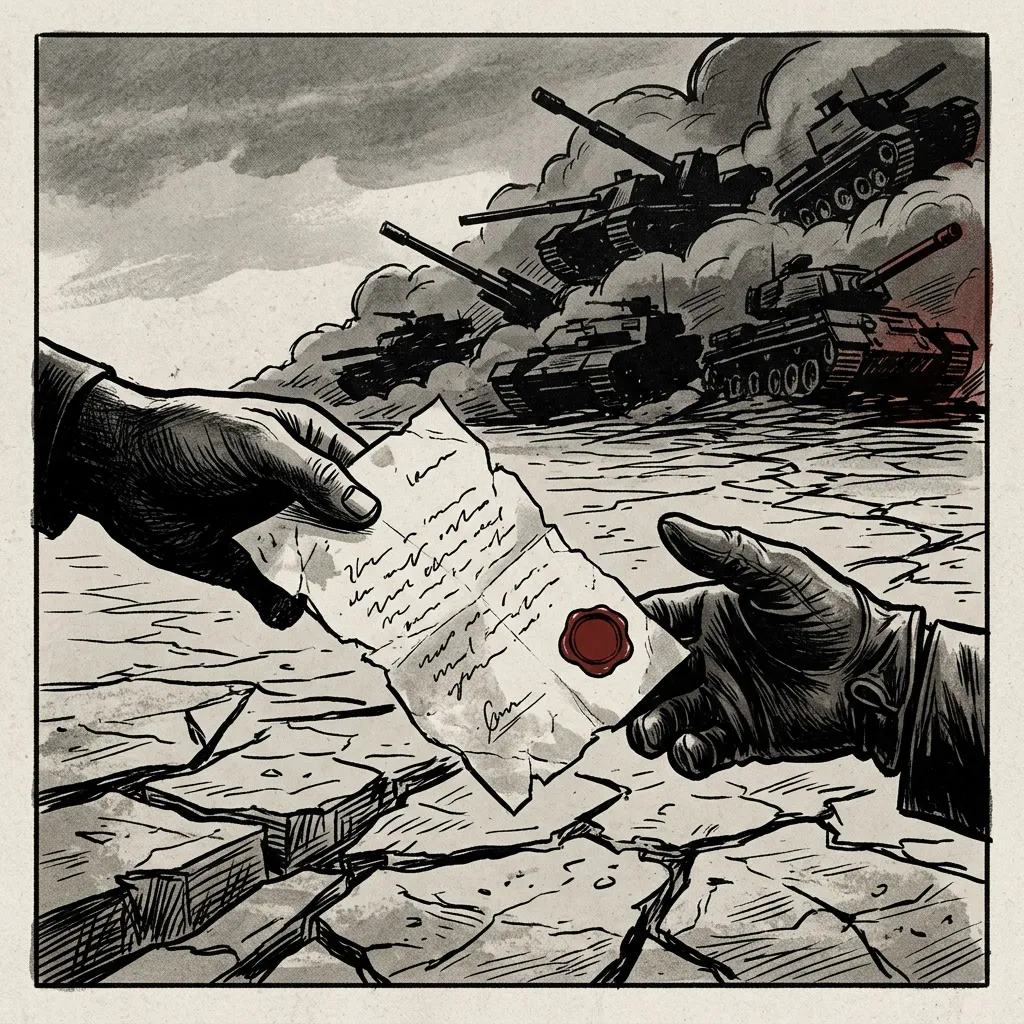
Iran has submitted a new peace proposal to the United States through diplomatic channels in Pakistan, an initiative immediately met with public skepticism from Washington. The proposal, delivered on April 30, 2026, according to Iranian state media, arrives amid a backdrop of heightened military rhetoric and stalled negotiations. While the exact contents of the draft remain undisclosed, the move highlights a dual-track approach from Tehran, coupling diplomatic outreach with stark warnings from its military leadership about the potential for renewed conflict.
Source Perspectives and Framing
Reporting from The Hindu in India provides the foundational details of the diplomatic and military posturing. One report notes the delivery of the proposal to mediator Pakistan, explicitly stating that Iranian state media did not reveal the document's contents. This framing presents a straightforward, factual account of the diplomatic action. A separate report from the same outlet details the concurrent warnings from leaders of Iran's Islamic Revolutionary Guard Corps (IRGC). The report quotes IRGC officials stating their navy is prepared to use "new cards," described as smart targeting capabilities, to destroy U.S. warships should the United States initiate strikes against Iran. The Hindu's coverage thus juxtaposes the opaque diplomatic offer with explicit, detailed threats of military escalation, framing the situation as one of high tension and uncertain prospects.
Al Jazeera's coverage, based in the Middle East, focuses primarily on the U.S. reaction to the proposal. Its report centers on a statement from U.S. President Donald Trump, who is quoted as saying the Iranian offer contains terms he "can't agree to" and that he is "not satisfied" with it. This framing shifts the narrative from the act of proposal to its immediate reception, emphasizing the diplomatic impasse from the American perspective. Al Jazeera does not include the specific military warnings highlighted by The Hindu, instead concentrating on the political stalemate at the leadership level.
Framing the Diplomatic Stalemate
The sources collectively paint a picture of a diplomatic initiative launched into a climate of deep mutual distrust. The Hindu's framing presents a more comprehensive view of the Iranian position, detailing both the diplomatic gesture and the coercive military messaging that accompanies it. This suggests a narrative where Iran is pursuing a strategy of simultaneous deterrence and diplomacy. In contrast, Al Jazeera's framing simplifies the narrative to a direct exchange: an Iranian proposal met with a swift and negative U.S. presidential dismissal. This focuses the story on the failure of the proposal to gain traction, rather than on the complex dynamics surrounding its submission.
A key divergence is the treatment of context. The Hindu explicitly references "stalled talks" and a military official's assessment that renewed war with the U.S. is "likely," providing a backdrop of escalating risk. Al Jazeera implies the stalled nature of talks through the President's rejection but does not elaborate on the broader military tensions or the specific threats issued by Iranian military figures. This results in two distinct emphases: one on the volatile, multi-faceted standoff, and the other on a specific point of diplomatic rejection.
In conclusion, the synthesis of reports indicates that Iran's latest diplomatic effort, channeled through Pakistan, has done little to bridge the gap with the United States. The proposal remains shrouded in official secrecy, while the public discourse is dominated by military threats from one side and presidential rejection from the other. This event underscores the profound challenges in de-escalating tensions, where diplomatic overtures are immediately undercut by adversarial posturing and public dismissals, leaving the path forward uncertain and the risk of miscalculation high.