
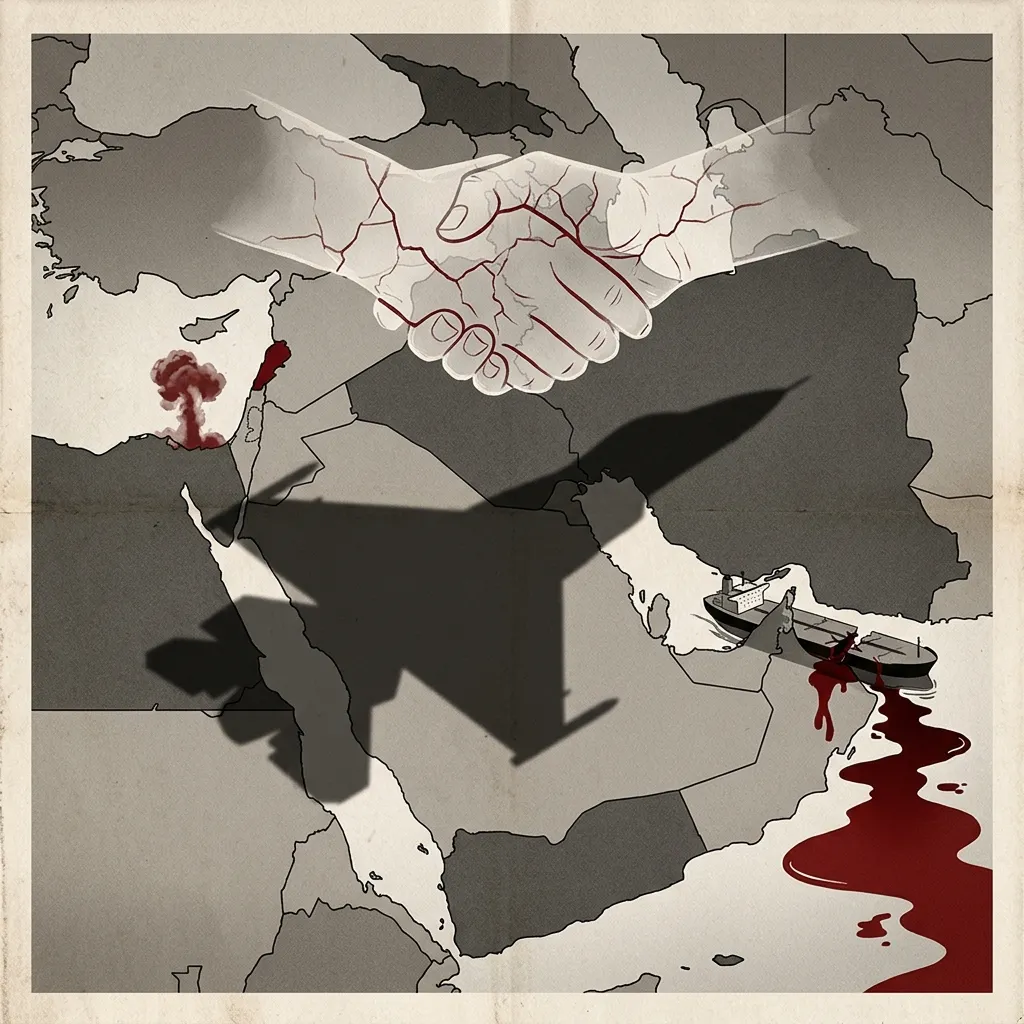
A U.S. fighter jet disabled an Iranian oil tanker in the Gulf of Oman, while Israeli forces conducted an airstrike in Beirut, marking significant escalations amid ongoing international efforts to broker a permanent end to the Iran-Israel war. These military actions coincide with a delicate diplomatic phase, where the United States is pressuring Iran for a deal and a reported ceasefire is being tested. The developments highlight the complex interplay between military pressure, diplomatic negotiations, and regional power dynamics, with key players including the U.S., Iran, Israel, and mediators like Pakistan and China offering starkly different narratives.
Military Escalations and Conflicting Claims Reports from U.S. Central Command, relayed by sources including The Hindu and RT, state that a U.S. F/A-18 Super Hornet fired on the rudder of the Iranian-flagged tanker M/T Hasna in the Gulf of Oman. The U.S. military framed this as an enforcement action against a vessel attempting to breach an American naval blockade of Iranian ports. RT's report emphasizes the attack followed a threat from President Donald Trump to resume intensive bombing unless Tehran agrees to U.S. terms. In a separate theater, Israeli forces bombed the southern suburbs of Beirut. European outlets like BBC News and Le Monde report Israel's justification, citing a targeted strike on a senior commander of Hezbollah's Radwan force, which Israel considers an elite unit. Latin American source Folha de S. Paulo frames this action as Israel violating the ceasefire in Lebanon. Al Jazeera's coverage similarly notes this was the first such attack since a ceasefire took effect in mid-April, implicitly questioning the stability of the truce.
Diplomatic Maneuvering and Regional Perspectives The military actions unfold against a backdrop of intense diplomatic activity. The BBC reports that Iran is considering a U.S. proposal, with mediator Pakistan working to convert a ceasefire into a permanent peace. Al Jazeera notes Trump's public optimism, quoting him saying the war will be 'over quickly,' while also reporting that Iran's foreign minister is in Beijing seeking support for a deal, indicating a search for diplomatic counterweights to U.S. pressure. The Hindu highlights what it calls a 'U-turn' by Trump on Iran, suggesting volatility in the U.S. approach. Politico Europe provides a deep analysis of the diplomatic obstacles, centering on Trump's rhetoric and personal style. It quotes officials who worry that his insults toward Iranian leaders and demand for their 'unconditional surrender' are major barriers to a deal, as they prevent the face-saving concessions crucial in Iranian culture and domestic politics. The report contrasts this with the more respectful diplomacy of the Obama era that led to the 2015 nuclear deal.
Framing the Conflict The sources diverge significantly in how they contextualize these events, revealing regional and editorial priorities. U.S. and allied actions are framed through distinct lenses of legitimacy and provocation. Outlets like The Hindu and BBC present the tanker attack factually as a U.S. enforcement action, linking it to pressure for a deal. RT, however, frames it more aggressively as an 'attack' following an 'ultimatum,' highlighting U.S. coercive tactics. Regarding Beirut, European and Latin American sources focus on the breach of the ceasefire, with Folha de S. Paulo using the term 'violated.' Israeli sources, as conveyed by Le Monde, focus exclusively on the military objective of targeting a Hezbollah commander. Al Jazeera's broader coverage includes critical angles often absent elsewhere, such as the UN's call for Israel to release detained aid flotilla members and U.S. lawmakers demanding transparency on Israel's nuclear capabilities, which it links to heightened risks in the current war. Politico's analysis is almost exclusively focused on the personality-driven impediments to diplomacy within the U.S. administration.
Broader Implications and Stakes The synthesis of reports paints a picture of a conflict at a precarious juncture, where military force is being used explicitly as leverage in negotiations. The tanker attack underscores the continued U.S. economic and military pressure on Iran through a blockade, even as talks proceed. The Beirut strike demonstrates how the broader regional proxy conflict between Israel and Iran-aligned groups like Hezbollah persists, potentially derailing ceasefire efforts. The diplomatic narratives reveal a fundamental clash: the U.S., under Trump, seeks a deal that can be portrayed as a decisive victory, while Iran, backed by cultural and political necessities, requires a dignified exit. The involvement of other powers like China and Pakistan indicates a multipolar dimension to the crisis, where Iran seeks alternatives to U.S. dominance. The ultimate obstacle, as framed by several sources, may be less about the technical terms of a deal and more about the political and psychological space required for both sides to claim success, a space currently constricted by public rhetoric and military posturing.