
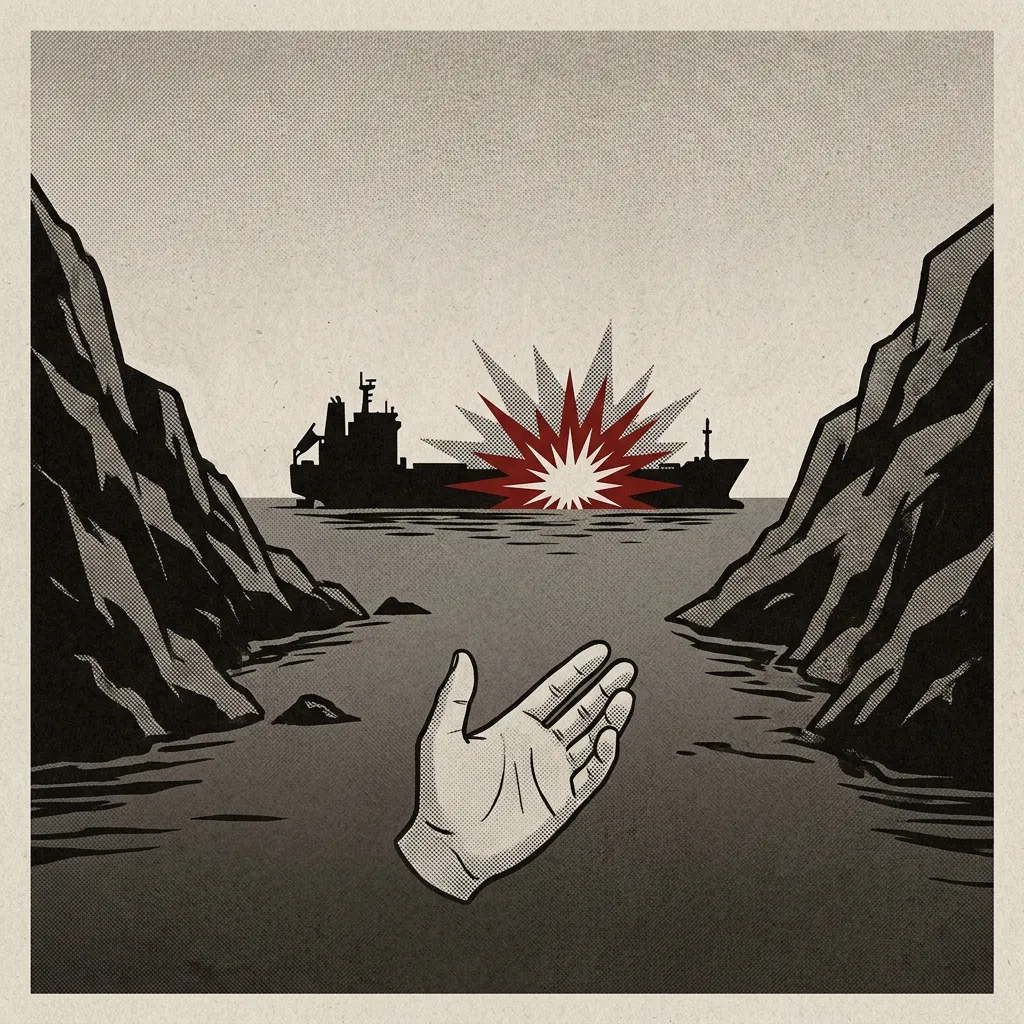
Iran has issued a formal denial of any involvement by its military in an explosion aboard a commercial vessel in the Strait of Hormuz, a critical global oil transit route. The incident, involving a Panama-flagged ship reportedly linked to South Korea, occurs against a backdrop of heightened regional tensions and ongoing diplomatic efforts. Reports from different regions frame the event by emphasizing distinct contextual factors, from high-stakes U.S.-Iran negotiations to direct military threats, illustrating how the same denial is interpreted through varied geopolitical lenses.
Latin American Perspective: A Diplomatic Context The report from Folha de S.Paulo places Iran's denial squarely within the framework of active negotiations between Tehran and Washington. It notes that the rejection of involvement comes as Iran is simultaneously evaluating a peace proposal presented by the United States, aimed at reaching a temporary agreement to end the broader Middle East conflict. This framing presents the incident not as an isolated event but as a potential complication or pressure point within delicate diplomatic talks. The narrative suggests the denial is a strategic move to avoid derailing negotiations, implicitly linking regional maritime security to the success or failure of international diplomacy.
South Asian Perspective: A Context of Direct Threats The Hindu's coverage provides a different, more immediate context for Iran's statement. It details that the denial was communicated officially by Iran's embassy in Seoul, which firmly and categorically rejected allegations of its armed forces' involvement with the vessel named HMM Namu. However, the report juxtaposes this denial with warnings from former U.S. President Donald Trump, who is cited as threatening renewed bombing campaigns. This framing creates a narrative of escalating verbal and military posturing, where the ship incident becomes a flashpoint in a cycle of accusations and threats between Iran and the U.S., with less emphasis on concurrent diplomatic channels.
Framing the Incident The core factual claim—Iran's denial of attacking a ship—is consistent across reports. The primary divergence lies in the explanatory context provided for why this denial matters at this specific time. Folha de S.Paulo constructs a narrative of diplomatic opportunity, where the incident is a disruptive variable in peace talks. The report implies a cause-and-effect relationship, where Iran's actions (or denials thereof) are calculated to influence negotiation outcomes. In contrast, The Hindu constructs a narrative of renewed confrontation, framing the event within a pattern of historical hostility and recent threats from U.S. political figures. This perspective highlights the risk of military escalation rather than diplomatic resolution.
Synthesis of Broader Implications The reporting on this incident underscores the Strait of Hormuz's perennial status as a barometer for Middle Eastern stability and global energy security. The differing regional framings reveal the multifaceted nature of the Iran-U.S. relationship, which exists simultaneously on parallel tracks of tentative diplomacy and overt military threat. For international observers, the event highlights how a single act of maritime violence—or its denial—can be leveraged for multiple strategic purposes: as a bargaining chip in negotiations, as a justification for military action, or as a tool for domestic political messaging. The consistent thread is the recognition that any incident in this waterway carries implications far beyond the immediate damage, capable of swaying international policy debates in Washington, Tehran, and beyond.