
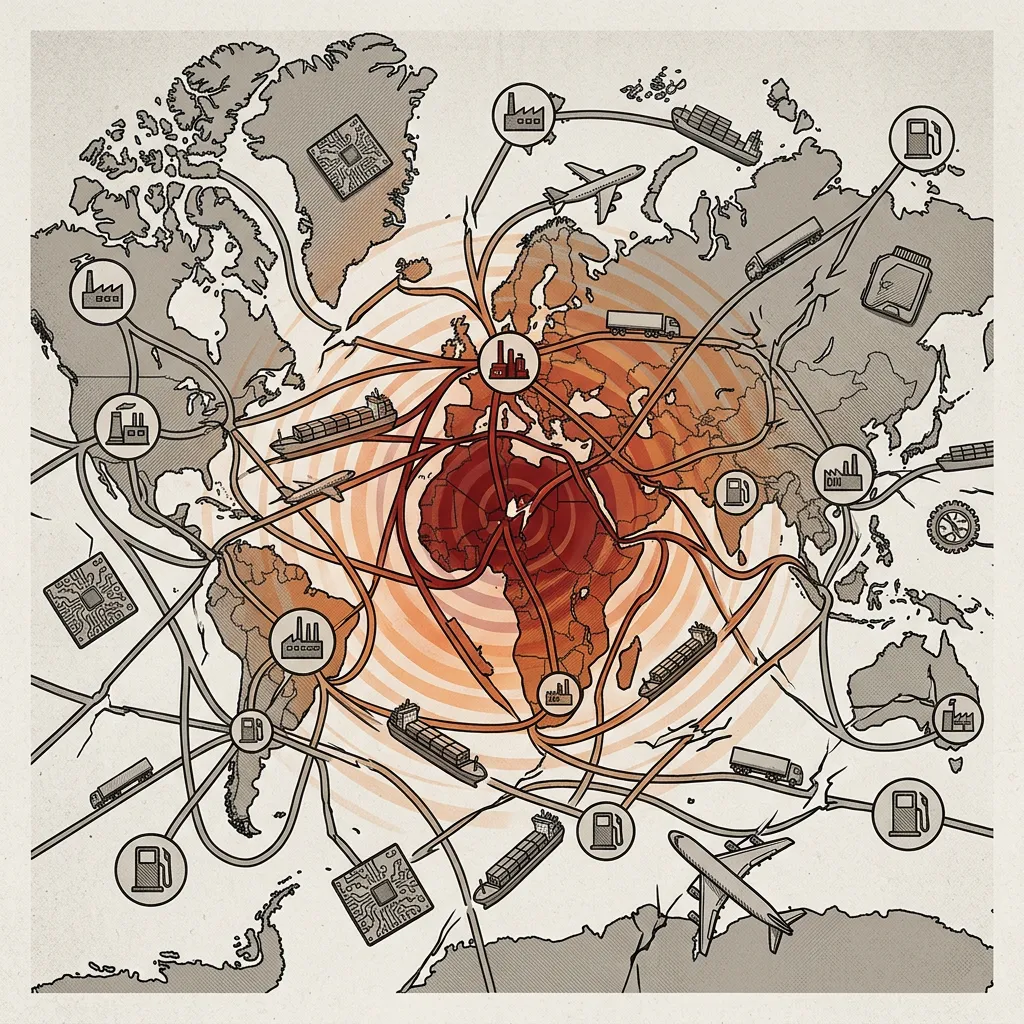
Conflict Triggers Multi-Sector Economic Disruption
The ongoing conflict involving Iran is generating cascading effects across global supply chains, with impacts ranging from electronics manufacturing to aviation and automotive markets, according to reports from news outlets across three continents.
Electronics Industry Faces Component Shortages
Indian publication The Hindu reports that the conflict has disrupted circuit board supply chains, creating fresh challenges for technology manufacturers. The disruption arrives as electronics firms already contend with elevated memory chip prices, according to the outlet. The Hindu characterizes this as evidence of the "broadening impact" of the conflict, though the article does not specify the mechanism by which Iran-related hostilities affect circuit board production or distribution routes.
The report frames the situation as a compounding crisis for tech manufacturers, emphasizing the cumulative nature of supply chain pressures rather than isolating the Iran conflict as a singular cause.
Strait of Hormuz Closure Drives Fuel Crisis
Latin American newspaper Clarín provides specific detail on transportation sector impacts, reporting that French low-cost carrier Transavia France has cancelled flights scheduled for May and June. The Argentine publication directly links these cancellations to the closure of the Strait of Hormuz, which it states is preventing crude oil and petroleum products from exiting the Persian Gulf.
This represents the most concrete supply chain mechanism identified across the sources: a physical blockage of a critical energy chokepoint. The Strait of Hormuz typically handles approximately one-fifth of global oil traffic, though Clarín does not provide this context. The publication frames the story through the lens of immediate consumer impact—flight cancellations affecting European travelers.
Electric Vehicle Sales Surge as Fuel Costs Rise
Qatar-based Al Jazeera reports a contrasting economic effect: accelerating electric vehicle adoption across multiple markets. The outlet identifies Australia and Vietnam among countries experiencing surging EV sales, attributing the trend to conflict-driven increases in petrol and diesel operating costs.
Al Jazeera frames this development as a demand-side market shift rather than a crisis, presenting the conflict's economic impact as creating winners alongside losers. The publication does not specify whether the fuel price increases stem from actual supply shortages, speculative market behavior, or other factors, nor does it quantify the sales increases or price rises mentioned.
Geographic Variation in Impact and Coverage
The three sources demonstrate how the same conflict generates region-specific concerns. The Hindu emphasizes technology manufacturing impacts relevant to India's growing electronics sector. Clarín focuses on immediate European consumer disruption affecting Latin American travelers and businesses with European connections. Al Jazeera highlights automotive market transformations across Asia-Pacific and Middle Eastern regions.
None of the sources provide direct quotes from industry executives, government officials, or economic analysts. The Hindu and Al Jazeera do not specify their information sources, while Clarín attributes its reporting to the airline's announcement without providing direct quotation.
Unanswered Questions on Scope and Duration
Significant details remain unclear across all reporting. No source specifies the conflict's current military status, the parties involved beyond Iran, or the timeline for potential resolution. The mechanism connecting the conflict to circuit board supplies remains unexplained in The Hindu's coverage. Al Jazeera does not quantify the EV sales increases or fuel price rises. Clarín does not indicate whether the Strait of Hormuz closure is complete, partial, or anticipated.
The reports collectively suggest a conflict with sufficient intensity to disrupt major shipping routes and create market volatility across multiple sectors, but the absence of specific detail about the conflict itself limits assessment of whether these impacts represent short-term disruption or fundamental supply chain restructuring.