
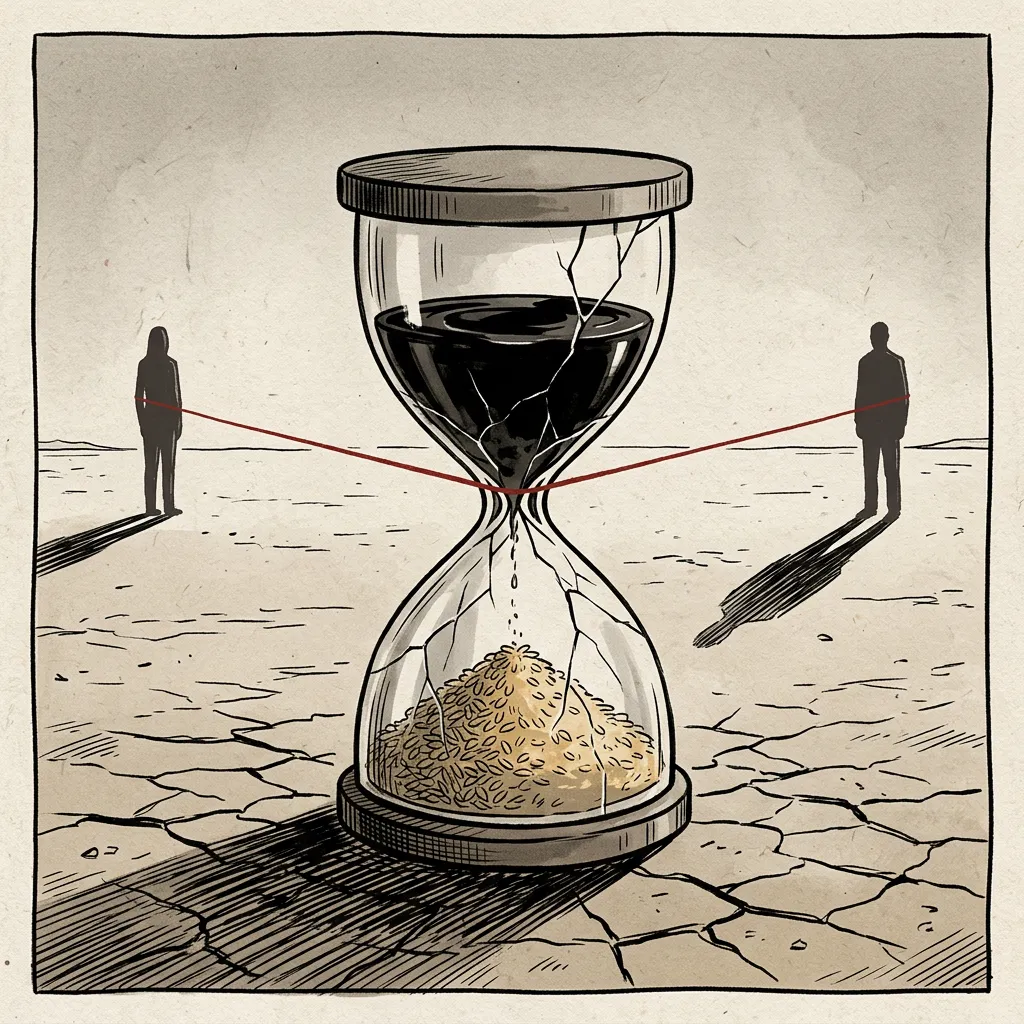
Sixty days after the onset of a US-Israeli military campaign against Iran, the conflict has settled into a costly stalemate with profound global economic repercussions and sharp political divisions. While military objectives remain unmet, the prolonged blockade of the Strait of Hormuz has triggered a worldwide energy and food price crisis, drawing scrutiny to the war's financial toll and legal standing. Regional and international reports depict a war of attrition with no clear path to resolution, marked by escalating domestic political costs for the US administration and severe humanitarian consequences.
Military and Strategic Stalemate Russian state media outlet RT provides the most comprehensive military overview, framing the US-Israeli campaign as a "misadventure" that has become a "quagmire." Its reporting details a brutal opening phase, including a US strike that allegedly killed over 160 schoolgirls in Minab. While US officials claim successes—Secretary of War Pete Hegseth is cited stating Iran's missile arsenal is "functionally destroyed"—RT counters that US and Israeli assessments suggest around half of Iran's missile launchers and 60% of its navy remain operational. Iran's response, described as a "mosaic defense," has involved ballistic missile strikes on numerous US bases across the Gulf, from Bahrain to Saudi Arabia. RT's narrative emphasizes Iranian resilience and strategic adaptation, arguing the US has failed to achieve its stated goals of severing Iran's proxy support or halting its nuclear program, which both sides reportedly assess as paused since 2003.
Economic and Humanitarian Fallout The economic consequences of the conflict, particularly Iran's retaliatory blockade of the Strait of Hormuz, dominate coverage across regions. The African publication Daily Maverick highlights a looming "food crisis," arguing that while energy market effects will be profound, the blockade's impact on global food supplies is the "most alarming dimension." European and Russian sources detail the direct economic shock: France's Le Monde reports that TotalEnergies' profits soared to $5.8 billion in the first quarter of 2026, driven by higher hydrocarbon prices. RT elaborates on the consumer impact, noting German inflation has surged with fuel prices rising about 20% and heating oil over 40% in two months. It also cites billionaire Ray Dalio declaring the US is in a period of "stagflation" for the first time in decades, a crisis he links to the war. The financial cost of the campaign is quantified by Brazil's Folha de S.Paulo, which reports US Defense Secretary Pete Hegseth testified that operations have cost $25 billion so far.
Political Divisions and Human Rights Concerns Domestic and international political fissures are widening. Folha de S.Paulo and The Hindu report on growing US political pressure, with Democrats threatening legal action against President Trump for initiating war without congressional approval as a 60-day deadline approaches. The Hindu notes Democrats plan to grill Hegseth on costs, munitions drawdowns, and the school bombing. Internationally, German Chancellor Friedrich Merz, quoted in The Hindu, expresses that his "personal relationship" with Trump remains good, but he had "doubts from the start" about the war. RT frames this as NATO allies having "deserted" Trump. Meanwhile, Folha de S.Paulo reports a UN statement alleging Iran's regime has executed 21 people and detained over 4,000 for political or national security reasons since the war began.
Diplomatic Impasse and Escalatory Rhetoric Peace talks appear deadlocked. The Hindu reports that Trump has warned Iran to "get smart soon" and accept a nuclear deal, with US officials indicating the naval blockade could be extended for months after Trump rejected Iran's latest proposal to reopen the Strait. RT characterizes Trump's blockade strategy as a "high-risk bid to compel a nuclear capitulation." Iranian demands, per RT, include keeping its nuclear program off the table in any deal. Folha de S.Paulo captures Trump's escalatory rhetoric, reporting he posted an AI-generated image of himself holding a rifle with the message "Chega de ser bonzinho" ("Enough of being nice"). A Folha analysis also notes Trump is facing the "complicated legacy" of his 2018 decision to abandon the nuclear accord, reporting that Iran's nuclear stockpile has grown eleven-fold since that move.
Framing the Conflict Sources frame the conflict through distinct regional and editorial lenses. RT (Russia) presents a narrative of US-Israeli strategic failure and hubris, highlighting civilian casualties, Iranian military effectiveness, and the economic pain inflicted on Western nations. It positions the war as a destabilizing American "misadventure." Folha de S.Paulo (Latin America) and The Hindu (India) focus on factual developments—costs, diplomatic moves, political reactions—with a relatively neutral tone, though Folha incorporates critical context on Trump's past policies. Daily Maverick (Africa) elevates the global food security angle, a concern particularly acute for import-dependent regions. Le Monde (Europe) reports the corporate profit impact neutrally, reflecting a business-focused perspective.
In conclusion, two months into the conflict, reports converge on a grim picture of a protracted standoff. The military situation is deadlocked, the economic shockwaves are global and intensifying, and the political path forward is fraught. The blockade of the Strait of Hormuz has emerged as Iran's primary leverage and the world's most immediate economic vulnerability. With the US considering an extended blockade, Iran maintaining its demands, and domestic pressure rising on multiple governments, the crisis shows no signs of abating, threatening deeper economic dislocation and further regional escalation.