
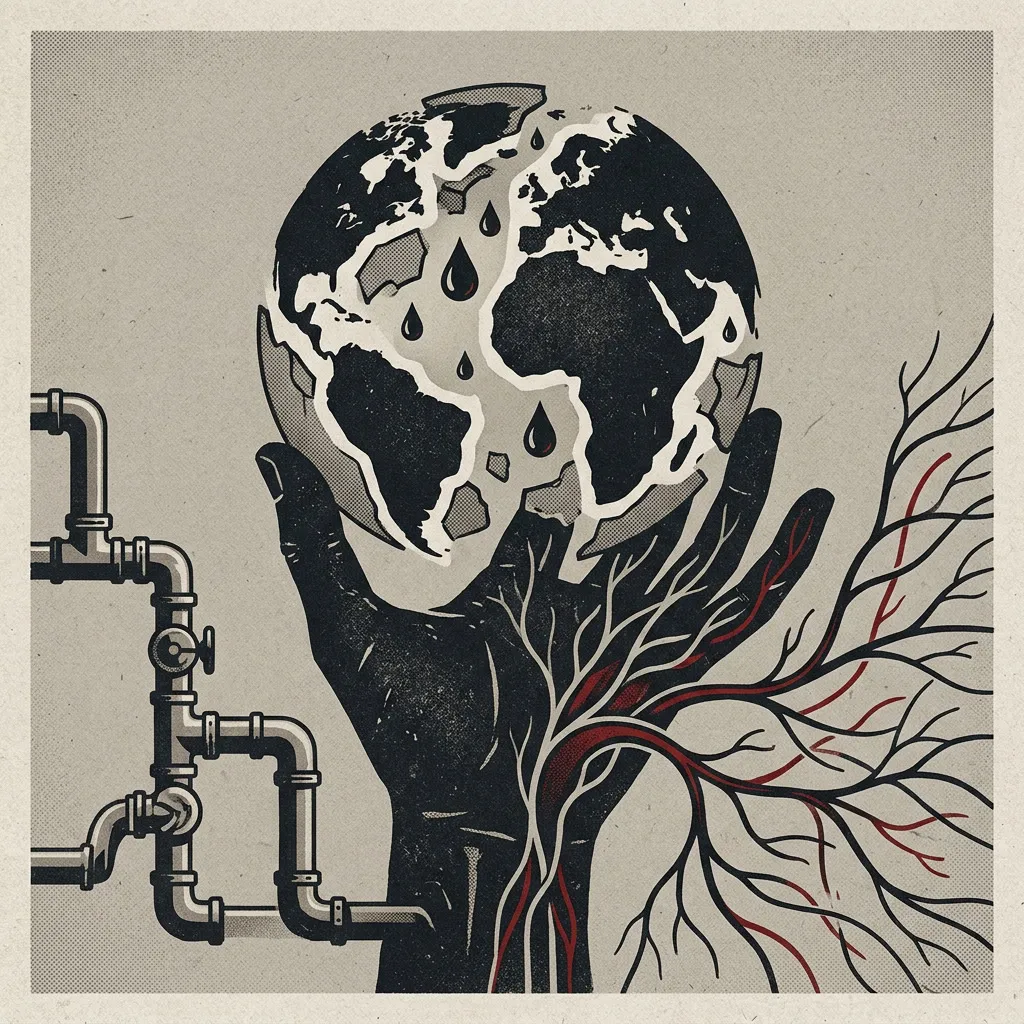
India's significant dependence on imported crude oil, exceeding 85% of its needs, places its economy in a precarious position as geopolitical conflicts and shifts in global producer alliances threaten market stability. This reliance makes the country highly vulnerable to price shocks stemming from international disputes, particularly those in West Asia, a key supply region. The emerging debate centers on whether India's security strategy should focus on achieving self-sufficiency or on maximizing its options within a complex and often fragmented global market.
Al Jazeera's Global Market Perspective Al Jazeera frames the issue through the lens of potential structural changes within the Organization of the Petroleum Exporting Countries (OPEC). Its reporting questions the stability of the global oil market, suggesting that a possible fracturing of the OPEC alliance could usher in a new period of energy price volatility. This perspective places India's situation within a broader narrative of shifting producer power dynamics and uncertain supply chains. The outlet implies that traditional market stabilizers may be weakening, which could lead to more frequent and severe price fluctuations for all major importers, including India.
The Hindu's National Strategic Focus In contrast, The Hindu provides a direct analysis of India's specific vulnerabilities and strategic posture. It explicitly links the conflict in West Asia to tangible risks for India's domestic economy, illustrating how geopolitical shocks are transmitted through the energy import channel. The publication argues that in a fragmented energy landscape, India's primary advantage does not lie in pursuing unattainable self-sufficiency. Instead, it champions a strategy of 'optionality'—cultivating a diverse portfolio of suppliers, exploring alternative energy sources, and maintaining strategic reserves to navigate disruptions. This framing is inward-looking and solution-oriented, focusing on national policy responses to external threats.
Framing the Energy Security Challenge The two sources analyze the same fundamental risk—India's import dependence—but through distinctly different narrative lenses. Al Jazeera adopts a macro, systemic view, examining the root causes of potential volatility within producer cartels and its worldwide implications. Its coverage is speculative about future market structures. The Hindu, meanwhile, starts from a confirmed present-day vulnerability (the West Asia conflict) and derives a pragmatic national strategy from it. For The Hindu, market fragmentation is a given condition to be managed, whereas for Al Jazeera, it is a potential future state whose emergence is a central question. This difference highlights a common divergence in reporting between international outlets analyzing global systems and national outlets focusing on local impacts and adaptations.
In conclusion, the synthesis of these reports underscores a critical reality for large developing economies: energy security is increasingly decoupled from domestic production and is instead a function of diplomatic agility and market strategy. India's experience exemplifies how nations are compelled to develop sophisticated risk-management frameworks in response to an interconnected yet unstable global energy order. The broader implication is that economic resilience for major importers will depend less on controlling sources and more on building flexibility across the entire energy procurement and consumption system.