
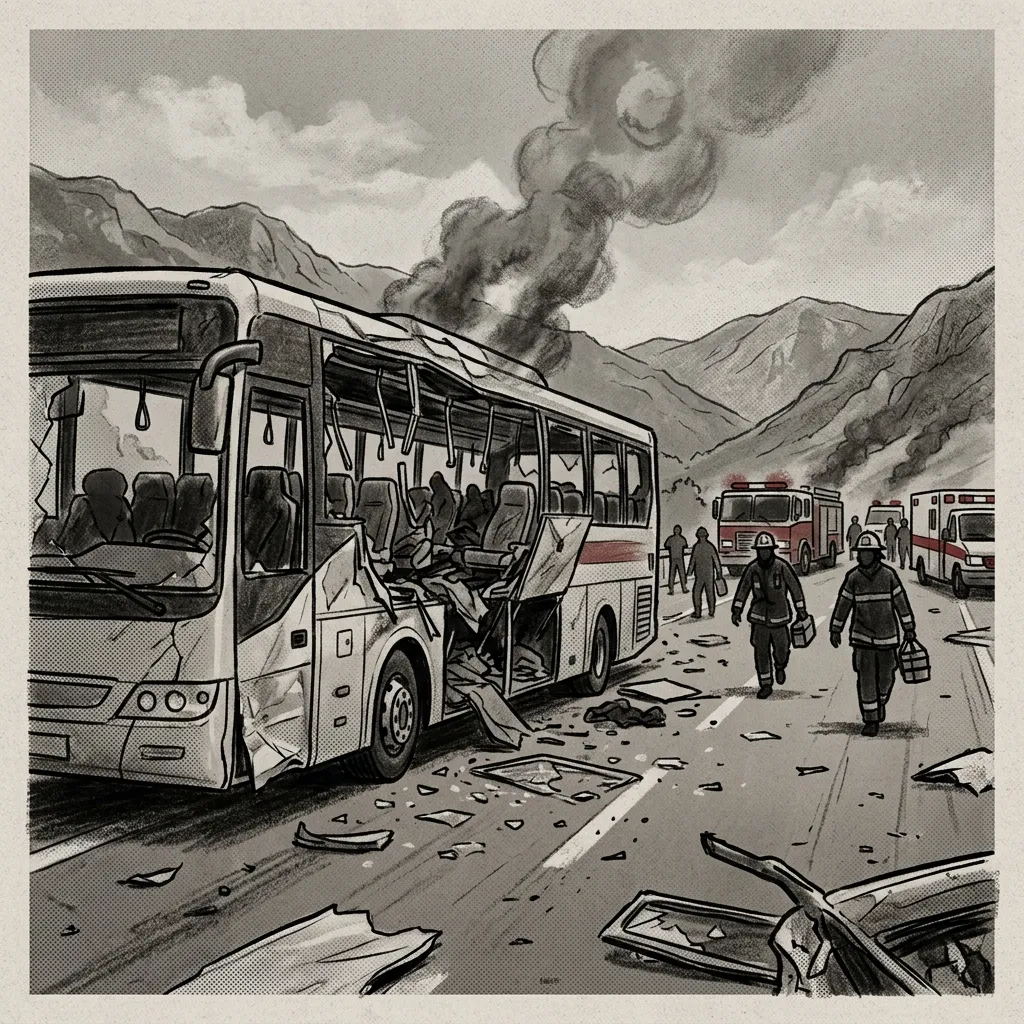
A deadly explosion targeting a passenger bus on Colombia's Panamerican Highway has killed at least 13 people and injured dozens more, according to regional authorities, though casualty figures vary significantly across international reports.
The attack occurred in the municipality of Cajibio in southwestern Colombia's Cauca region, a zone that has experienced persistent violence. Octavio Guzman, Governor of Cauca, confirmed via social media platform X that an explosive device detonated while the bus traveled along the major highway route. The Hindu reports 13 fatalities and 38 injuries based on this official statement.
However, Al Jazeera's coverage cites a substantially higher death toll of 19 killed, alongside dozens injured. The news organization did not specify the source of this higher figure in the available excerpts, creating a notable discrepancy in the reported scale of casualties. Neither outlet provided details about whether the differing numbers reflect evolving counts as victims succumbed to injuries, or represent conflicting initial assessments from different authorities.
Newly released dashcam footage, reported by Al Jazeera, captured the moment of the explosion, showing the bomb-laden bus detonating. The availability of this video evidence has provided visual documentation of the attack's immediate impact, though neither source elaborated on the circumstances of the footage's release or verification.
The attack's timing carries particular significance in Al Jazeera's framing, which explicitly connects the bombing to Colombia's electoral calendar. The Middle Eastern outlet characterizes the incident as occurring "ahead of next month's election" and describes it as part of "a surge in violence" linked to the upcoming vote. This framing positions the attack within a broader pattern of election-related violence.
In contrast, The Hindu's coverage makes no mention of any electoral context whatsoever. The Indian publication instead describes the violence as part of ongoing security challenges, stating that "violence persists" in the region without connecting it to any specific political timeline or event. This represents a fundamental difference in how the two sources contextualize the same attack.
Neither source identified which group or individuals might be responsible for the bombing. The Cauca region has historically been affected by various armed actors, including guerrilla groups, criminal organizations, and remnants of paramilitary forces, but no attribution was provided in the available reporting.
The Panamerican Highway, where the attack occurred, serves as a critical transportation artery connecting communities across the Americas. Its targeting suggests an intent to maximize casualties among civilian travelers and disrupt a major transit route. The municipality of Cajibio, where the explosion took place, lies in a region that has experienced recurring security incidents.
Both sources confirm the use of an explosive device, though technical details about the bomb's construction, placement, or detonation method were not included in the reporting. The fact that the device was described as being on or in the bus itself indicates either a planted explosive or a vehicle-borne improvised device.
The divergent casualty counts and contextual framing highlight how the same violent incident can be reported with substantially different emphases depending on the news organization and its regional perspective. While one outlet stresses electoral violence as the key interpretive frame, another presents it as part of a general security crisis without political timing as a factor.