
Diplomatic Efforts Rebuffed Amid Renewed Fighting
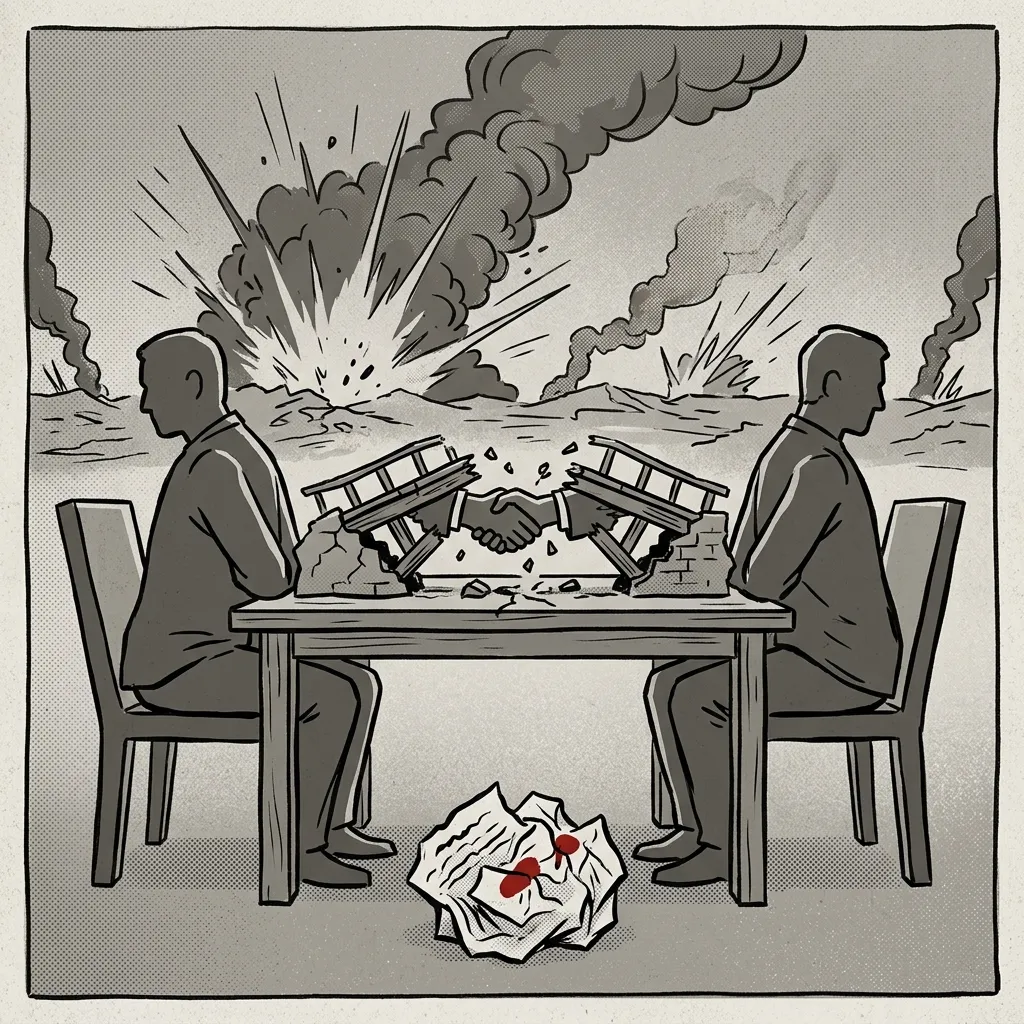
Hezbollah leader Naim Qassem announced Monday that the Iran-aligned group will not respect any agreement reached between Lebanon and Israel, rejecting recent diplomatic initiatives and vowing continued armed resistance. The statement comes as cross-border violence intensifies, with Israeli airstrikes reportedly killing at least 14 people in southern Lebanon.
According to Indian outlet The Hindu, Lebanese and Israeli ambassadors to the United States held two meetings in Washington in recent weeks—described as the first direct talks of their kind in decades. However, Qassem dismissed these negotiations as what Latin American source Clarín characterized as a "free, humiliating, and unnecessary concession," explicitly stating that Hezbollah would not relinquish its weapons.
Escalating Military Rhetoric and Operations
Middle Eastern sources report an exchange of threats and military actions across Lebanon's border. Al Jazeera attributes a statement to Israel's defense minister threatening to "burn all of Lebanon," while describing Hezbollah as reiterating defiance. The group is characterized across sources as Iran-linked or Iran-aligned.
Israeli airstrikes targeted southern Lebanon amid what Al Jazeera describes as a faltering ceasefire, causing casualties and forcing new displacement of civilians. The strikes mark what regional sources frame as breaches of an existing ceasefire arrangement, though the specific terms and status of this ceasefire are not detailed uniformly across coverage.
Competing Narratives on Sovereignty and Legitimacy
Sources present divergent frameworks for understanding the conflict's political dimensions. Al Jazeera published analysis arguing that Lebanese sovereignty and Hezbollah demilitarization cannot be achieved through military force alone, asserting that a "credible political transition" is necessary. This framing positions the violence as counterproductive to stated goals of establishing state authority.
Meanwhile, Hezbollah's position, as reported across sources, frames its armed status as non-negotiable. Clarín quotes the group's leadership stating they will not renounce their weapons, positioning armed resistance as central to the organization's identity and mission. The Hindu notes Hezbollah's vow to "confront Israel," emphasizing the group's rejection of diplomatic channels.
Civilian Impact and Displacement
The human cost receives varying emphasis across sources. Al Jazeera specifically reports 14 deaths from Israeli airstrikes and highlights forced displacement of civilians in southern Lebanon. The outlet frames these strikes as occurring "amid ceasefire breaches," suggesting violations of an agreement meant to protect civilian populations.
Other sources focus primarily on the diplomatic and military-strategic dimensions, with less detailed coverage of civilian casualties. The Hindu's coverage centers on Hezbollah's political stance and the historic nature of the Washington meetings, while Clarín emphasizes the group's defiant rejection of negotiations.
Regional Diplomatic Landscape
The Washington meetings between ambassadors represent what The Hindu describes as unprecedented direct contact in decades, suggesting potential shifts in regional diplomatic architecture. However, Hezbollah's immediate rejection indicates the group does not consider itself bound by state-level agreements, highlighting the complex relationship between the Lebanese government and armed non-state actors within its territory.
No source reports responses from the Lebanese government to Hezbollah's rejection of potential agreements, nor do they detail what specific terms were discussed in Washington. The Israeli government's position beyond the defense minister's reported threat is similarly not elaborated across the coverage reviewed.