
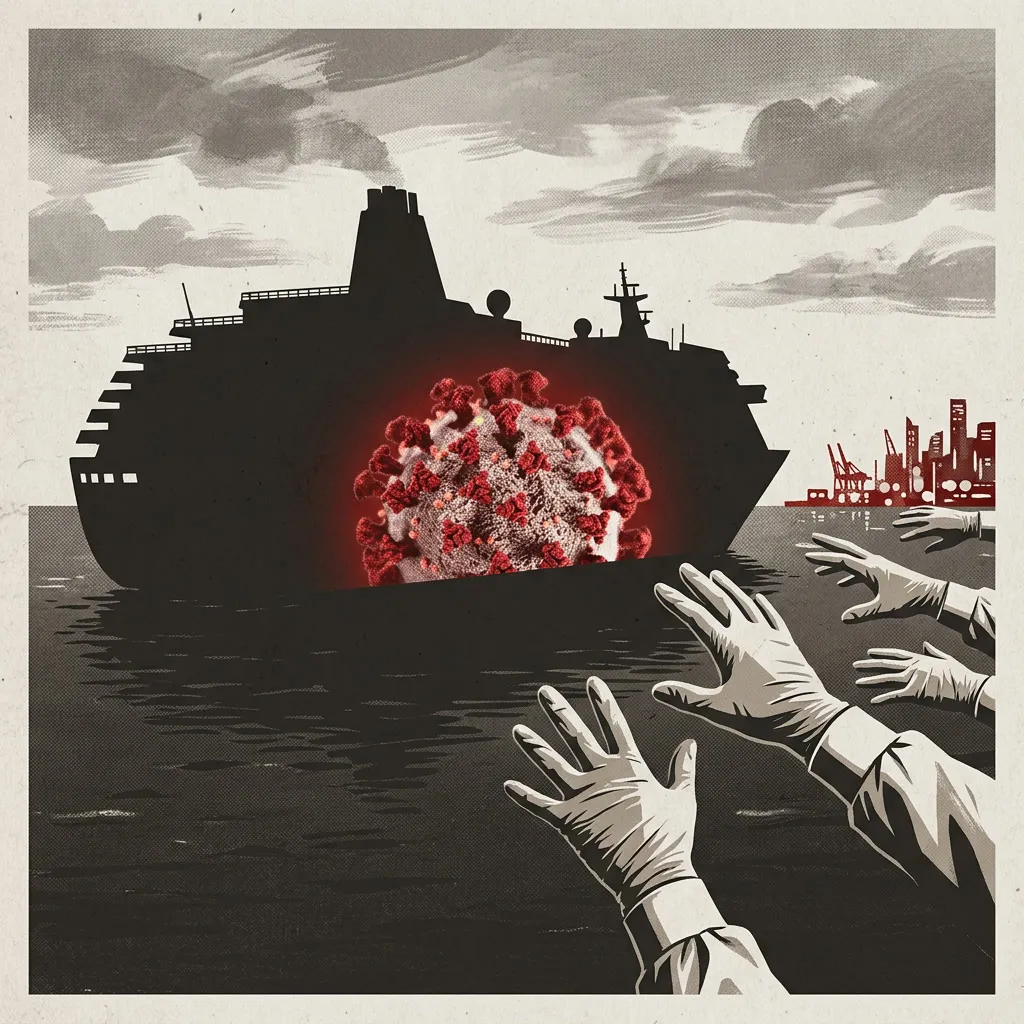
An outbreak of hantavirus on the Dutch-flagged cruise ship MV Hondius, resulting in multiple passenger deaths, has triggered a coordinated international public health response and drawn global media attention. While health authorities emphasize the virus's limited human-to-human transmission potential, the incident has raised questions about onboard crisis management and sparked varied regional reactions, particularly in the port community of Tenerife awaiting the vessel's arrival.
Reports from Channel News Asia (CNA) provide a detailed public health perspective, framing the event as a contained outbreak requiring rigorous investigation rather than a public panic. One CNA commentary, written by a public health doctor involved in the investigation, focuses on the scientific process of determining whether person-to-person spread occurred within the ship's close quarters. A separate CNA article cites infectious disease experts who characterize the risk to Singapore and similar regions as "very negligible," stressing that the virus "doesn't spread easily between people" and usually requires close physical contact. This framing presents the outbreak as a manageable, isolated incident and highlights the preparedness of healthcare systems.
European outlets like Le Monde and the BBC offer a mix of scientific explanation and on-the-ground reporting. Le Monde provides a glossary of scientific terms, positioning the cruise ship cases as a catalyst for public education about hantaviruses, their Andean strains, and fatality rates. The BBC's coverage has two distinct angles. One report details the logistical operation planned for safely disembarking passengers in Tenerife, while another explicitly quotes the UN World Health Organization stating the outbreak is "not the start of a pandemic" and is fundamentally different from COVID-19 due to its transmission mechanisms. This dual approach balances practical crisis response with authoritative reassurance from global health bodies.
In contrast, Al Jazeera and RT introduce narratives focused on local anxiety and alleged failures in transparency. Al Jazeera's video report from Tenerife highlights the concerns of locals in the resort town, who fear the docking ship could pose health risks to their community. RT's coverage adopts a more critical tone, labeling the MV Hondius a "plague ship" in its headline. It centers on newly released video footage from April 12, in which the captain assured passengers that an initial death was due to "natural causes" and was "not infectious." RT notes this assurance was given before the hantavirus outbreak was officially confirmed, juxtaposing the captain's early statements with the subsequent deaths of three passengers, including the wife of the first victim and a German woman whose body reportedly remained on board.
Framing the Conflict The synthesis of sources reveals a clear divergence in narrative framing. Asian and mainstream European sources (CNA, BBC, Le Monde) predominantly frame the event through a lens of public health management and scientific fact, aiming to quell undue alarm. They emphasize the virus's epidemiology, the low risk of widespread transmission, and the structured response from authorities like the WHO. Conversely, media from the Middle East and Russia (Al Jazeera, RT) frame the story around human drama and potential institutional missteps. Al Jazeera spotlights community fear and the social disruption of the ship's arrival, while RT constructs a narrative of possible passenger misinformation by highlighting the temporal gap between the captain's reassuring announcements and the full confirmation of the outbreak.
In conclusion, the MV Hondius incident serves as a case study in how regional media lenses filter a complex health event. The core facts—a rodent-borne virus outbreak on a cruise ship with fatal consequences—are consistent. However, the emphasis shifts dramatically from a technical, reassurance-oriented narrative in some regions to a story of local impact and questions about accountability in others. This divergence underscores how public health crises are interpreted not just through medical data, but through pre-existing cultural attitudes towards authority, transparency, and risk.