
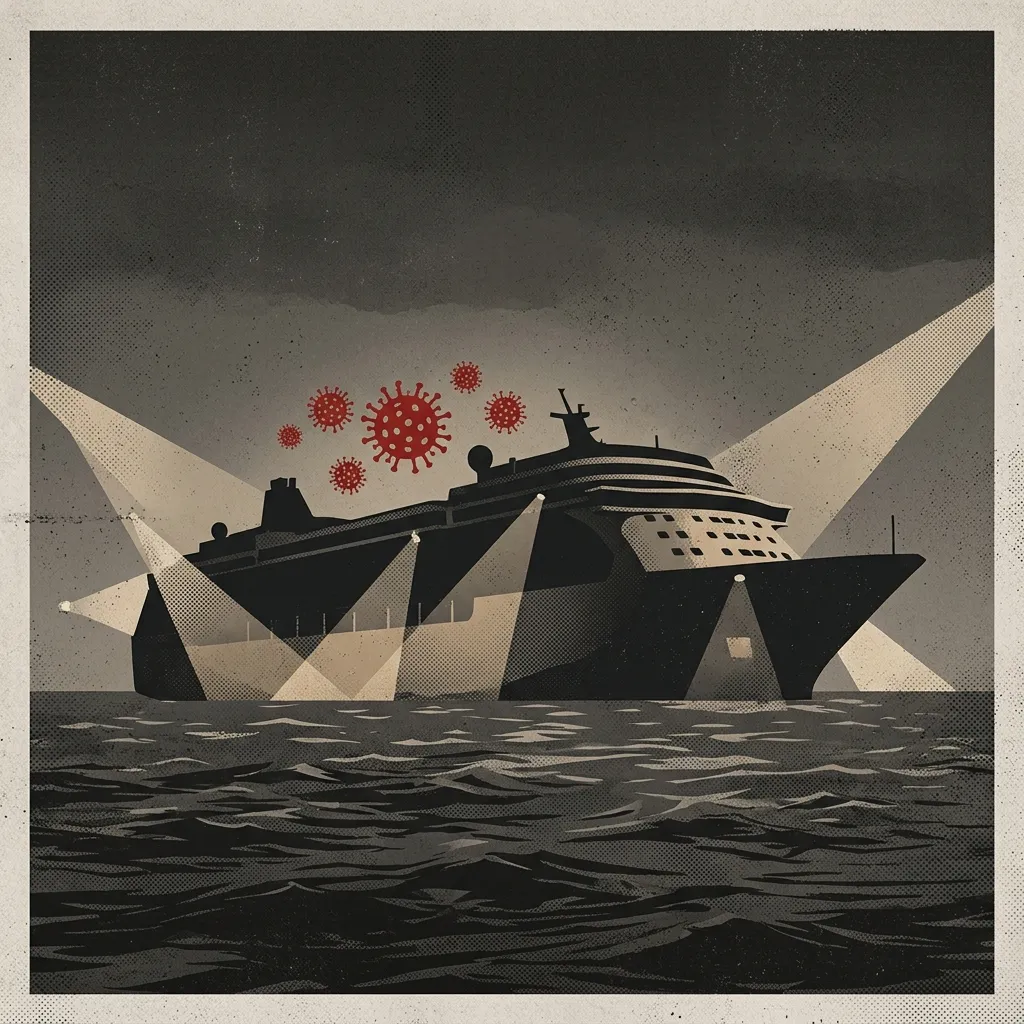
A major international health incident has emerged from the cruise ship MV Hondius, struck by a hantavirus outbreak. The incident has triggered complex international evacuation efforts and sparked varying regional media narratives. This analysis synthesizes how different news sources from across the globe have reported the event, highlighting differences in framing, emphasis, and the selection of facts.
Lead Paragraph
A rare hantavirus outbreak on the Dutch-flagged cruise liner MV Hondius has led to the evacuation of passengers from multiple countries. Initial reports confirm at least eight linked cases and three deaths. The response involves specialized medical repatriation to facilities like the University of Nebraska Medical Center. Media coverage varies significantly by region, focusing on different aspects from public health protocols to geopolitical implications.
Main Body: Framing Differences Across Sources
Coverage of the outbreak can be categorized into several distinct regional framings.
1. U.S. & European Mainstream: Operational and Public Health Focus Sources like Politico Europe and The Hindu (reporting on U.S. official statements) frame the story around operational logistics, public health assurances, and low risk to the general public. Their headlines emphasize that evacuated Americans "will not necessarily be quarantined" (The Hindu) and note a positive case with "mild symptoms" (Politico). The narrative centers on the efficiency of repatriation efforts, the specialized clinical care available, reiterates official statements downplaying broader transmission risk. The tone is procedural and reassuring, focusing on contained, competent institutional management.
2. UK & European Media: Isolated Incident and Local Impact BBC News coverage exemplifies a framing that focuses on the isolated nature of the incident and its direct consequences for specific nationals. Headlines note "French national shows symptoms" and that tourists will be "quarantined in Paris." story is presented as a discrete event with clear national boundaries, focusing on the steps taken for affected citizens (French, British) without extensive discussion of global health implications. The remote British territory of Tristan da Cunha is also highlighted, introducing a colonial-era framing of remote vulnerability.
3. Russian State-Aligned Media: Geopolitical and Military Framing RT (Russia Today) employs a dramatically different frame, emphasizing military response and potential for fear. Its headline, "British army parachutes hantavirus response team to remote island," is accompanied by a video. The report labels the ship the "plague ship" and details the unique human-transmissible Andes strain. This framing sensationalizes the event, highlights state military capability (British paratroopers), and implicitly critiques Western responses, potentially aligning with broader narratives about Western public health failures.
4. African Independent Media: Investigative and Source-Tracing Focus South Africa's Daily Maverick provides the most investigative depth, running multiple articles. One piece focuses on "How an SA team of scientists hunted a rare hantavirus strain," framing the outbreak as a point of national scientific pride and capability. Another tracks "possible Andes virus exposure in Western Cape," shifting the narrative to local vulnerability and proactive surveillance. This coverage moves beyond the immediate event to explore origins, scientific response, and regional preparedness, reflecting a perspective concerned with both global health equity and local agency.
5. Latin American State Media: Comprehensive Chronology and Bureaucratic Detail Brazil's Agência Brasil offers a detailed, chronological account focused on bureaucratic and logistical steps. The report lists the nationalities of passengers, the sequence of disembarkation and flights, and specifics about quarantine locations in Spain. It extensively quotes international and local officials, including the WHO. The framing is factual and procedural, serving to inform the public of the steps taken by authorities without overt sensationalism or critique, typical of state-affiliated news services.
Framing the Conflict: Explicit Comparison of Source Narratives
A clear divergence exists between sources that frame the event as a manageable public health operation and those that frame it as a sensational or geopolitically significant crisis.
- Public Health Management Frame (The Hindu, Politico, Agência Brasil): These sources present a sequence of official actions: evacuation, transport, assessment, care. The language is neutral; the protagonists are health departments and governments; the conflict is between human health and a pathogen, competently being managed.
- Crisis/Sensational Frame (RT, some BBC elements): RT explicitly uses terms like "plague ship" and focuses on military deployment. Even the BBC's mention of the "tourist hotspot" at the origin (Ushuaia) introduces a narrative of blame and source-tracing. In these frames, the conflict is amplified: it is between civilization and a deadly outbreak, between states in a response race.
- Investigative/Scientific Frame (Daily Maverick): Here, conflict is between scientific ignorance and knowledge. The narrative arc is about the hunt for the strain and the tracking of exposure, casting scientists and authorities as protagonists in a detective story.
Concluding Paragraph
The global media response to the MV Hondius hantavirus outbreak reveals how regional priorities, political contexts, and editorial missions shape news narratives. While U.S. and European mainstream outlets largely provided reassuring, operationally-focused accounts, Russian media leveraged the story for sensational and geopolitical framing. African independent media used it as a springboard for investigative and scientific reporting, Latin American state media presented a detailed bureaucratic record. These divergent framings underscore that the "same" news event is never singularly reported; it is reconstructed through lenses of public reassurance, national interest, strategic narrative, or local scientific pride, presenting multifaceted truths to their respective audiences.