
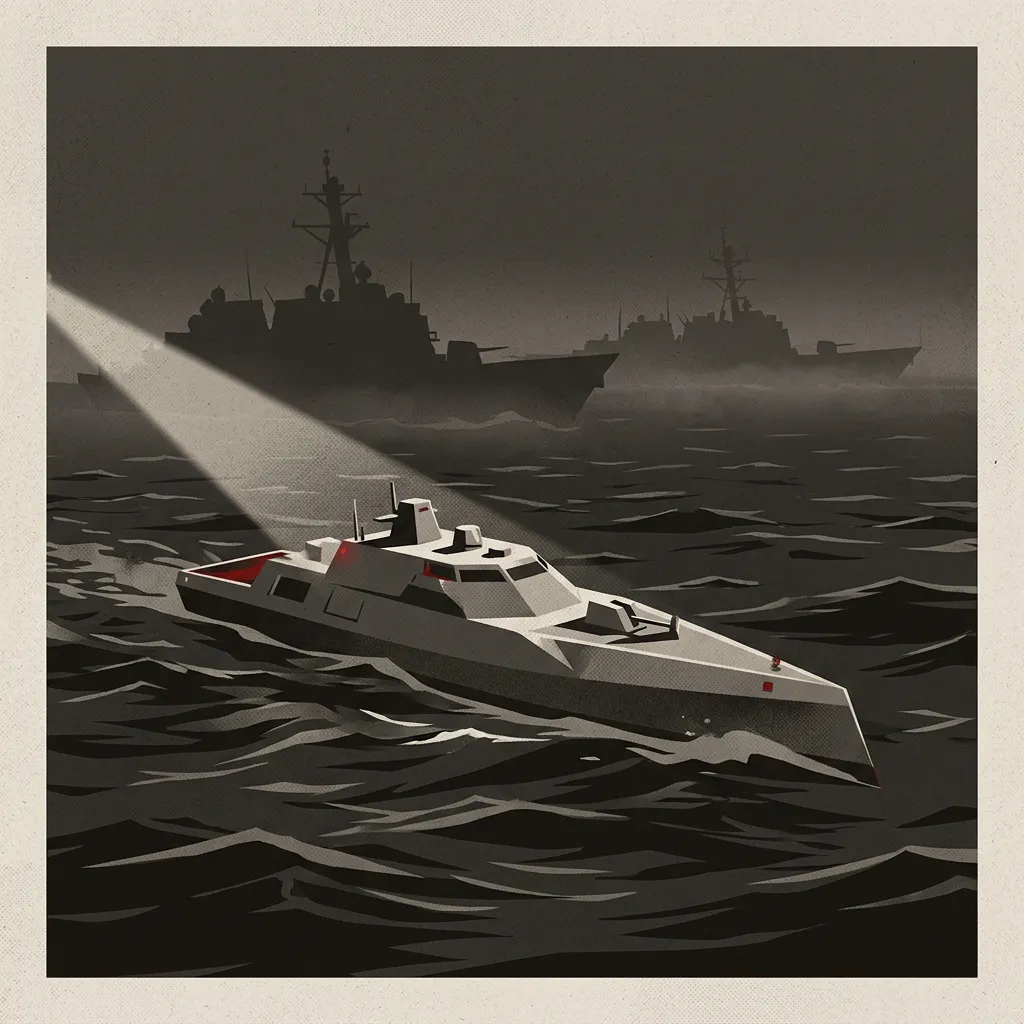
Greek authorities are examining a sophisticated unmanned naval vessel discovered in the Ionian Sea, with initial reports suggesting it is a type of maritime drone. The incident has drawn international attention, as investigators explore potential links to the ongoing conflict in Ukraine, illicit trafficking, or a navigational mishap. The discovery has prompted a significant security response and raised questions about the expanding geographical reach of naval drone warfare and regional maritime security.
Source 1: BBC News (Europe) The BBC's report is concise and centers on the uncertainty surrounding the drone's origin and purpose. It notes that Greek media have suggested the vessel could be Ukrainian or otherwise connected to the Russia-Ukraine war. The report mentions that the drone was reportedly found with explosives, framing the story as a developing mystery with potential geopolitical implications. The BBC's framing is cautious, presenting the information as based on media reports without extensive elaboration on the drone's specifications or the broader context of naval attacks.
Source 2: RT (Russia) RT provides a significantly more detailed account, explicitly identifying the vessel as a "suspected Ukrainian-made" MAGURA V3 kamikaze drone. It cites Reuters and Greek sources, detailing that the drone was found in a cave, fitted with detonators and potentially explosives, and equipped with a Starlink satellite dish. The report heavily contextualizes the find within Ukraine's campaign against Russian maritime interests. It describes Ukraine's attacks on vessels linked to Moscow in the Black Sea and Mediterranean, labeling several specific incidents, including strikes on an Omani-flagged tanker and a Russian LNG carrier. RT quotes Moscow's characterization of such strikes as "terrorism and maritime piracy." Notably, RT also includes a paragraph from the Greek newspaper Kathimerini proposing an alternative theory: that the drone, due to a purported lack of a warhead, could have been used for drug trafficking. This inclusion adds a layer of complexity to the narrative.
Framing the Discovery The framing of this incident diverges sharply based on the source's regional perspective and editorial stance. The BBC presents a neutral, brief update focused on the basic facts of the discovery and the two main possibilities under consideration by Greek investigators. It avoids attributing blame or detailing the conflict's maritime dimension. In contrast, RT's narrative is expansive and accusatory. It firmly anchors the story within the Russia-Ukraine war, presenting the drone as almost certainly Ukrainian and part of a pattern of attacks it condemns. By detailing past Ukrainian strikes and quoting Russian government rhetoric, RT frames Ukraine's actions as reckless and illegal, threatening civilian shipping in international waters. The mention of the drug trafficking theory, while presented as a Greek media report, serves to potentially cast doubt on Ukraine's military conduct or suggest alternative, criminal uses for its technology.
Synthesis and Implications The discovery of this naval drone in Greek waters represents a tangible spillover of the Ukraine conflict into a NATO member's maritime domain. The differing reports highlight how a single object can be interpreted through competing geopolitical lenses. For European outlets like the BBC, the priority is reporting the investigative facts without prematurely assigning responsibility, reflecting a cautious approach to a sensitive security matter. For Russian state media, the incident is an opportunity to reinforce a narrative of Ukrainian aggression and destabilization beyond the Black Sea. The exploration of a drug trafficking link, whether substantiated or not, introduces an element of ambiguity that could be used to question the official Ukrainian narrative of its naval operations. Ultimately, the Greek investigation's conclusions will be critical, but the initial reporting underscores how the tools of modern hybrid warfare—like maritime drones—can become focal points for information warfare, with each side leveraging the incident to support its broader strategic messaging about the conflict's nature and reach.