
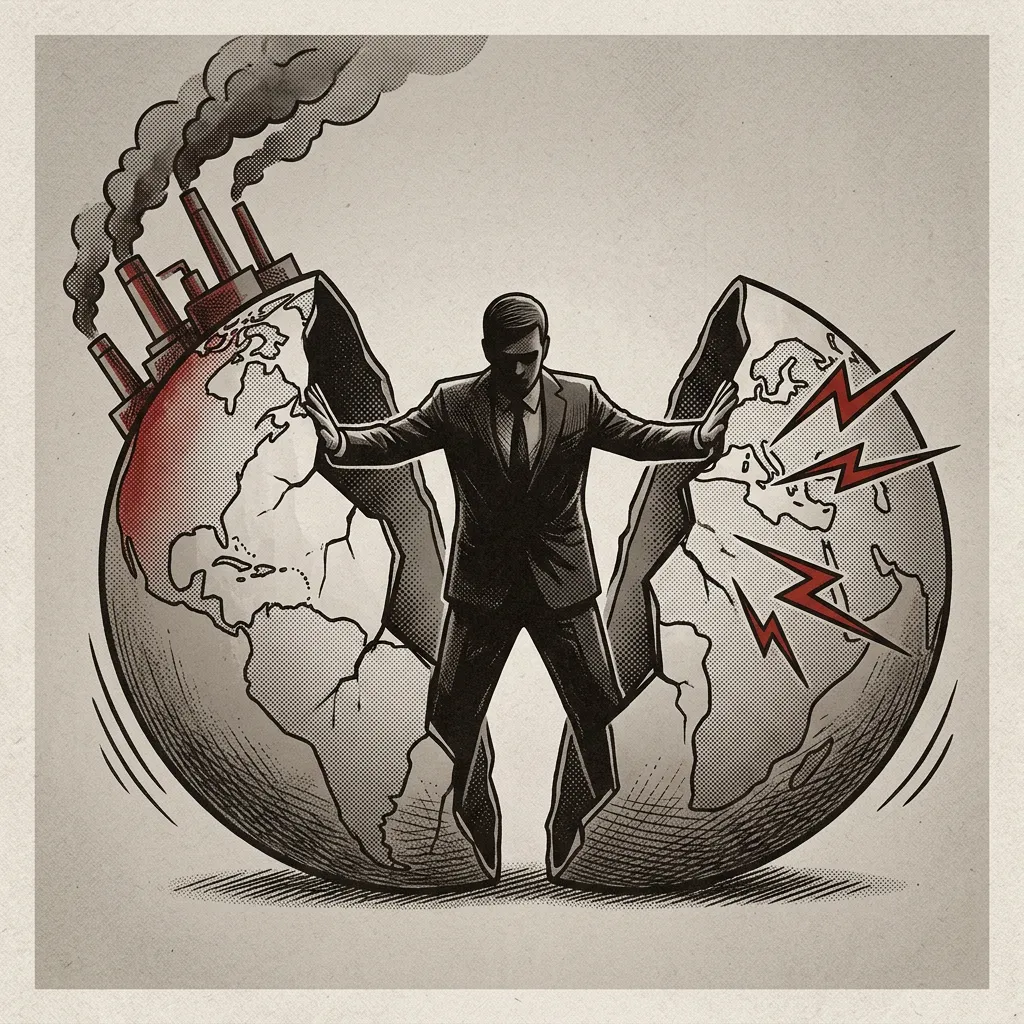
German Chancellor Friedrich Merz has publicly criticized the United States' handling of the war in Iran and European Union regulations, framing them as key factors behind Germany's struggling economy. The comments prompted a sharp personal rebuke from US President Donald Trump, highlighting transatlantic tensions.
According to a report from Politico Europe, Chancellor Merz, speaking to students in western Germany, stated that the US had been "humiliated" by Iran's regime and lacked a strategy to end the conflict. He argued that the resulting surge in energy prices was directly damaging Germany's economic performance and costing taxpayers significant sums. The same report notes that Merz has also intensified criticism of the EU, pledging to push for exemptions from AI regulations and calling for sweeping budget cuts in Brussels, which he portrays as a "regulatory straitjacket."
This framing positions external factors—the Iran war and EU bureaucracy—as primary obstacles to German economic growth. Politico's analysis suggests this is a political strategy, as Merz's domestic popularity has plummeted. The report states he recently fell to last place in a ranking of prominent German politicians, with only 15% of the public satisfied with his coalition government. Concurrently, the far-right Alternative for Germany (AfD) party has risen in polls, capitalizing on economic discontent.
The chancellor's critique of US policy drew an immediate response from President Trump. As reported by Al Jazeera, Trump used his Truth Social platform to state that Merz "doesn't know what he's talking about" and defended the war on Iran as necessary. Trump further connected the criticism to Germany's economic situation, writing, "No wonder Germany is doing so poorly, both Economically, and otherwise!" Folha de S.Paulo's brief report confirms the exchange, noting Trump's criticism came after Merz said Iranians were humiliating Americans in negotiations.
Politico's reporting provides context for Merz's focus on external blame, citing Germany's limited domestic policy options. The government recently slashed its growth forecasts for 2026 and 2027, citing fallout from the Middle East war. A major borrowing initiative for infrastructure and defense, dubbed an economic "bazooka," reportedly failed to deliver the expected stimulus, with funds being redirected to cover budget gaps. The report concludes that Merz now faces the difficult prospect of implementing structural economic reforms he had previously avoided.
Al Jazeera's coverage focuses more narrowly on the diplomatic spat over Iran, headlining Trump's "scolding" of Merz. It quotes Trump's defense of the war as "necessary," but does not delve into the broader context of Germany's economic politics or Merz's criticisms of the EU that Politico details extensively. Folha de S.Paulo presents the incident as a straightforward diplomatic news item, summarizing the clash without analytical context.
The Politico report explicitly frames Merz's actions as a blame-shifting tactic amid poor polling and a rising far-right challenge, a narrative absent from the other sources. It also details the chancellor's parallel campaign against EU regulation, which is not mentioned in the Al Jazeera or Folha de S.Paulo accounts.