
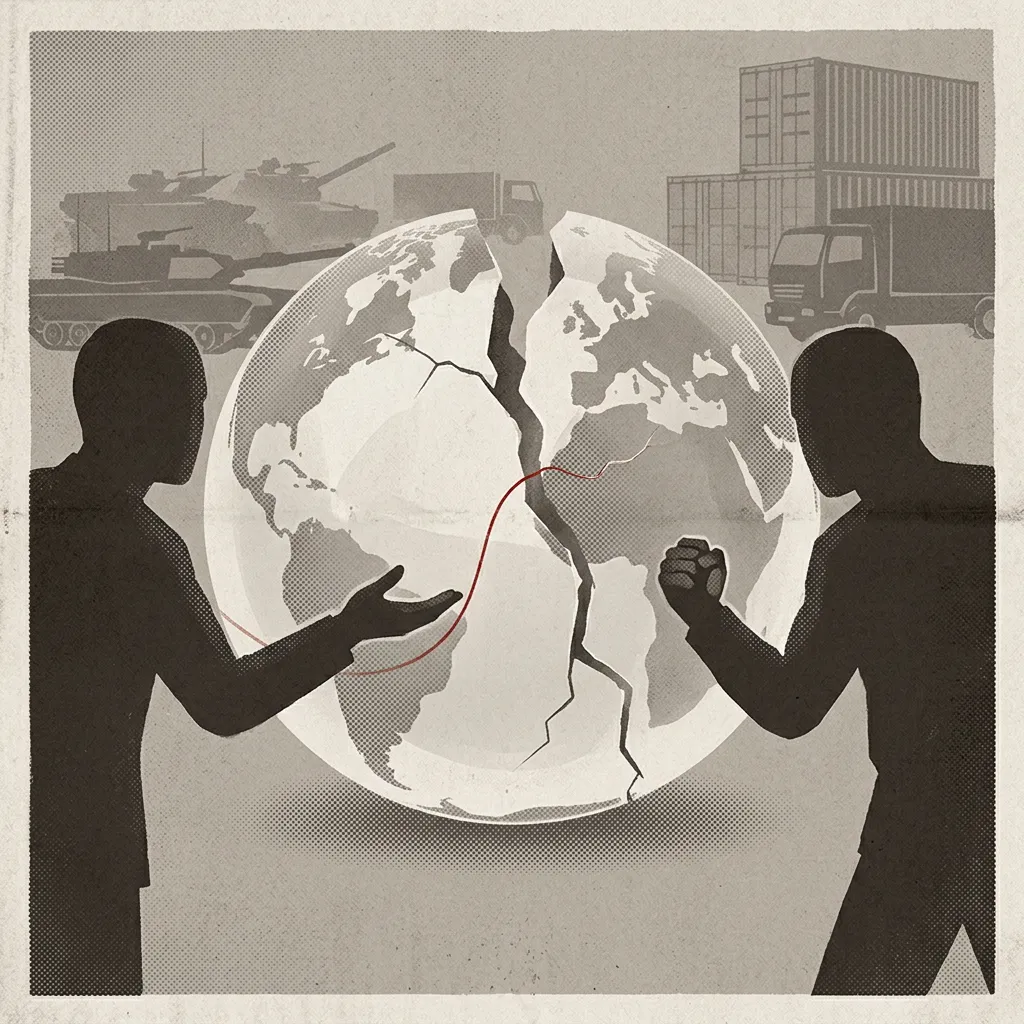
German Chancellor Friedrich Merz has publicly sought to downplay a recent diplomatic clash with U.S. President Donald Trump, emphasizing a continued commitment to the transatlantic partnership despite disagreements over military deployments and trade. The friction stems from Merz's criticism of U.S. actions in Iran, which prompted a retaliatory social media insult from Trump and subsequent announcements regarding troop withdrawals and potential auto tariffs. In a Sunday interview, Merz framed the disputes as manageable differences within a vital alliance, though underlying strategic and economic tensions remain evident across regional reports.
European Perspectives: Managing the Partnership Politico Europe provides the most detailed account, characterizing Merz's approach as an effort to "lower the temperature." The report notes Merz's attempt to contextualize the troop withdrawal, describing it as part of longer-term military planning rather than a direct retaliation. Merz is quoted stating the withdrawal of a contingent stationed by former President Joe Biden had "been discussed for quite some time." However, Politico highlights more consequential uncertainties, particularly the lapse of a U.S. commitment to supply Germany with Tomahawk missiles, which raises concerns about European deterrence against Russia. On trade, the outlet reports Merz struck a "measured tone," acknowledging U.S. frustration over stalled EU negotiations while reiterating German opposition to tariffs. Le Monde's shorter report synthesizes this into a core message, noting Merz reiterated that "Americans are important partners" despite disagreements on Iran.
Global Framing: Strategic Rifts and Regional Reactions Other international outlets focus on broader strategic implications. Al Jazeera's headline emphasizes Merz's effort to "downplay[] rift with Washington" and separates the Iran criticism from the troop announcement. Similarly, Brazil's Folha de S.Paulo reports Merz argued there was "no link" between the recent divergence and the planned reduction of American soldiers, framing the chancellor's stance as a pragmatic acceptance of differing opinions to maintain cooperation within NATO.
In stark contrast, Russia's RT presents the situation as a significant rupture within the Western alliance. Its headline declares a "NATO rift widens" and the report frames the troop withdrawal as a direct consequence of feuding over the Iran war. RT's narrative extends beyond the Merz-Trump dynamic, quoting European leaders like Poland's Donald Tusk warning of NATO's "ongoing disintegration." The report also contextualizes the move within a European "rearmament drive" and portrays European defense spending increases as partly driven by Trump's demands, ultimately suggesting such actions are based on propaganda about a Russian threat.
Framing the Dispute The core factual event—Merz's public comments following Trump's announcements—is reported consistently, but the framing reveals distinct regional priorities. European sources (Politico, Le Monde) and those from other regions (Al Jazeera, Folha) focus on diplomatic management and damage control, analyzing Merz's rhetoric and the practical implications for missile defense and trade. They present the tension as a challenging but navigable episode in a complex relationship. RT, however, frames the event as a symptom of a deep and growing structural crisis within NATO, using it to critique Western alliance cohesion and military policy. This source also introduces external perspectives, like Moscow's dismissal of a Russian threat as "nonsense," which are absent from other reports.
Conclusion: Divergent Narratives on Alliance Cohesion The synthesis of reports reveals a fundamental divergence in interpreting the same diplomatic incident. For most Western and global media, the story is one of a European leader practicing crisis diplomacy to stabilize a key bilateral relationship amid policy disagreements. The subtext is the enduring importance, yet growing fragility, of the transatlantic link. The Russian state-affiliated narrative seizes on the incident to portray a weakening, internally divided Western bloc, aligning the story with a broader geopolitical message about Western decline and the artificial nature of its security concerns. The event thus serves as a mirror, reflecting either a temporary diplomatic spat or a confirmation of deepening alliance fractures, depending on the observer's vantage point.