
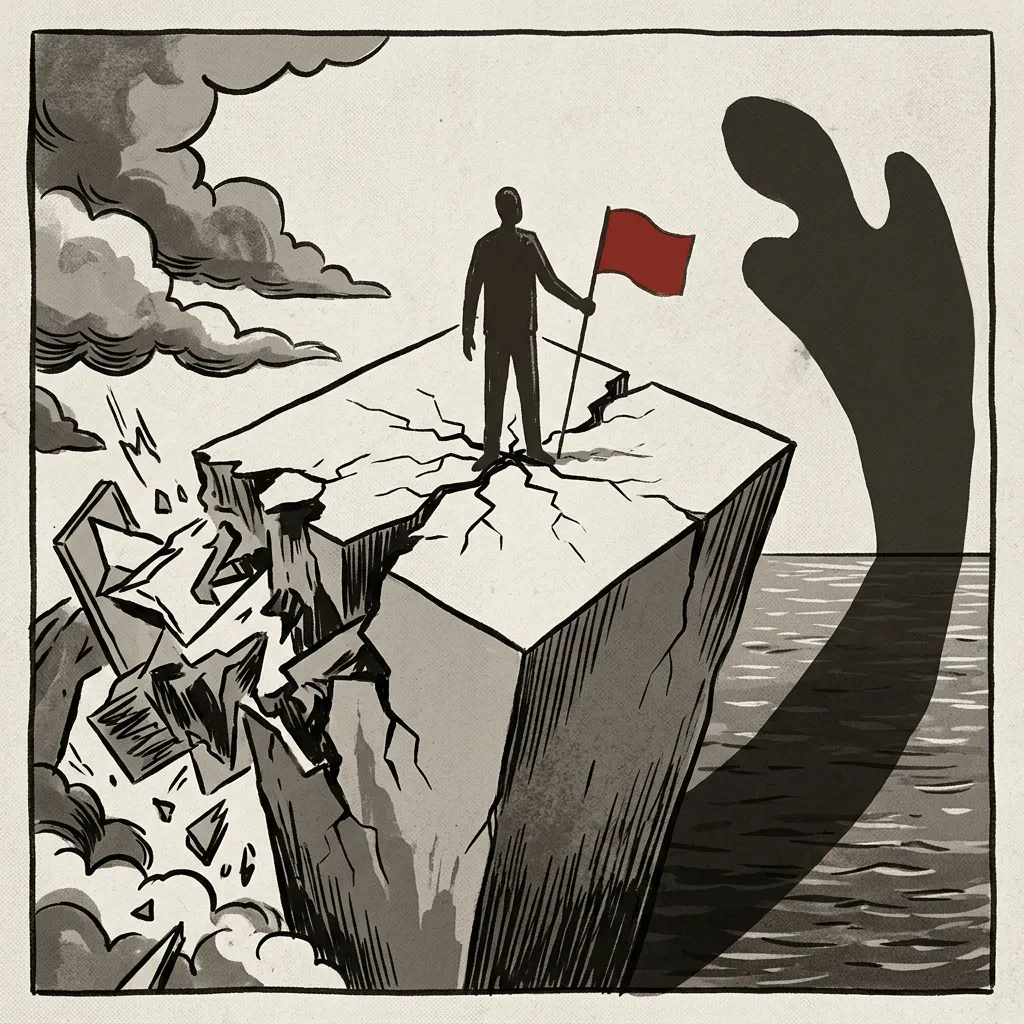
As German Chancellor Friedrich Merz marks his first year in office, assessments from European and international media converge on a portrait of a deeply embattled leader. While sources agree on the severity of his domestic political challenges and plummeting popularity, they diverge in their framing of his strategic choices, his foreign policy record, and the fundamental causes of his predicament. The anniversary is defined by a collision with the United States, a fragile governing coalition, and historically low public approval.
Domestic Challenges and Coalition Strains All sources highlight Merz's severe domestic headwinds. Politico Europe's analysis describes a chancellor leading a "fractious coalition" and a Christian Democratic Union (CDU) that is "splintered," caught between its own right flank and left-wing critics. His personal approval ratings, cited as low as 15% in one Politico report, are noted as being worse than his predecessor Olaf Scholz's lowest point. The Brazilian newspaper Folha de S.Paulo frames this simply as the "worst evaluation in history" for a German chancellor. The coalition with the Social Democrats (SPD) is portrayed as a source of weakness; one Politico article suggests Merz is seen as giving ground too quickly under pressure from his junior partner, constraining his ability to enact promised conservative reforms on welfare and pensions. Le Monde does not focus on domestic politics but implies the external pressure from the U.S. compounds an already difficult situation.
Foreign Policy: Strategic Pivot or Self-Sabotage? The framing of Merz's foreign policy, particularly his handling of the relationship with U.S. President Donald Trump, reveals significant divergence. One Politico column, explicitly titled "In defense of Germany’s Merz," argues the chancellor has been "more strategic than he has been given credit for, particularly on defense and security." It credits him with working to reinforce Ukraine, confronting residual German sympathy for Russia, and decisively committing Germany to major defense spending increases to achieve strategic autonomy. This source presents Merz's bluntness as a necessary corrective to the previous politics of consensus.
In stark contrast, another Politico report, "The incredible shrinking German chancellor," frames Merz's foreign policy as a source of newfound vulnerability. It details how a controversial comment by Merz about the U.S. being "humiliated" in Iran led to a sharp rebuke from Trump and the announcement of U.S. troop withdrawals from Germany. This narrative suggests the incident has undermined Merz's core identity as an Außenkanzler (foreign policy chancellor) and threatens a key deterrent arrangement with Russia. Folha de S.Paulo also centers the "collision course with Donald Trump" as a defining problem. The defensive Politico column acknowledges these missteps, describing Merz's comments as ranging from "blithely suggesting" to "self-sabotage," but argues the strategic underpinnings of his policy remain sound.
Framing the Leadership Crisis The sources offer different lenses through which to view Merz's first-year crisis. The critical Politico analysis frames it as a story of diminishing returns: a leader who promised authority and renewal has become "incredibly shrinking" due to coalition constraints and diplomatic missteps. It questions whether he can recover. Folha de S.Paulo emphasizes a series of "controversial phrases" as a key factor in his troubles. Conversely, the supportive Politico column frames the crisis as an inevitable and even commendable result of Merz's blunt, transparent style breaking with a comfortable but outdated German consensus. It posits that the "bile thrown at him" is partly because "Germans are struggling to come to terms with the end of the politics of consensus." Le Monde introduces a distinct, geopolitical frame, viewing the U.S. troop withdrawal not merely as a diplomatic spat but as a catalyst forcing Berlin to confront a "historic dilemma" and the long-taboo issue of financing its own defense—a challenge Merz now must navigate.
Synthesis of Broader Implications The synthesis of these reports suggests Merz's first anniversary is less a celebration and more a critical juncture for German politics. The consensus is that his chancellorship is under unprecedented pressure, with domestic fragility and international friction reinforcing each other. The divergences in analysis hinge on whether Merz's foreign policy represents a flawed but necessary strategic awakening or a series of unforced errors that have weakened Germany's position. Furthermore, the coverage reflects a broader debate about the viability of Germany's traditional coalition-based governance model in an era of polarized politics, with the rise of the far-right Alternative for Germany (AfD) noted as a constant backdrop. Ultimately, the reports depict a leader caught between the exigencies of a volatile world and the deep-seated political constraints at home, with his ability to bridge that gap defining the trajectory of his government.