
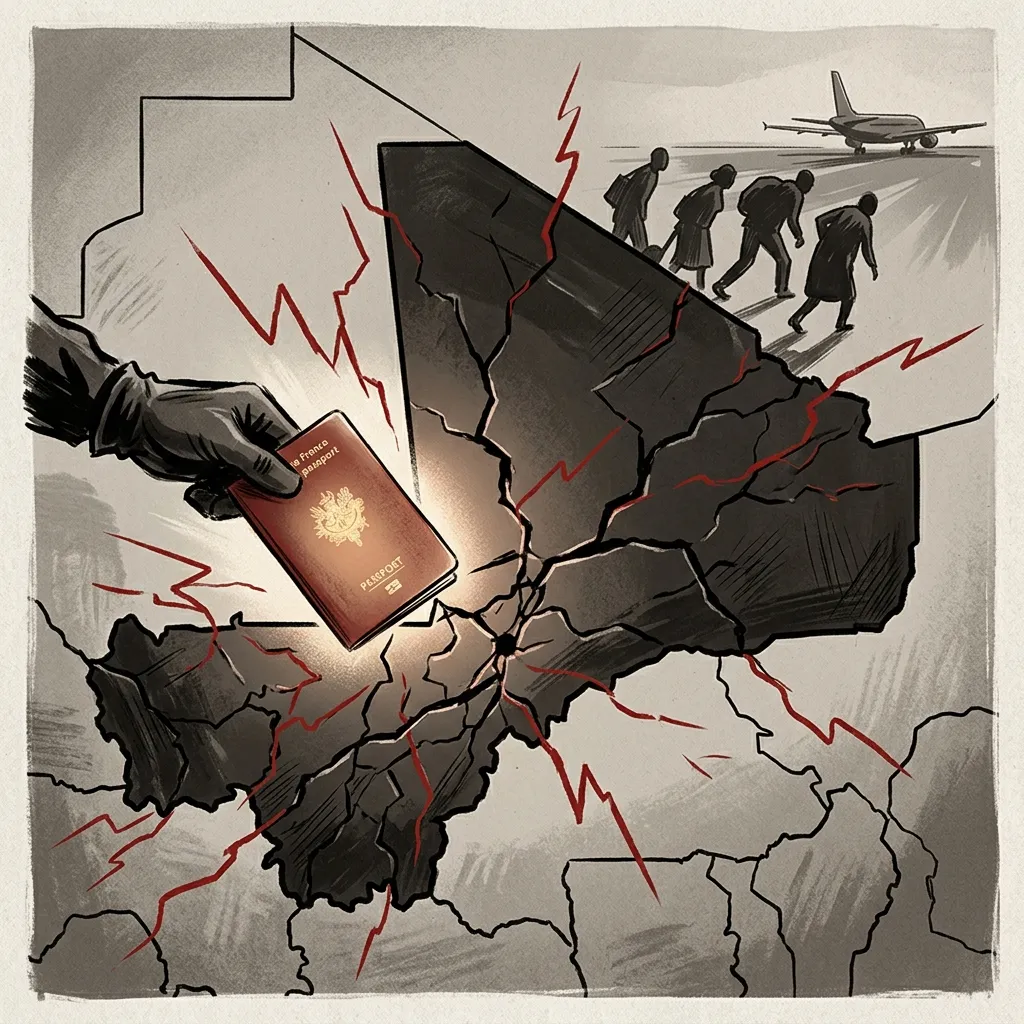
France has issued an urgent call for its citizens to depart Mali, citing a rapidly worsening security environment following a series of coordinated attacks. The advisory, which warns of an 'extremely volatile' situation, comes as other nations, including the United Kingdom, issue similar warnings. This development highlights the deepening instability in the West African nation, with the violence reaching the capital, Bamako, a significant escalation that has prompted international concern.
The BBC News report frames the event primarily through the lens of international diplomatic coordination and risk management. It notes that the UK has issued 'similar advice,' explicitly stating that citizens who choose to remain do so 'at their own risk.' This framing presents the situation as a matter of standard consular procedure and shared Western assessment, focusing on the practical steps taken by allied governments to protect their nationals. The language is measured and procedural, typical of mainstream European news outlets reporting on foreign affairs.
Africanews provides a more detailed account of the immediate trigger for the advisory, specifying that it followed 'coordinated attacks' in 'several cities, including the capital Bamako.' The report emphasizes the term 'extremely volatile' directly from the French warning, giving weight to the official characterization of the crisis. This framing from a pan-African perspective situates the event within the ongoing regional security landscape, acknowledging the specific incidents that precipitated the heightened alert. It presents the French action as a direct and urgent response to a tangible escalation of violence on the ground.
The Daily Maverick, an independent African publication, aligns closely with the factual reporting of Africanews but presents it with a slightly more direct tone. It quotes the French advisory's instruction to leave 'as soon as possible' and explicitly links it to the 'coordinated attacks at the weekend.' The framing is concise and focused on the advisory itself as a news event, with less emphasis on the broader international diplomatic context provided by the BBC. This approach reflects a focus on the immediate implications for people in the region and the stark reality of the security deterioration.
Framing the Conflict
The sources converge on the core facts: France has urged its citizens to leave Mali due to serious security risks following attacks in Bamako and elsewhere. However, their framing reveals subtle but important differences in perspective. The BBC's narrative is one of allied Western governments enacting coordinated contingency plans, subtly reinforcing a narrative of collective external response to a foreign crisis. In contrast, both African sources—Africanews and the Daily Maverick—frame the event more squarely within the immediate and localized security breakdown in Mali itself. They highlight the attacks as the catalyst, presenting the French decision as a reactive measure to a deteriorating situation on African soil, rather than as part of a pre-existing diplomatic posture.
A key divergence lies in what each source chooses to amplify. The BBC spotlights the parallel action by the UK, constructing a story about international consensus. The African sources prioritize the description of the violence ('coordinated attacks,' 'extremely volatile') and the urgency of the French directive ('as soon as possible'). This suggests that for European audiences, the story may resonate as part of a broader pattern of instability affecting Western interests abroad. For African audiences, the story is more directly about the specific and acute failure of security in a fellow African state, with the French advisory serving as a potent indicator of just how severe conditions have become.
In conclusion, the synthesis of these reports paints a picture of a significant security crisis in Mali that has forced a major former colonial power and security partner to publicly advise evacuation. While all sources agree on the gravity of the situation, the framing reflects their distinct editorial vantage points: one viewing it through the prism of international diplomacy and citizen protection, and the others through the lens of on-the-ground violence and regional instability. The event underscores Mali's precarious position and the challenges facing international engagement in the Sahel, with the urgent departure of foreign nationals marking a notable downturn in the country's security outlook.