
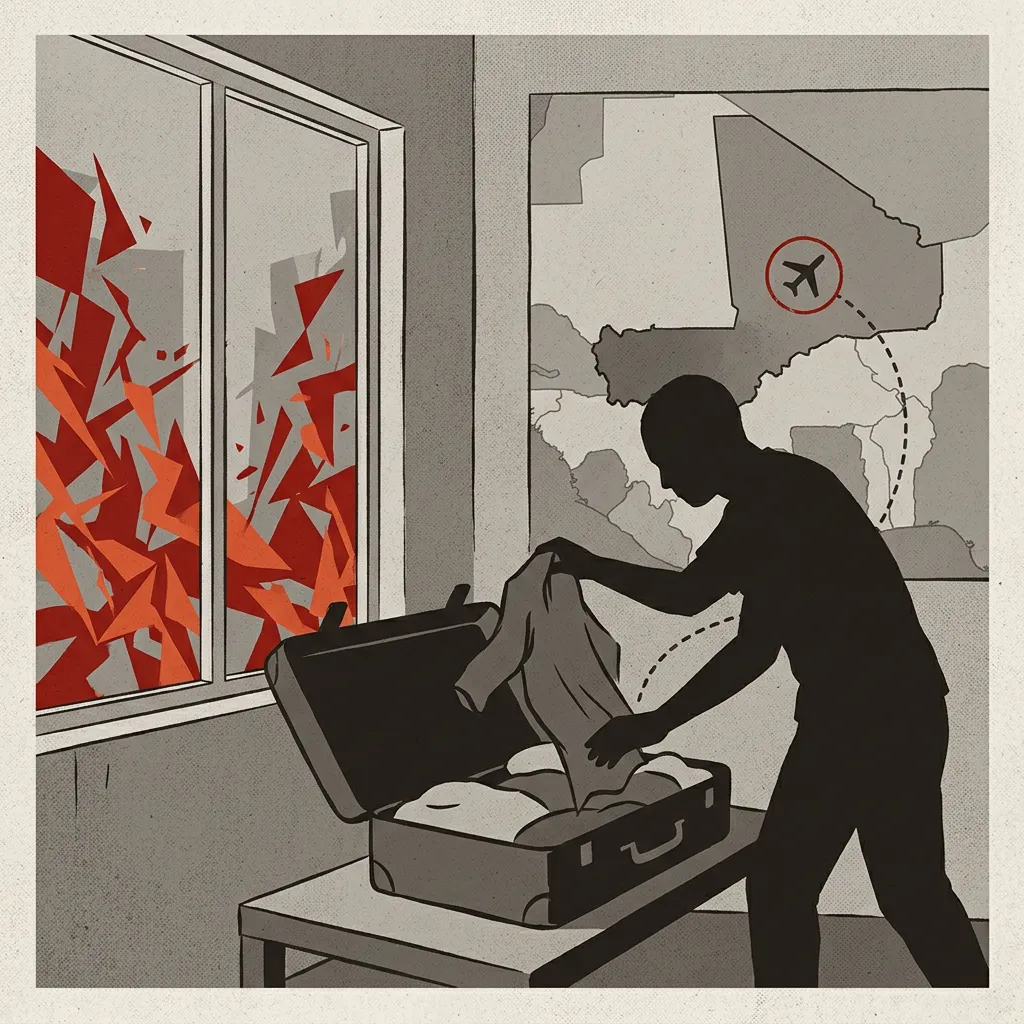
The French government has issued an urgent call for its citizens in Mali to depart the country. The advisory, described as a travel advice update, instructs nationals to leave "as soon as possible." This directive follows a series of violent incidents over a weekend, which included coordinated assaults on several urban centers. One of the locations targeted was the capital city, Bamako. French authorities have characterized the overall security environment in Mali as "extremely volatile."
In a parallel move, the United Kingdom has provided similar guidance to its own citizens who remain in Mali. The British advice explicitly states that individuals who choose to stay do so entirely at their own risk, placing the onus of personal safety on the traveler. This development points to a shared international assessment of heightened danger within the country.
The reporting on the underlying cause of the security deterioration shows a difference in emphasis. While all sources mention the coordinated attacks as the immediate trigger for the advisory, the framing of the broader context varies. One African source explicitly links the French travel warning to a "deepening" security crisis in Mali, suggesting a longer-term and worsening trend of instability. Other reports focus more narrowly on the specific, recent attacks as the catalyst for the updated government advice.
The language used to describe the advisory is largely consistent across reports, with multiple outlets directly quoting the French government's "as soon as possible" phrasing. The characterization of the security situation as "extremely volatile" is also widely cited. The inclusion of the UK's similar warning provides additional international context for the severity of the situation as perceived by Western governments.