
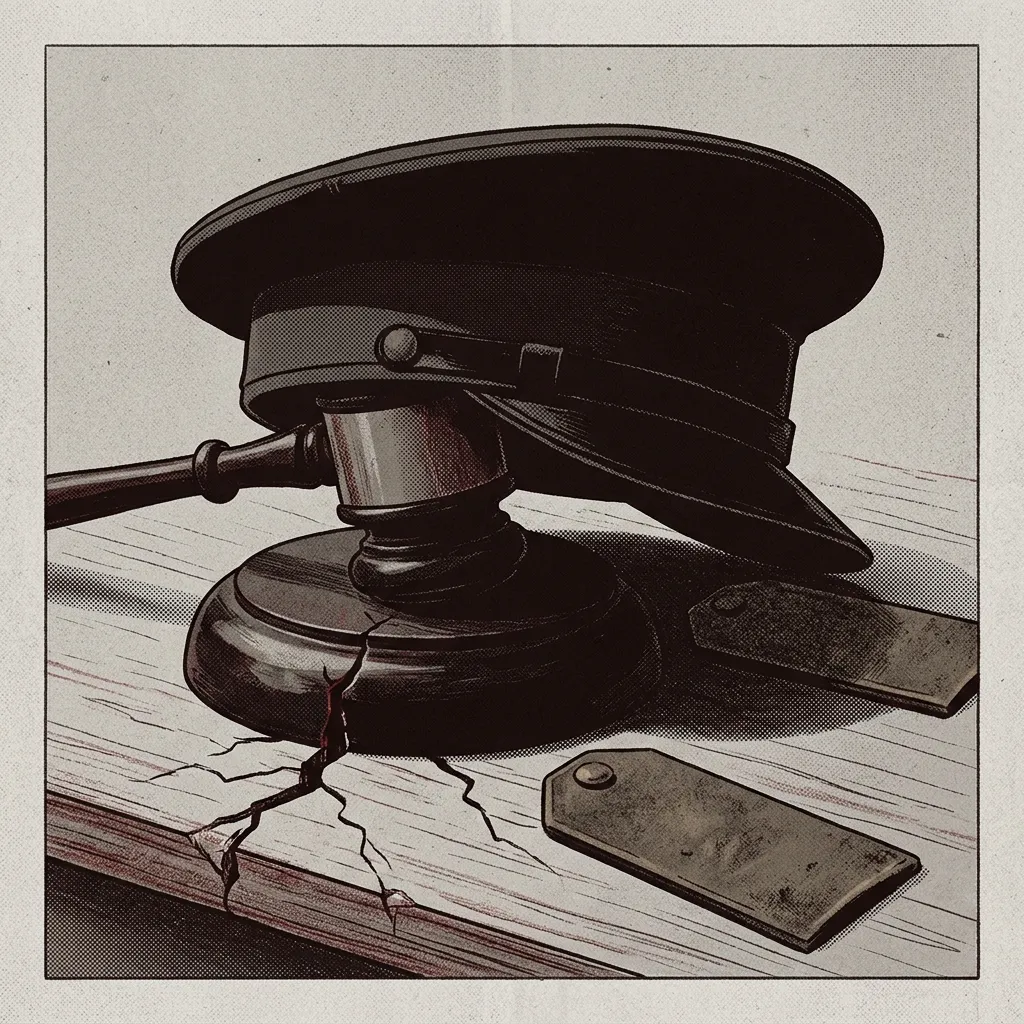
A Chinese military court has handed down suspended death sentences to two former defense ministers, Wei Fenghe and Li Shangfu, on corruption charges. The verdicts, announced by the state-run Xinhua news agency, mark an unprecedented escalation in the long-running anti-corruption campaign within the People's Liberation Army, targeting its highest-ranking officials to date. The development has drawn international attention, with regional media outlets analyzing the sentences' legal specifics, their political context, and potential implications for China's military and governance.
Reporting the Verdict and Legal Nuance The core facts of the verdict are consistently reported, but sources vary in their emphasis on legal detail and context. Folha de S.Paulo provides the most granular legal reporting, specifying that the sentence is "death with a suspension of two years," a direct translation of the Chinese legal term. It notes the announcement came from a military tribunal via Xinhua. The Hindu corroborates this, adding that both men were expelled from the Communist Party in 2024 and were former members of the Central Military Commission (CMC), which is chaired by President Xi Jinping. BBC News frames the announcement more broadly, linking it to the "recent ousting of several top officials in China's military," placing it within a pattern of purges rather than an isolated event. The Diplomat offers analytical depth, stating that "no one from the military top brass had received such severe punishments since early days of the anti-corruption campaign," highlighting the historical significance and escalated severity of the move.
Framing the Political and Institutional Context The sources diverge significantly in how they contextualize the sentences within China's political system. The Hindu explicitly connects the defendants to the current leadership, noting they "worked under President Xi Jinping's watch" and were part of the CMC he heads. This framing subtly raises questions about oversight and responsibility at the highest levels. The Diplomat analyzes the "wider implications," suggesting the sentences are a powerful demonstration of the campaign's reach and a warning to other elites, potentially signaling a consolidation of control or a deep clean-up of the military-industrial complex. In contrast, BBC News uses the more neutral term "ousting" for the removal of other officials, avoiding direct commentary on the campaign's political nature. Folha de S.Paulo sticks closely to the procedural facts as released by Xinhua, offering minimal external political analysis, which reflects a reportorial approach focused on the event itself.
Synthesizing the Narratives Collectively, the reports paint a picture of a landmark judicial action with profound political undertones. The unanimous reporting of the suspended death sentence—a punishment that typically converts to life imprisonment after the two-year reprieve—indicates its severity within the Chinese legal framework. The key divergence lies in the narrative surrounding Xi Jinping's role. Some sources implicitly frame the event as an assertion of his authority and the relentless expansion of his signature anti-corruption drive, even into the most sacred institutions. Others present it as a straightforward judicial outcome for corruption, albeit an exceptionally high-profile one. The lack of detailed public evidence or a transparent trial process, a point not contested in any report, forms the silent backdrop against which all these regional interpretations are made, allowing for emphasis on either the punitive result or the opaque political mechanics behind it.
In conclusion, the sentencing of two former defense ministers represents a pivotal moment in China's domestic governance. While the factual basis of the court's decision is uniformly reported as corruption, the international coverage reveals differing lenses: one focusing on the internal party discipline and demonstration of power, and another on the exceptional nature of punishing top military brass. This event underscores the continuing tension between China's presentation of rule-by-law campaigns and external perceptions of their use as tools for political consolidation, with significant ramifications for military morale, elite politics, and the international community's view of Beijing's internal stability.