
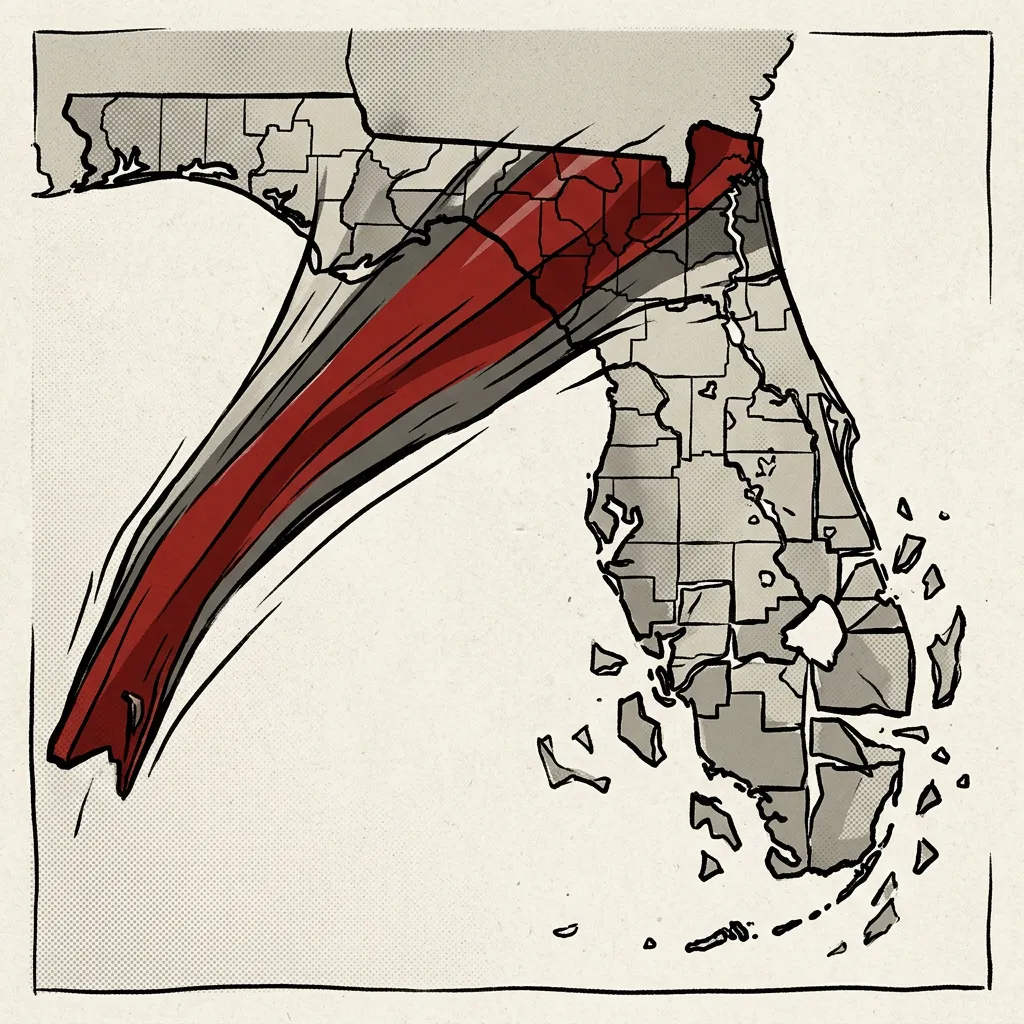
Florida’s legislature has passed a new congressional district map, a move that political analysts and media outlets describe as likely to strengthen the Republican Party’s position in the state. The action places Florida at the center of a nationwide political struggle over redistricting, with significant implications for the balance of power in the U.S. House of Representatives. The process, which occurs every decade following the national census, has become a highly contentious and partisan battleground, with each party seeking to draw boundaries that maximize its electoral advantages.
BBC News frames the development as the latest tactical maneuver in a broader national conflict. The outlet characterizes the situation as a "redistricting war" that will play a decisive role in determining which political party controls the House. This framing presents the Florida decision not as an isolated event but as a strategic move in a high-stakes, countrywide political campaign. The BBC's coverage implicitly situates the action within the context of longstanding democratic norms and the integrity of electoral processes, a common perspective in European mainstream media when reporting on U.S. domestic politics.
Al Jazeera reports on the same legislative approval but emphasizes the transformation of the national electoral landscape ahead of the upcoming midterm elections. Its coverage notes that Florida has become the latest state to enact such changes, highlighting the sequential and reactive nature of redistricting efforts across the country. The network’s reporting often contextualizes U.S. political events within a global narrative concerning democratic practices and partisan competition, sometimes drawing implicit parallels to electoral dynamics in other regions.
Framing the Redistricting Debate
The two sources converge on the core factual outcome: Florida’s lawmakers have approved a new map that analysts believe will bolster Republican congressional seats. However, their narrative framing reveals subtle but important differences in emphasis and context. The BBC employs the metaphor of war, suggesting a zero-sum, conflict-driven process with clear winners and losers that could decisively shape federal governance. This language underscores the profound national consequences of state-level actions. Al Jazeera, while also acknowledging the national fight, places greater emphasis on the ongoing and transformative nature of the redistricting cycle, presenting it as a continuous reshaping of the political terrain in the lead-up to a major election. This framing may resonate with international audiences observing the U.S. political system from the outside, often with a focus on its procedural complexities and partisan tensions.
Both outlets report the story without overt editorializing, yet their chosen terminology—"war" versus "fight" and "transforms"—carries different connotations of scale and intensity. The BBC’s "war" implies a more existential and systematic struggle, while Al Jazeera’s "fight" and focus on transformation might suggest a dynamic, albeit contentious, political routine. Neither source delves deeply into the specific legal arguments or local demographic data underpinning the map, focusing instead on the national political implications and the procedural fact of its passage.
In conclusion, the approval of Florida’s new congressional map is a significant event in the U.S. political calendar, intensifying the partisan battle for control of Congress. The reporting from international outlets like the BBC and Al Jazeera provides external perspectives on a deeply domestic process, framing it as a critical juncture in American democracy with repercussions that extend beyond state borders. Their coverage reflects a shared understanding of the map's partisan tilt while differing in the metaphorical and contextual lenses used to explain its importance within the wider American political landscape.