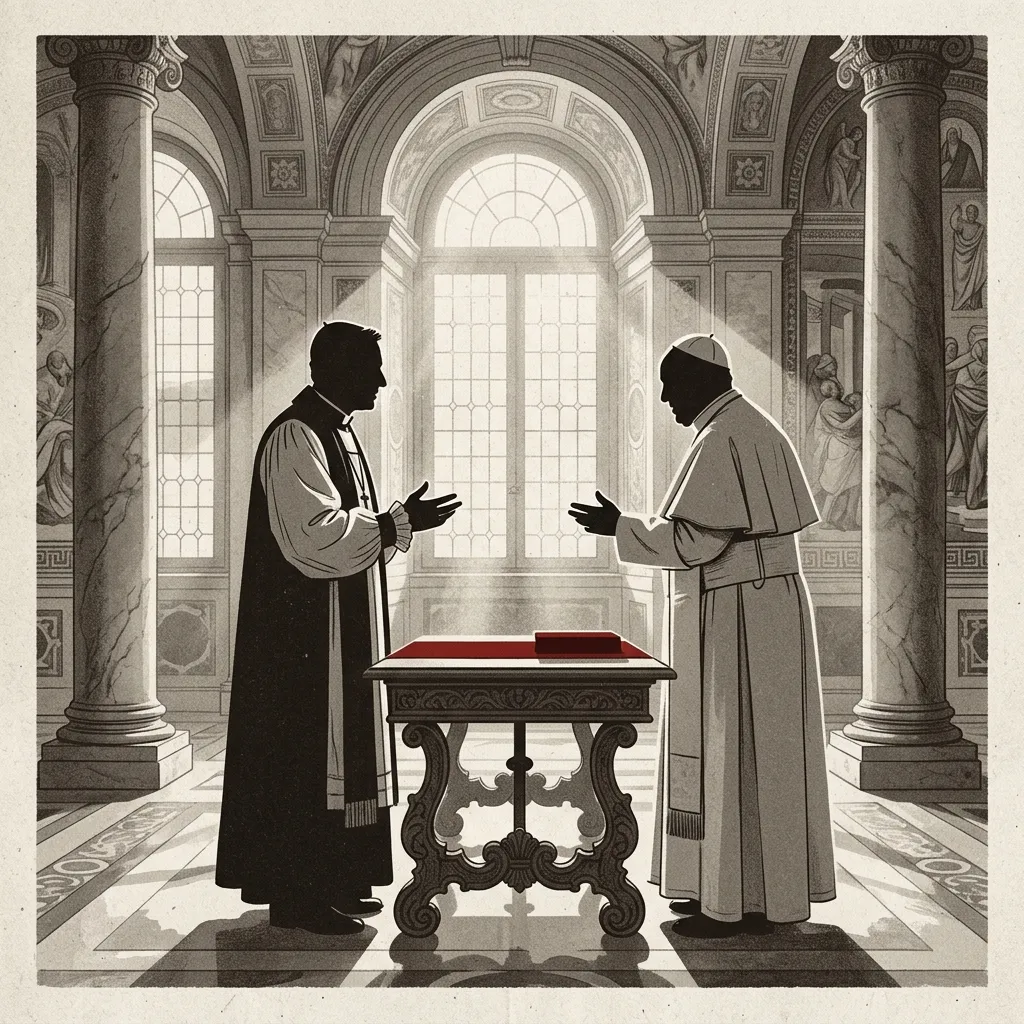
Archbishop of Canterbury Sarah Mullally has completed a historic visit to the Vatican, marking the first time a woman has held the Church of England's highest office during such an encounter with the papacy.
According to Latin American outlet Clarin, Mullally is the first woman to achieve the primacy of the Anglican Church in its nearly five centuries of history. The publication reports she was received privately by Pope Leo XIV as part of a four-day pilgrimage to Rome.
British broadcaster BBC News confirms the private discussion between Dame Sarah Mullally and Pope Leo, describing her as "the first female head of the Church of England." The BBC's coverage emphasizes that during the trip, Mullally praised the Pope's anti-war comments, though specific details of these remarks are not provided in the available reporting.
Indian publication The Hindu offers additional context about the pilgrimage's scope, reporting that the four-day visit included stops at the main pontifical basilicas. According to their account, Mullally prayed at the tombs of Saints Peter and Paul and held meetings with top Vatican officials beyond her encounter with the Pope himself.
The visit represents a significant moment in Anglican-Catholic relations, occurring at a time when both communions navigate questions of tradition, reform, and interfaith dialogue. The Church of England's decision to elevate a woman to its highest ecclesiastical office stands in contrast to the Roman Catholic Church's continued restriction of ordination to men.
While all three sources confirm the historic nature of the meeting, they differ in their emphasis. The Latin American source frames the event primarily through the lens of gender milestone, highlighting Mullally's status as the first woman to reach this position in five centuries. The British coverage, while acknowledging the gender barrier broken, focuses attention on the substantive diplomatic content—specifically Mullally's response to papal statements on war and peace. The Indian outlet takes a more descriptive approach, cataloging the pilgrimage's religious itinerary and institutional meetings.
None of the sources provide extensive detail about what was discussed during the private papal audience, leaving the specific topics of conversation largely unreported. The BBC's mention of anti-war comments suggests contemporary geopolitical concerns may have featured in the dialogue, but without direct quotes or elaboration from either party, the substance remains unclear.
The timing and format of the visit—described consistently as a pilgrimage rather than a state or diplomatic visit—suggests a spiritual rather than purely political character, though the meeting between leaders of two major Christian denominations inevitably carries ecumenical significance.
All sources identify the pontiff as Pope Leo, with Clarin specifically referring to him as "León XIV" (Leo XIV). This detail, while consistent across reports, represents a notable papal name choice given historical associations with previous popes named Leo.
The visit's four-day duration and inclusion of multiple basilicas and Vatican officials indicates a comprehensive engagement with Catholic Rome beyond the headline papal meeting. Mullally's prayers at the tombs of Peter and Paul—the two apostles most associated with the founding of the Roman church—carry symbolic weight in the context of Anglican-Catholic relations, which have been marked by both cooperation and theological division since the English Reformation in the sixteenth century.