
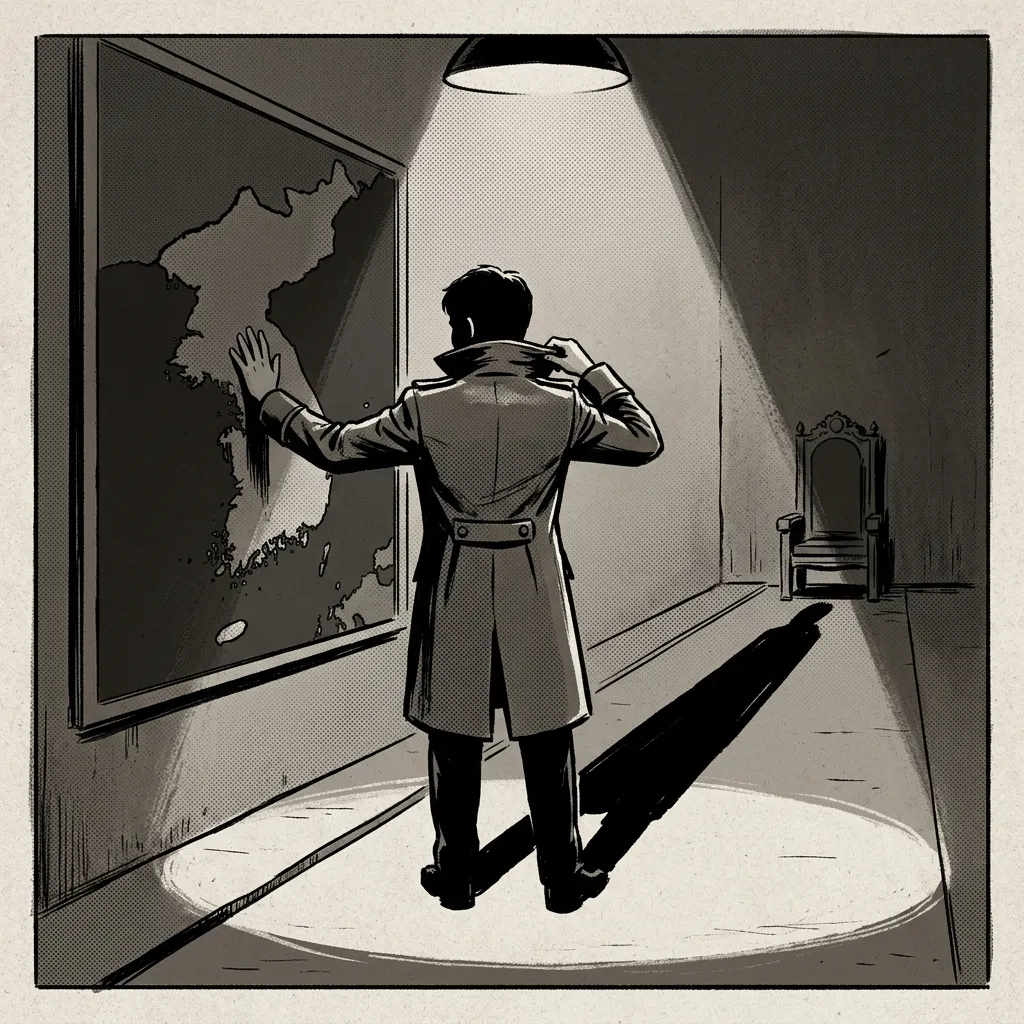
The public appearances and evolving wardrobe of Kim Ju Ae, the teenage daughter of North Korean leader Kim Jong Un, are being interpreted by international observers as a carefully orchestrated political campaign, signaling her potential grooming as the country's future leader. Media outlets and analysts across different regions are dissecting her fashion choices, from luxury Western brands to military-style attire, as a non-verbal language of power and succession planning within the secretive regime.
BBC News: Framing Fashion as a Calculated Political Tool The BBC's analysis positions Kim Ju Ae's clothing as a direct and intentional communication strategy from the North Korean leadership. The broadcaster reports that analysts see her not merely as a teenager growing up but as a figure being deliberately 'styled for succession.' This framing suggests a calculated, top-down process where every public appearance and outfit is curated to send specific messages to both domestic and international audiences. The BBC emphasizes the 'evolving' nature of her fashion, implying a narrative arc designed to introduce her gradually and associate her with symbols of authority and modernity. The coverage treats her attire as one of several key signs pointing toward her political future, analyzing it with the seriousness typically reserved for diplomatic statements or policy shifts.
Folha de S.Paulo: Highlighting the Contradiction of Luxury in a Socialist State Brazil's Folha de S.Paulo provides a similar core analysis but frames it with a sharper focus on the inherent contradictions within North Korea's ideological system. The outlet explicitly notes that Kim Ju Ae has been photographed increasingly in luxury brands from Western designers, items that are officially prohibited in North Korea for being considered 'reactionary and anti-socialist.' This framing introduces a layer of critique and highlights a perceived hypocrisy: the rules that apply to the general population are suspended for the ruling family. Folha's perspective suggests that the fashion choices are not just about projecting power but also about the Kim family placing itself above the very socialist principles it enforces, a point of tension that resonates in a Latin American context familiar with discussions of inequality and elite privilege.
Framing the Succession Narrative The central agreement across sources is that Kim Ju Ae's public presentation is a form of political grooming. However, the emphasis and contextual framing differ. The BBC adopts a more clinical, analytical tone, dissecting the 'what' and 'how' of the fashion signals as part of standard geopolitical analysis. Folha de S.Paulo, while also analytical, injects a more pointed observation about the dissonance between state ideology and the ruling family's personal consumption. This contrast is subtle but significant: one source analyzes the strategy, while the other also implicitly questions its legitimacy within the regime's own stated framework. Both, however, treat the teenager's wardrobe as a primary text for understanding shifts in one of the world's most opaque political dynasties.
Synthesis and Broader Implications The convergence of these international reports on sartorial analysis underscores the unique challenge of interpreting North Korean politics, where traditional channels of information are closed. When a leader's potential successor is a minor with no official title, external observers are forced to scrutinize symbolism—clothing, seating positions, and public roles—as the only available data points. This media focus on Kim Ju Ae's fashion transforms apparel into a geopolitical indicator, suggesting that her tailored coats and designer handbags are being read as deliberately as a military parade. The global attention confirms that the Kim family's succession planning, communicated through this visual lexicon, is being watched as a critical variable for future stability in Northeast Asia. The analysis ultimately reveals less about teenage fashion trends and more about the calculated theater of authoritarian power transition, where every visible detail is presumed to be a loaded statement.