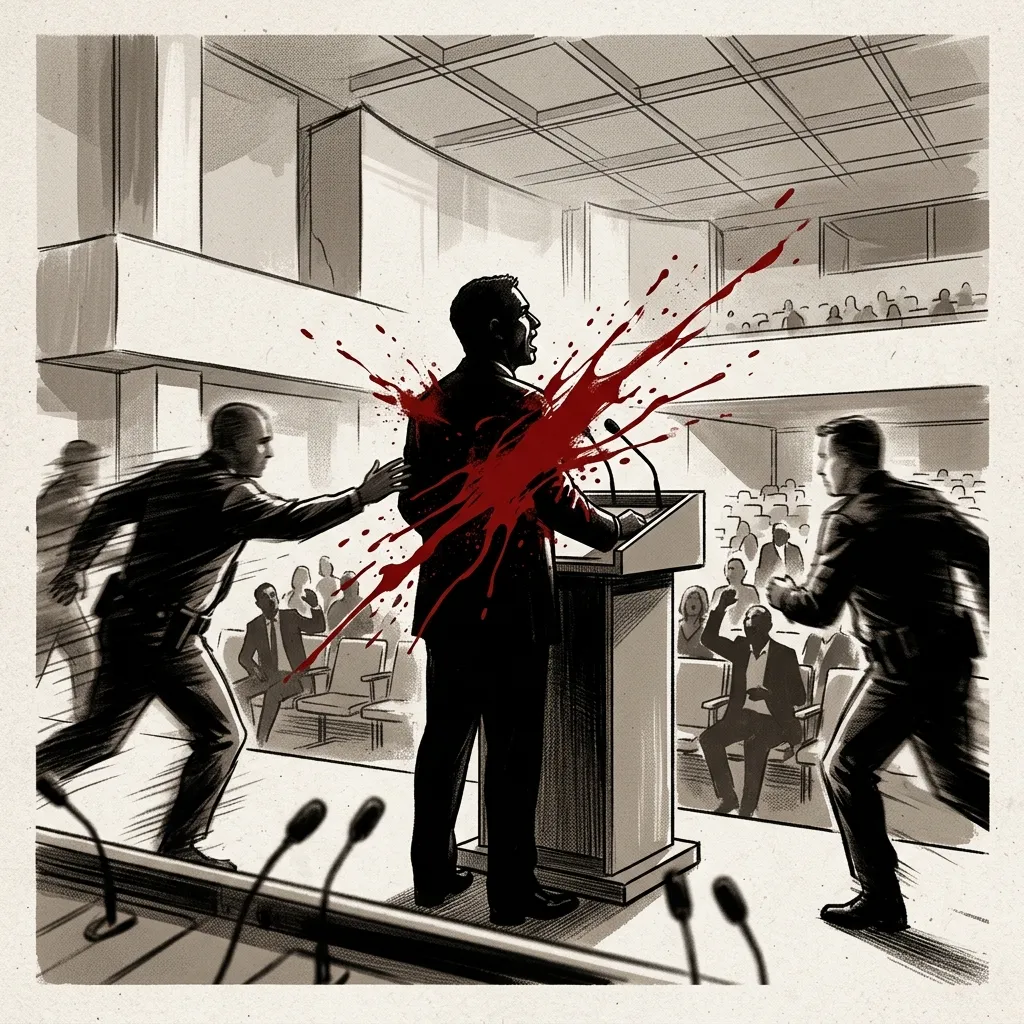
Reza Pahlavi, the exiled son of Iran's last shah, was splattered with red liquid following a press conference in Berlin, according to multiple international reports. The alleged perpetrator was detained by authorities after the incident.
Pahlavi, who has lived in exile since the 1979 Iranian Revolution that overthrew his father's monarchy, was in the German capital to address European audiences. According to The Hindu, an Indian publication, Pahlavi used the occasion to call on Europeans to increase their support for the Iranian people. The nature of this support and the specific context of his remarks were not detailed in available reporting.
Clarin, an Argentine news outlet, provided a different framing of Pahlavi's statements in Berlin. The Latin American source reported that Pahlavi had spoken out against peace efforts in the Middle East, specifically questioning ceasefire initiatives and diplomatic attempts to end ongoing warfare in the region. Clarin characterized Pahlavi as someone "who seeks to regain power," explicitly framing him as a political aspirant to leadership in Iran.
The attack itself occurred as Pahlavi was leaving the press conference venue. Details about the substance used—described only as a red liquid—remain limited in both reports. Neither source provided information about the identity of the alleged attacker, their possible motivations, or whether any charges have been filed following the detention.
Pahlavi has maintained a public profile as an opposition figure to Iran's Islamic Republic government for decades. His father, Mohammad Reza Pahlavi, ruled Iran until the 1979 revolution brought Ayatollah Ruhollah Khomeini to power and established the current theocratic system. The younger Pahlavi has periodically advocated for political change in Iran, though his actual influence within the country remains a subject of debate among Iran analysts.
The incident in Berlin comes amid heightened tensions across the Middle East, though neither source explicitly connected the attack to specific regional developments. The use of red liquid in political protests often symbolizes blood or violence, a tactic employed by activists across various causes globally, though no confirmation of the attacker's intent has been reported.
Neither source indicated whether Pahlavi was injured in the incident or required medical attention. The circumstances of the alleged perpetrator's detention—including whether they acted alone or as part of an organized group—were not clarified in available reporting.
Pahlavi's Berlin appearance appears to have been part of broader engagement with European audiences, though the specific event organizers and the full scope of his visit were not detailed. His calls for European support, as reported by The Hindu, suggest an attempt to mobilize international backing for opposition movements within Iran, though the concrete measures he proposed were not specified.
The contrasting emphasis in regional coverage highlights different editorial priorities: Indian media focused on Pahlavi's appeal to European governments, while Latin American coverage emphasized his stated positions on Middle Eastern peace processes and his political ambitions regarding Iran.