
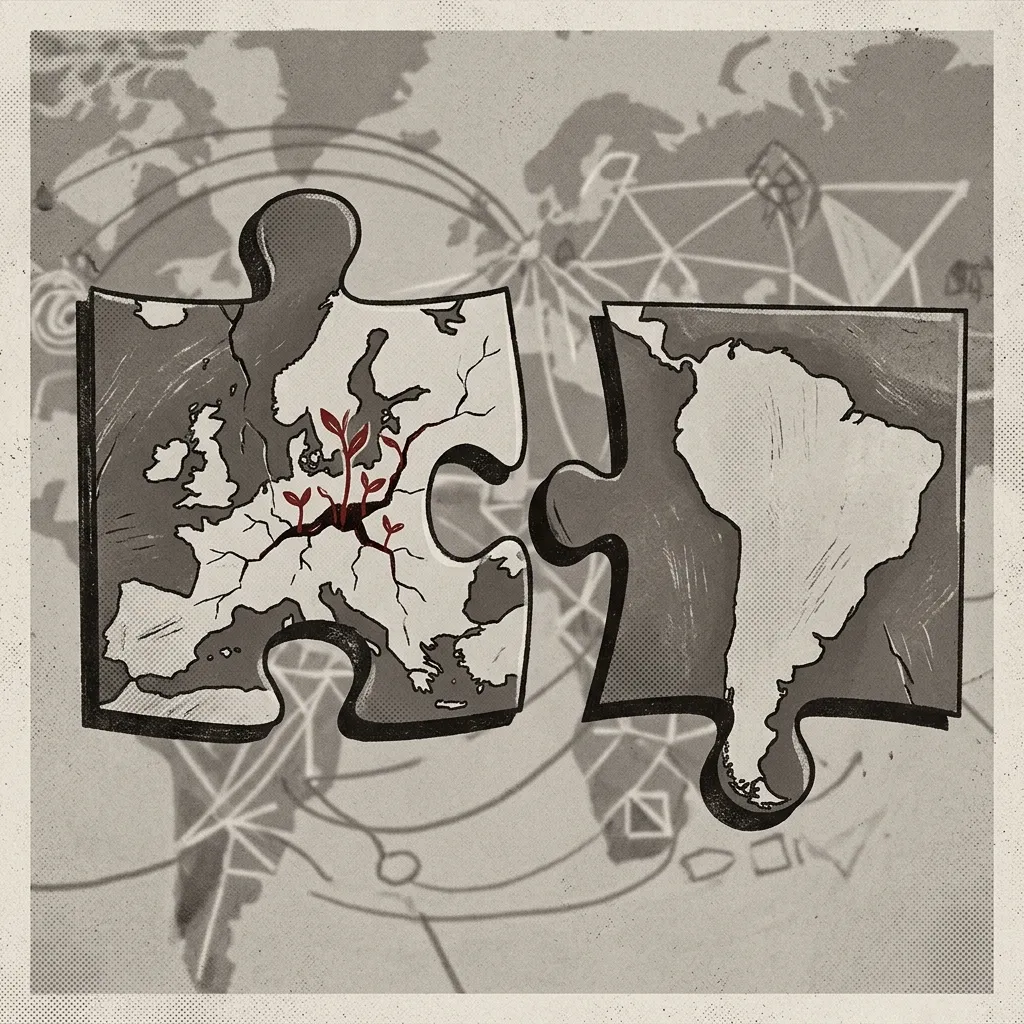
A landmark trade agreement between the European Union and the South American Mercosur bloc entered a new phase on May 1, with the provisional application of its core commercial terms. This step creates a free-trade area encompassing approximately 720 million people, yet the pact remains mired in political contention within Europe and faces a lengthy legal review before final ratification. The move marks a tentative milestone after negotiations that began in 1999, characterized by repeated delays and deep divisions over its economic and environmental implications.
European Perspectives: A Deal Fraught with Internal Conflict Reporting from Brussels, Politico Europe frames the development as a significant but fragile administrative step. The article emphasizes that while the European Commission has moved to provisionally apply the trade components, the political battle is far from over. It details how the agreement was championed by Germany, seeking to boost exports of automobiles and machinery, but vehemently opposed by France and Poland, which feared being undercut by cheaper agricultural imports like beef and poultry. The narrative highlights a power struggle, noting that French President Emmanuel Macron initially halted the deal in early 2024, but subsequent political shifts allowed Commission President Ursula von der Leyen to finalize it. The source underscores that the European Parliament, by a narrow margin, has sent the full agreement for review to the EU's highest court, a process that could take up to two years, leaving the final outcome uncertain.
Le Monde's coverage, reflecting a French viewpoint, concurs on the contentious nature of the deal but places even sharper focus on the opposition. Its headline explicitly notes the agreement is moving forward "despite opposition from France." The analysis structures the story around key questions, implicitly acknowledging the domestic skepticism and framing the provisional application as a procedural event that does not equate to final approval. It aligns with Politico in noting the remaining hurdle of a European Parliament vote, but its tone suggests a more cautious interpretation of the milestone, likely resonating with an audience concerned about the pact's impact on French farmers.
Latin American Perspective: Cautious Optimism and Strategic Gains From Buenos Aires, Clarin presents the agreement's activation with a tone of historic achievement and forward-looking analysis. It describes the pact as one of the most ambitious ever signed, creating a vast free-trade zone. The coverage balances celebration of the new phase with a pragmatic analysis of winners and losers. It quotes the Uruguayan ambassador to the EU, who called the provisional application a "qualitative shift" and the opening of a new chapter, not a final destination. Clarin's reporting details the immediate benefits for Mercosur, such as reduced tariffs on key exports like beef, while also noting the long phase-in periods for many tariff cuts. It further highlights a significant geopolitical angle less prominent in European sources: the interest of other Latin American nations like Colombia, Panama, and Venezuela in joining or rejoining Mercosur, suggesting the deal is enhancing the bloc's regional stature and attractiveness.
Framing the Milestone The sources collectively describe the same event but with distinct regional emphases. The European outlets, Politico and Le Monde, frame the story through the lens of intra-EU political conflict and unresolved legal jeopardy. The achievement is tempered by the narrative of discord and future obstacles. In contrast, Clarin, while acknowledging complexities, frames the event more as a strategic victory and a door opening to long-term economic opportunity and increased geopolitical relevance for South America. All sources agree the economic effects will be gradual, with tariff reductions spanning a decade or more, but the European reporting stresses the immediate political friction, whereas the Latin American reporting looks more toward the horizon of future integration and growth.
The broader implications hinge on this provisional period. European officials, as cited by Politico, argue that the deal must succeed to prevent the EU from losing further economic ground in the region to China, which has already become Mercosur's top trading partner. The success of this interim application could build political and economic facts on the ground, making a future rejection by the European Parliament or courts more difficult. Conversely, sustained opposition from powerful agricultural sectors in Europe could galvanize further legal and political challenges. For Mercosur nations, the immediate benefit is enhanced market access and a signal of commitment to global trade partnerships, potentially spurring further regional expansion and investment.