
Sustained Campaign Against Energy Facilities
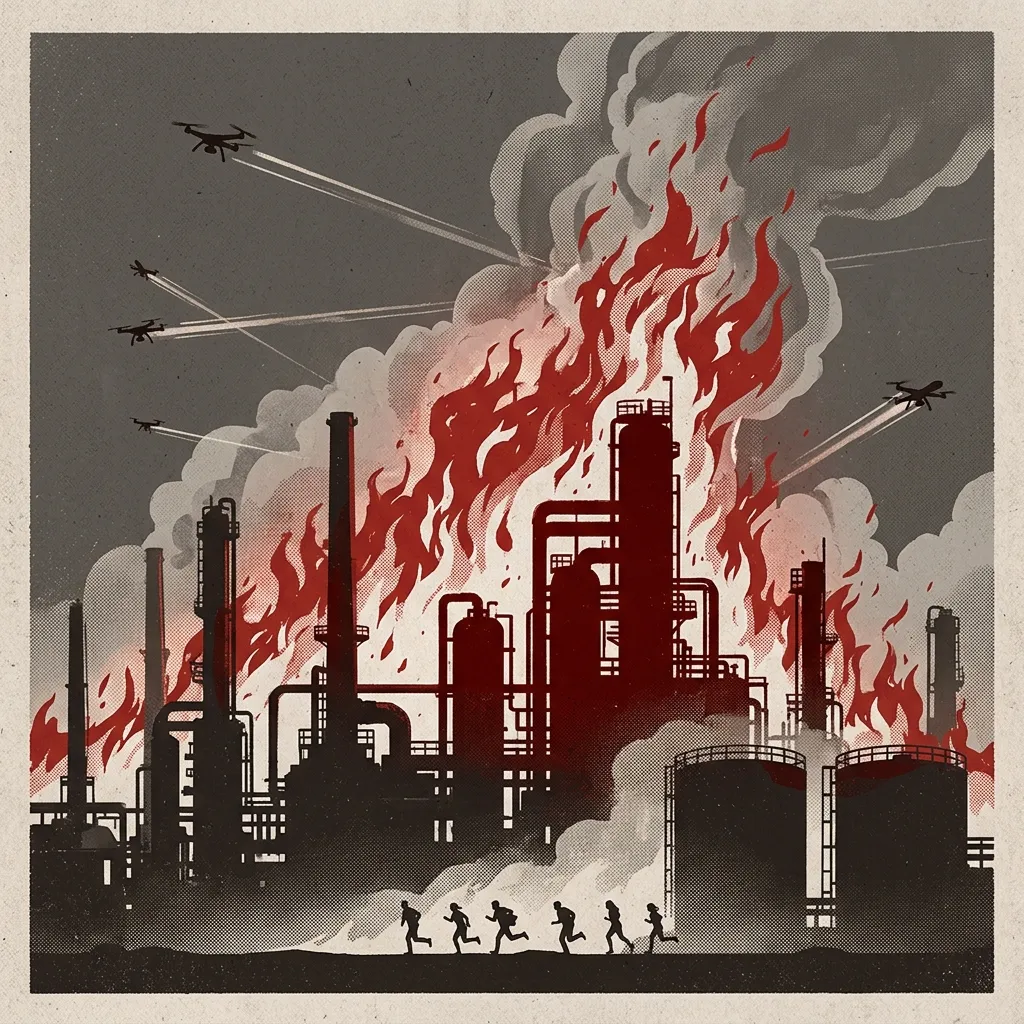
Both Russia and Ukraine have intensified aerial attacks on each other's energy infrastructure in recent months, according to multiple international sources. The latest incident occurred in the early hours of April 28, when drone debris struck an oil refinery in Tuapse, a Russian coastal city in Krasnodar Krai, igniting a fire that prompted local evacuations.
According to Russian regional authorities, the strike caused no casualties, though Mayor Sergei Boyko ordered residents of several streets near the facility to evacuate to a temporary shelter established at a local school. Independent Russian outlet Meduza reported that "enormous black columns of smoke" hung over the city, with environmental monitors detecting petroleum products in the Tuapse River appearing as "black streams that stand out sharply from the color of the water."
Pattern of Repeated Attacks
The Tuapse refinery has faced multiple strikes since mid-April, according to Russian independent media. One previous attack triggered a fire that required four days to extinguish. That incident reportedly caused what local residents described as "oil rains" falling on the city, with air quality measurements showing benzene and xylene concentrations exceeding permissible levels by two to three times.
BBC News characterized the April 28 incident as the "third Ukrainian strike" on Russian oil infrastructure, framing it as part of Kyiv's deliberate targeting campaign. The British broadcaster reported that the Kremlin accused Ukraine of "destabilising global energy markets" through these attacks. The Hindu, an Indian publication, described the situation more broadly, noting that "Kyiv and Moscow have stepped up their aerial attacks over recent months, with both sides mainly targeting energy infrastructure."
Environmental and Public Health Concerns
Independent environmental outlet Kedr Media, cited by Meduza, reported concerning public health conditions in Tuapse. A correspondent observed residents "walking around without respirators or in simple medical masks," with locals claiming they had "gotten used to the smell and can't feel it anymore." The outlet warned this adaptation posed serious risks: "which is very dangerous, because you can get poisoned that way."
Following the previous major fire, heavy rains washed petroleum products from the river into the Black Sea. Russian authorities' response to the environmental crisis drew criticism for its limited scope—officials advised residents only to keep windows closed, minimize outdoor activity, and wear masks. School classes continued despite documented air pollution.
Attack Details and Duration
Local residents reported explosions and air defense activity beginning around 2 a.m., with some telling Russian Telegram channel Ostorozhno Novosti that drone attacks continued for several hours. Ukrainian Telegram channels published footage showing both the marine terminal attack and the resulting refinery fire, though these sources were not independently verified by the reporting outlets.
The independent Russian Telegram channel Astra confirmed through city camera footage that the Tuapse oil refinery in the seaport was burning, noting the facility had "already come under attack multiple times in recent days."
Broader Strategic Context
While sources agree on the factual occurrence of strikes against energy infrastructure by both sides, they differ in how they contextualize these attacks. BBC News specifically attributed the Tuapse strike to Ukraine and highlighted Russian accusations about global energy market destabilization. Meduza focused on technical details of the incident, environmental consequences, and official responses without attributing responsibility. The Hindu presented the attacks as part of a mutual escalation pattern without emphasizing either side's actions.
None of the sources provided casualty figures from Ukrainian energy infrastructure attacks, though The Hindu's reference to "six killed in Russia, Ukraine" in its headline suggests fatalities occurred in related incidents, without specifying locations or circumstances in the available excerpt.