
Incident at Europe's Largest Nuclear Facility
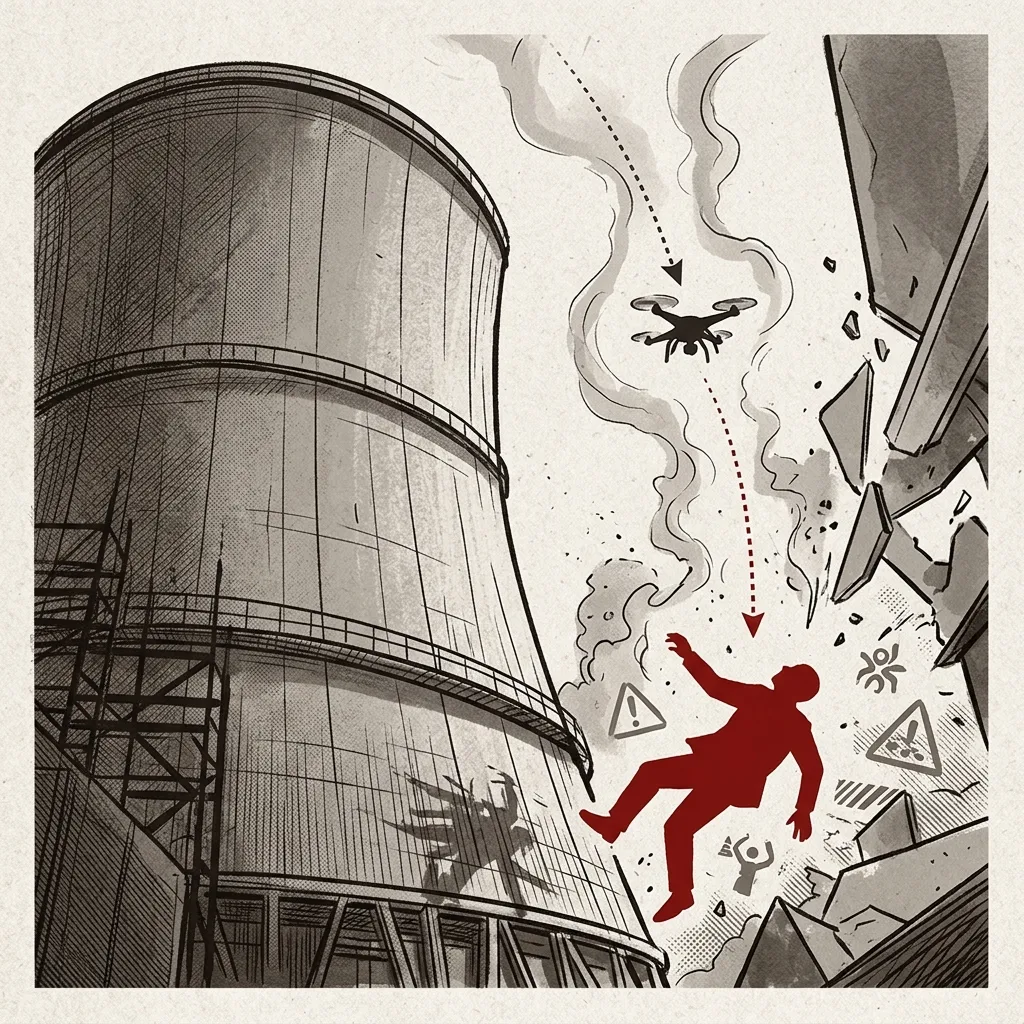
A worker at the Zaporizhzhia nuclear power plant died following what Russian-installed administrators describe as a Ukrainian drone attack on Monday, April 27, 2026. The facility, Europe's largest nuclear power station, has been under Russian military control since early in the conflict, though it remains operated by Ukrainian technical staff under occupation.
Both Latin American and Middle Eastern news outlets reported the death, citing statements from the Russian-appointed management of the plant. The victim's identity and specific role at the facility have not been disclosed in available reports.
Framing the Attribution
The sources present notably different approaches to attributing responsibility for the strike. Brazilian publication Folha de S.Paulo directly states in its headline that a "Ukrainian drone attack" killed the worker, presenting this as established fact. The report identifies the plant as "situated in territory controlled by Russia" and attributes the attack claim to "the Russian administration of the plant."
Al Jazeera adopts more cautious language, stating that the death occurred "according to managers installed by Russia." The Qatari outlet's headline structure separates Russian military actions against Odesa from Moscow's claims about the nuclear plant incident, using the verb "claims" rather than stating the Ukrainian attack as fact. This framing explicitly signals that the attribution comes from one party to the conflict rather than from independent verification.
Broader Military Context
Al Jazeera's report places the nuclear plant incident within a wider pattern of military exchanges, noting that Russia conducted attacks on the Ukrainian port city of Odesa on the same day. This contextual framing presents the drone strike allegation as part of ongoing mutual hostilities rather than as an isolated incident. The Latin American source does not reference other military operations occurring simultaneously.
The Zaporizhzhia Situation
Both sources acknowledge the plant's contested status. Folha describes it as a "Ukrainian nuclear plant" located in "Russian-controlled territory," emphasizing the facility's Ukrainian identity despite occupation. Al Jazeera refers to it as the "captured Zaporizhzhia nuclear plant," using language that characterizes Russian control as the result of seizure rather than administration.
The facility has been a flashpoint throughout the conflict, with both sides previously accusing each other of shelling that risked nuclear safety. International atomic energy officials have repeatedly expressed concern about military activity near the site, though neither source in this case references international monitoring or verification of the latest incident.
Information Verification Challenges
Neither report indicates independent confirmation of the attack's origin or circumstances. The sole attributed source for the drone strike claim is the Russian-installed plant administration. No Ukrainian government response or alternative account of the incident appears in either article. This absence highlights the information challenges inherent in reporting from occupied territories where access for independent journalists and investigators is restricted.
The incident underscores ongoing risks to nuclear safety in active conflict zones, though the specific threat level posed by this particular strike remains unclear from available reporting.