
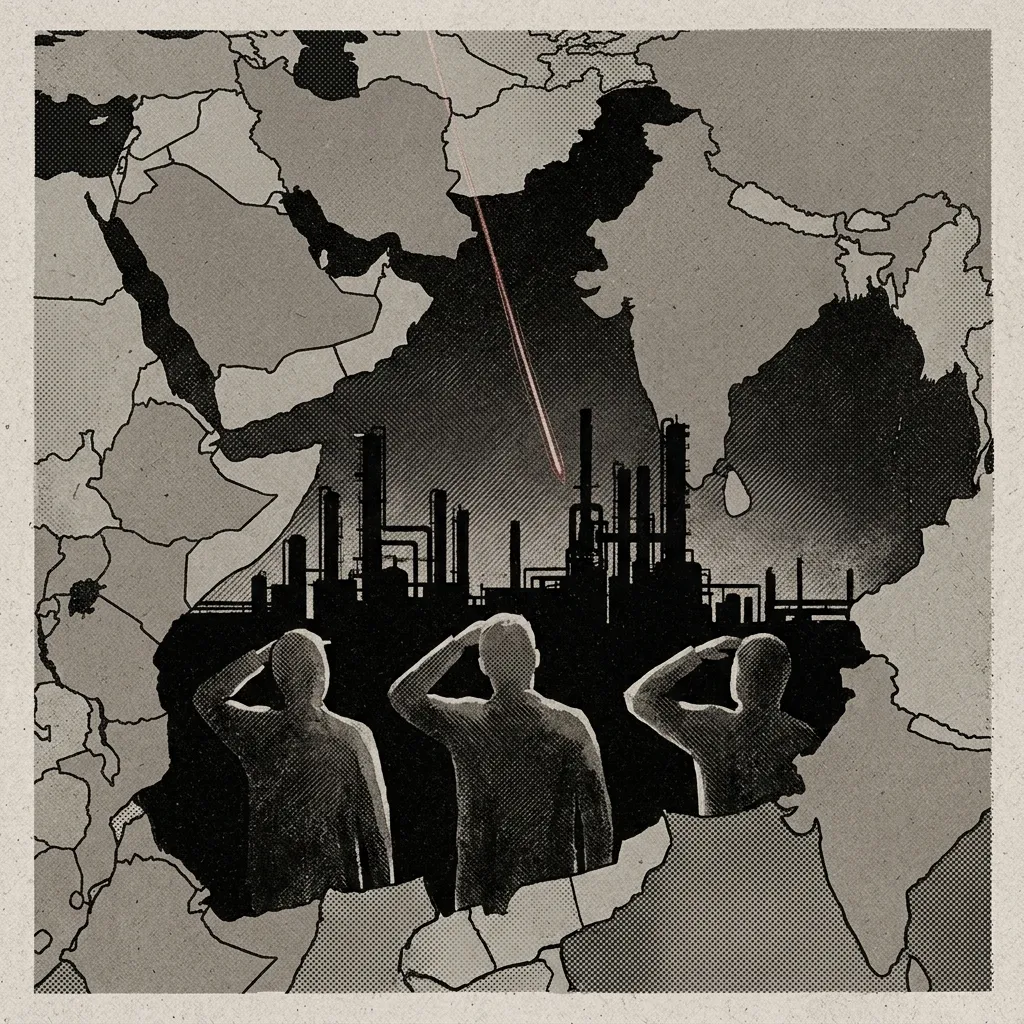
A drone attack targeting the Fujairah Petroleum Industries Zone in the United Arab Emirates has resulted in injuries to three Indian nationals, according to reports. The incident has drawn swift international condemnation and is situated within a broader context of escalating regional tensions, particularly involving Iran. The framing of the event, its attribution, and the geopolitical narrative surrounding it vary significantly across different news sources, reflecting divergent regional priorities and political alignments.
Indian media, as represented by The Hindu, provides detailed reporting on the human impact of the attack, explicitly naming the injured as Indian nationals. One report states that three Indian citizens sustained injuries after a fire broke out in the petroleum zone following a drone strike originating from Iran, citing local media. This coverage centers the narrative on the welfare of the Indian diaspora. A separate, broader report from the same outlet contextualizes the attack within a wider 'Iran-Israel war,' noting that India has officially condemned the assault on its citizens. It further links the regional instability to a U.S. initiative termed 'Project Freedom,' described as an effort by former President Donald Trump to secure shipping through the Strait of Hormuz, an action it reports prompted a strong reaction from Iran.
In contrast, Middle Eastern coverage from Al Jazeera frames the incident primarily as an act of regional aggression and a diplomatic crisis. Its headline characterizes the event as a 'dangerous escalation' and focuses on the international community's condemnation of Iran following attacks on the UAE. The report details denunciations from Gulf Cooperation Council states like Saudi Arabia, Qatar, Kuwait, and Bahrain, as well as calls from Western nations including Germany, the United Kingdom, and Canada for Iran to return to negotiation tables. The narrative is geopolitical, emphasizing state-level responses and the breach of UAE sovereignty, with less specific focus on the nationalities of the casualties.
Framing the Conflict The divergence in framing between these sources is stark. The Hindu's coverage operates on two parallel tracks: one is a localized, human-interest story about Indian workers caught in a crossfire, and the other is a macro-geopolitical story that connects the dots between U.S. policy, Iranian retaliation, and regional war. The Indian angle is paramount, making the attack a direct issue of national citizen safety. Al Jazeera, however, presents the event as a clear-cut case of Iranian aggression destabilizing the Gulf region. Its narrative is built around a coalition of Arab and Western states uniting in diplomatic reproach, positioning Iran as an isolated actor provoking a 'dangerous escalation.' The injury details are secondary to the overarching theme of interstate conflict and alliance dynamics.
The synthesis of these reports points to a multifaceted incident with layered implications. On one level, it is a workplace safety and diaspora concern for India, highlighting the vulnerabilities of expatriate labor in volatile regions. On another, it serves as a flashpoint in the protracted tension between Iran and a U.S.-aligned Gulf coalition, potentially exacerbated by broader conflicts such as the reported Iran-Israel hostilities. The mention of U.S. 'Project Freedom' by one source adds a dimension of great power rivalry over critical maritime chokepoints, suggesting the Fujairah attack may be interpreted as a tactical response within a larger strategic contest for control over the Strait of Hormuz. The differing reports collectively illustrate how a single kinetic event is absorbed into distinct national and regional narratives, from victimhood and citizen protection to alliance solidarity and condemnation of an adversarial state.