
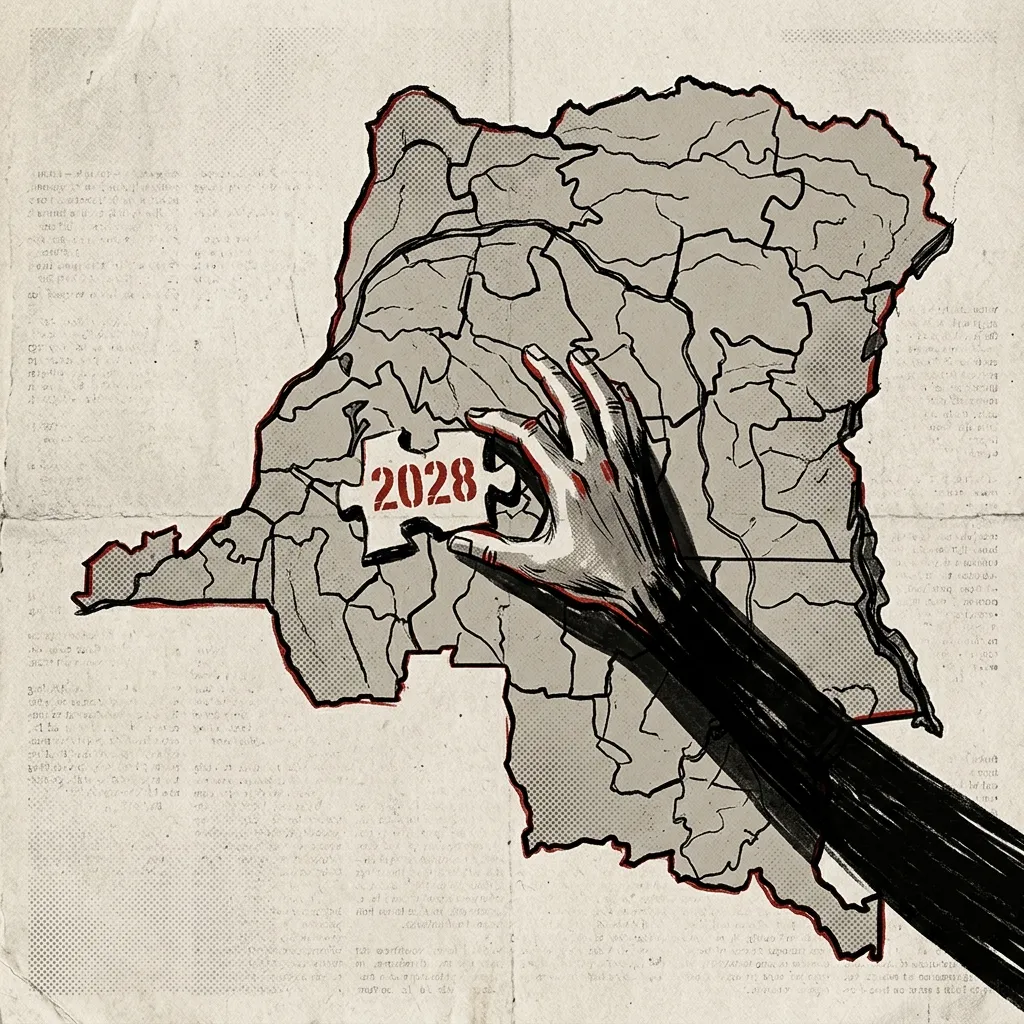
President Félix Tshisekedi of the Democratic Republic of Congo has publicly suggested he might seek a third term in office and has raised the possibility of postponing the 2028 presidential elections. His comments, made in May 2026, have sparked immediate analysis regarding the nation's political trajectory and constitutional stability.
The BBC News report focuses primarily on the domestic political implications of Tshisekedi's statement. It quotes him directly, stating he would accept a third mandate if the populace desired it, while noting his current term is set to conclude in 2028. The framing centers on the potential breach of constitutional norms, as the DRC's constitution currently limits presidents to two terms. The BBC's narrative implicitly questions the mechanism through which "the people" would express this desire, casting the remark as a significant political signal rather than a concrete plan.
Africanews provides a more contextualized report, linking the potential election delay directly to the security situation in the country's east. It details that Tshisekedi warned the intensifying conflict could necessitate a postponement of the polls. The article specifies the fighting involves Congolese forces and the M23 rebel group, which it describes as being backed by Rwanda, and locates the violence in the mineral-rich Kivu provinces. This framing presents the election delay not merely as a political choice but as a potential logistical necessity driven by an external security crisis, thereby embedding the domestic political story within a broader regional geopolitical conflict.
Framing the Political Discourse
The two sources present complementary but distinct narratives. BBC News adopts a classic political analysis lens, emphasizing the internal constitutional and democratic challenges posed by a leader hinting at extending his tenure beyond established limits. Its report is concise and focused on the statement's direct meaning for the DRC's political system.
Africanews, while also reporting the third-term hint, shifts significant emphasis to the rationale provided for a potential delay. By foregrounding the ongoing war with M23 and Rwandan involvement, it frames the election issue as intertwined with national security and regional stability. This approach suggests that any decision on the electoral calendar cannot be separated from the conflict's resolution, potentially justifying a delay as a matter of state survival rather than political ambition.
A critical divergence lies in the handling of the constitutional limit. BBC News clearly presents the two-term limit as a foundational rule, making Tshisekedi's hint a challenge to that order. Africanews does not explicitly reiterate this constitutional detail in its provided excerpt, allowing the security rationale to occupy the central explanatory position. This difference in emphasis shapes the perceived primary obstacle: one source highlights legal and democratic norms, while the other underscores practical security impediments.
The broader implications of these reports point to a period of uncertainty for the DRC. The combination of a president testing the boundaries of term limits and citing a protracted war as a reason to potentially alter the electoral schedule creates a complex scenario for domestic governance and international relations. Observers will likely monitor whether the security situation becomes the predominant public justification for any formal move to extend Tshisekedi's tenure or delay the vote, and how the concept of popular will is invoked or measured in the process.