
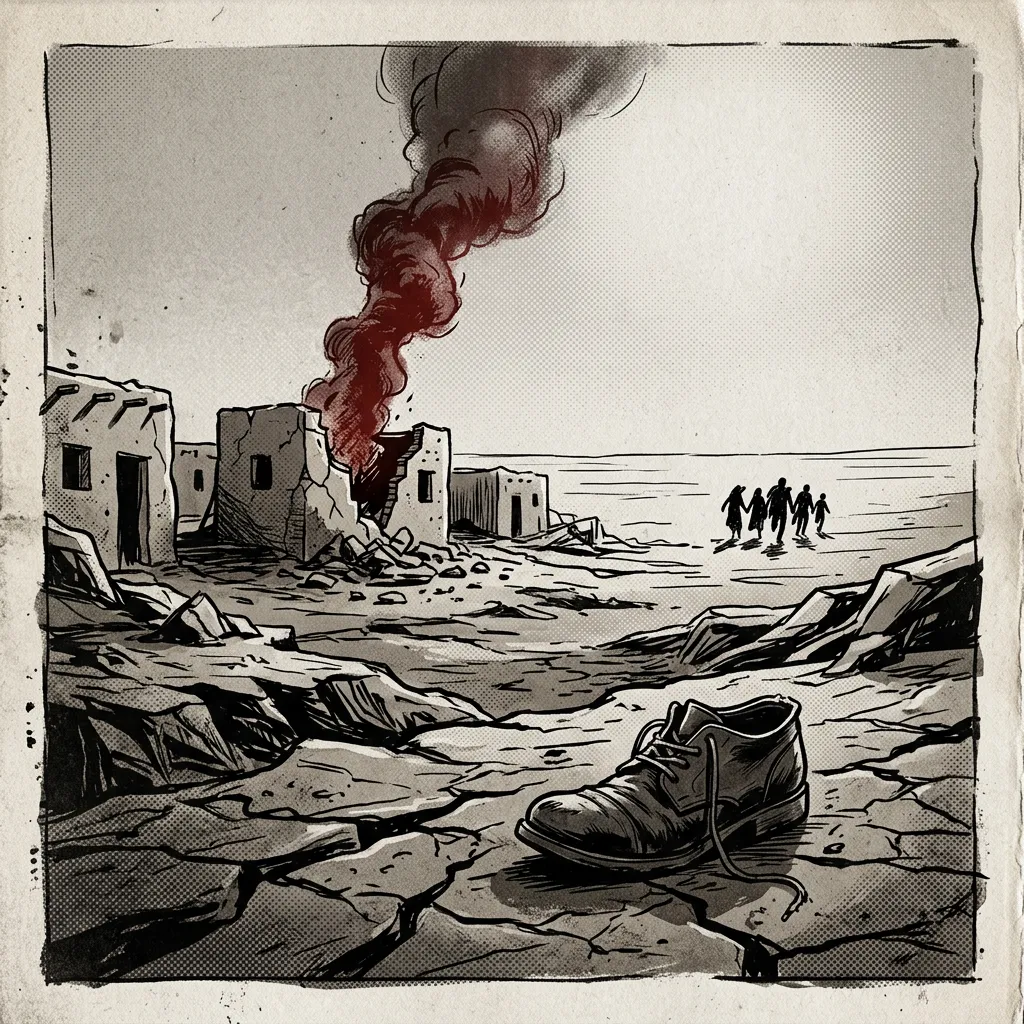
At least thirty people were killed in a pair of assaults on villages in central Mali's Mopti region on Wednesday, according to multiple regional sources. The attacks, which targeted civilian communities, have intensified concerns over the deteriorating security situation in the Sahel nation, where militant groups and communal violence have become increasingly entrenched. The reporting from major news outlets, while aligned on the basic casualty figures, reveals subtle but significant differences in how the perpetrators and the context of the violence are framed.
Al Jazeera's reporting, citing information from international news agencies Reuters and AFP, provides a specific attribution for the assault. It identifies the attackers as armed fighters affiliated with al-Qaeda. This framing immediately places the incident within the broader narrative of transnational jihadist terrorism in the Sahel, a conflict involving groups like Jama'at Nusrat al-Islam wal-Muslimin (JNIM). The report's reliance on wire service sources underscores an international perspective on the event, treating it as part of a wider geopolitical and security challenge. The language, such as 'assailants,' carries connotations of an organized, ideologically motivated offensive against civilian targets.
In contrast, Africanews, a pan-African broadcaster, presents the information with a different emphasis. Its report states the death toll came from a combination of local, security, and administrative sources within Mali. This framing centers the narrative on the ground-level impact and the official response from Malian institutions. Notably, the Africanews report does not name a specific perpetrator, such as an al-Qaeda affiliate. By referring to the incidents simply as 'twin central attacks,' it leaves the identity of the attackers ambiguous, which could encompass other actors active in the region, including ethnic militias or bandits. This approach prioritizes the factual outcome—the loss of life—and the immediate local and national reaction over a specific militant attribution.
Framing the Conflict
The divergence in reporting highlights two primary narratives about the conflict in Mali. The first, reflected in Al Jazeera's coverage, is a transnational security narrative. This frame views violence through the lens of global counterterrorism, linking local attacks to international terrorist networks. It suggests a conflict driven by ideological extremism with implications that extend beyond Mali's borders. The second, suggested by the Africanews report, is a localized crisis narrative. This frame focuses on the human toll and the challenges faced by national and community authorities in responding to violence, without necessarily defining its root cause as solely jihadist. It acknowledges the complex, often opaque, nature of Sahelian violence, where militant activity, inter-communal strife, and criminality are frequently intertwined and difficult to disentangle in the immediate aftermath of an attack.
Synthesizing these perspectives, the attacks underscore the persistent vulnerability of civilians in central Mali, a region that has become a hotspot for instability. The high casualty figure from coordinated strikes indicates a significant operational capacity by armed groups, regardless of their precise label. The differing reportorial emphasis—one on the perpetrators' international links and the other on the national and local sources of information—reflects the challenges of accurately narrating a conflict where information is tightly controlled, dangerous to gather, and often politicized. Ultimately, both reports converge on the essential tragedy: dozens of civilians were killed in a region where state protection remains elusive, and cycles of violence show no sign of abating.