
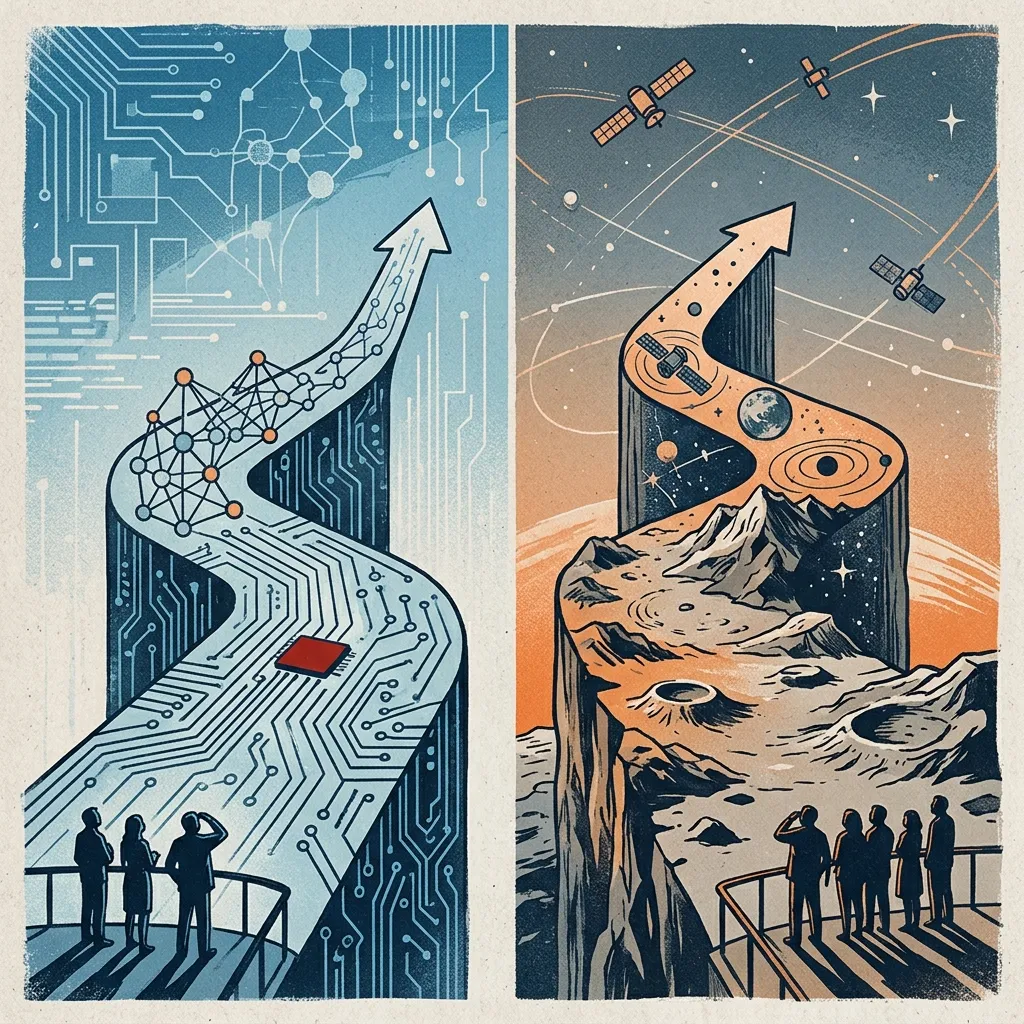
Competing Assessments of China's Technological Position
Two recent analyses from independent publications present contrasting yet complementary perspectives on China's technological competition with the United States, focusing on artificial intelligence development and lunar exploration respectively.
The AI Development Narrative
Daily Maverick, an African independent publication, frames China's recent technological advances in artificial intelligence as potentially decisive. The publication highlights the launch of DeepSeek V4 as a pivotal moment, characterizing it as evidence that "the balance in the AI arms race shifts." The framing explicitly positions this development as a "potential threat to US dominance in artificial intelligence innovation."
The African outlet's language choices are notable: describing China as "gradually winning" suggests a sustained competitive advantage rather than isolated achievements. The phrase "elephant in the room" in the headline implies this shift represents an uncomfortable truth that mainstream discourse may be avoiding or underestimating.
Daily Maverick does not provide technical specifications of DeepSeek V4 or comparative performance metrics against US systems. The assessment focuses on the broader strategic implications rather than granular technological details.
The Space Competition Framework
The Diplomat, an Asia-focused independent publication, examines the competition through the lens of lunar exploration and resource extraction. The publication frames both nations as "racing to establish a permanent presence on the moon," presenting the competition as more evenly matched than the AI narrative suggests.
Crucially, The Diplomat identifies a specific shared objective: both countries pursue "the explicit mission of mining – and exploiting – lunar resources." This framing emphasizes economic and resource motivations rather than purely scientific or prestige-driven goals. The publication's question-format headline—"Is China Winning the 2nd Space Race?"—presents the outcome as uncertain rather than determined.
The Diplomat does not declare a winner in this competition, instead posing the question to readers. This contrasts with Daily Maverick's more assertive framing about AI development trajectories.
Technological Domains and Strategic Implications
The two sources address different technological domains—artificial intelligence versus space exploration—making direct comparison challenging. However, both publications identify China as a formidable competitor to the United States in cutting-edge technology sectors.
Neither source provides detailed analysis of how these technological competitions might intersect. AI capabilities could theoretically influence space exploration through autonomous systems, robotics, and data processing, but neither publication explores these connections.
The sources also differ in their treatment of timelines. Daily Maverick's language suggests an ongoing shift already underway, while The Diplomat's focus on establishing permanent lunar presence implies a competition still in relatively early stages.
Regional Framing Differences
The geographic positioning of these publications may influence their framing choices. Daily Maverick, based in Africa, adopts a third-party observer perspective, analyzing great power competition without direct national stakes in the outcome. The publication's characterization of China "winning" may reflect less investment in maintaining narratives of Western technological supremacy.
The Diplomat, focused on Asian affairs, operates in a region where China's technological rise has immediate geopolitical implications. The publication's more cautious, question-based framing may reflect the complexity of assessing technological competition in a region where both powers maintain significant influence and partnerships.
Information Gaps
Both sources leave significant questions unanswered. Daily Maverick does not explain what specific capabilities DeepSeek V4 demonstrates or how it compares to American AI systems like GPT-series models or Claude. The Diplomat does not detail current progress by either nation toward lunar bases or provide timelines for resource extraction operations.
Neither publication addresses how their respective governments or independent analysts assess these competitions, relying instead on their own editorial judgments about competitive positioning.