
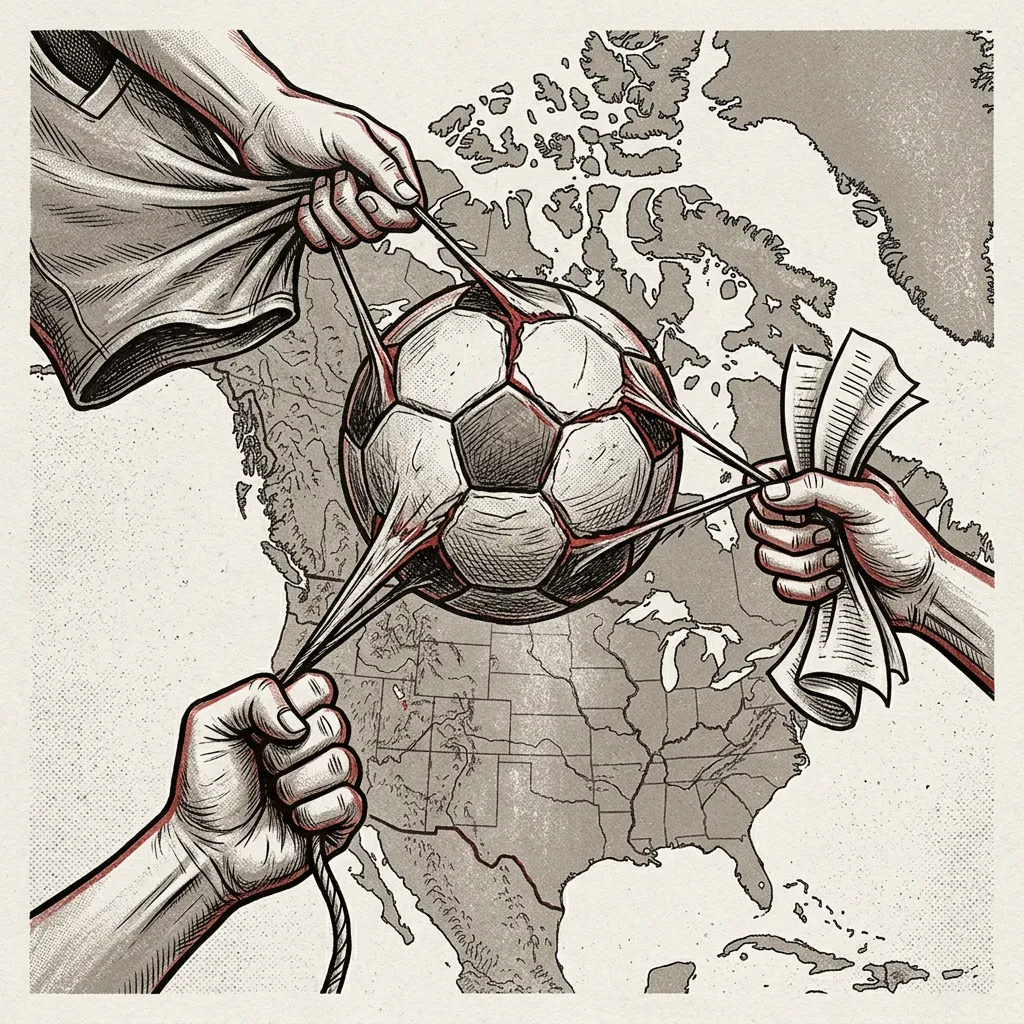
As preparations for the unprecedented three-nation 2026 FIFA World Cup intensify, global media coverage reveals starkly different focal points. While Asian outlets concentrate on player narratives and logistical announcements, European analysis delves into the geopolitical tensions simmering beneath the surface of the continental co-hosting arrangement. This divergence highlights how the same mega-event is framed through regional lenses, from human-interest sports stories to examinations of power and prestige among the hosts.
Channel News Asia (CNA), representing a mainstream Asian perspective, dedicates significant coverage to player-centric stories ahead of the tournament. One report details Lionel Messi's public endorsement for Neymar's inclusion in the Brazilian national squad, framing it as a notable intervention from one global superstar on behalf of another. In a separate piece, CNA covers Luis Suarez's expressed openness to a return to the Uruguayan team for the World Cup, presenting it as a potential comeback story for the veteran striker. These articles treat the World Cup primarily as a sporting spectacle, with narrative weight placed on the potential participation and performances of iconic figures, a focus likely aimed at engaging a broad, football-interested audience across Asia.
Beyond player news, CNA also reports on practical host nation preparations. One article notes FIFA's plan to hold separate opening ceremonies in Mexico, Canada, and the United States, a logistical detail for the tri-hosted event. Another report outlines a more controversial domestic measure, stating that Mexico will shorten its upcoming school year to accommodate the tournament. This framing presents the information matter-of-factly, as a notable administrative decision taken in anticipation of the global event, without delving deeply into potential local criticisms or the broader implications for the host country's priorities.
In sharp contrast, Politico Europe provides a deep analytical dive into the political and diplomatic undercurrents of the co-hosting model. Its report, titled 'A middle power gets squeezed at its own World Cup,' argues that the original vision of continental unity has devolved into cross-border anxieties. The article positions Canada as feeling like an 'afterthought,' overshadowed by the United States, which is slated to host approximately 75 percent of matches. It frames the recent FIFA Congress in Vancouver—Canada's marquee pre-tournament event—as the 'least exciting and prestigious' of the major lead-up events, characterizing it as a business meeting for sports bureaucrats largely invisible to the public.
The Politico analysis directly links this perceived imbalance to the actions of FIFA leadership. It contends that FIFA President Gianni Infantino's 'relentless focus' on engaging with former U.S. President Donald Trump has widened the gap between the three nations in both power and public perception. The report suggests the tournament is increasingly viewed as an 'American pageant with a handful of satellite events abroad.' To counter this narrative, the article details how awarding the Congress to Vancouver was a 'carefully calibrated concession' to Canadian sensitivities, closely tied to the influence of FIFA Vice President and CONCACAF head Victor Montagliani. The piece further explores internal FIFA dynamics, noting tensions between Infantino's centralized governance model and regional stakeholders like Montagliani, who reportedly feel preparations are too U.S.-centric.
Framing the Tournament The framing of the 2026 World Cup preparations splits along clear regional lines. The Asian coverage, as exemplified by CNA, adopts a classic sports journalism approach. Its frame is the tournament as a global sporting festival, with news value derived from star players, team preparations, and official announcements from the governing body. The potential shortening of Mexico's school year is presented as a logistical footnote rather than a point of political debate. Conversely, the European analysis from Politico frames the World Cup as a geopolitical and diplomatic stage. Its primary lens is power dynamics—between host nations, within FIFA's governance structure, and in the contest for prestige and attention. The sporting competition itself is almost secondary to the narrative of national identity, bureaucratic maneuvering, and the challenges of multinational cooperation.
This synthesis reveals that the story of the 2026 World Cup is not a monolithic one. For audiences in Asia, the dominant narrative may be one of athletic anticipation, focused on the heroes who will define the tournament on the pitch. For observers in Europe and perhaps within the host continent itself, a parallel narrative exists—one of complex logistics, diplomatic friction, and the struggle of a middle-power co-host to claim its share of the spotlight in a partnership dominated by a larger neighbor. These divergent frames will likely continue as the tournament approaches, offering fundamentally different answers to the question of what the first 48-team, three-nation World Cup truly represents.